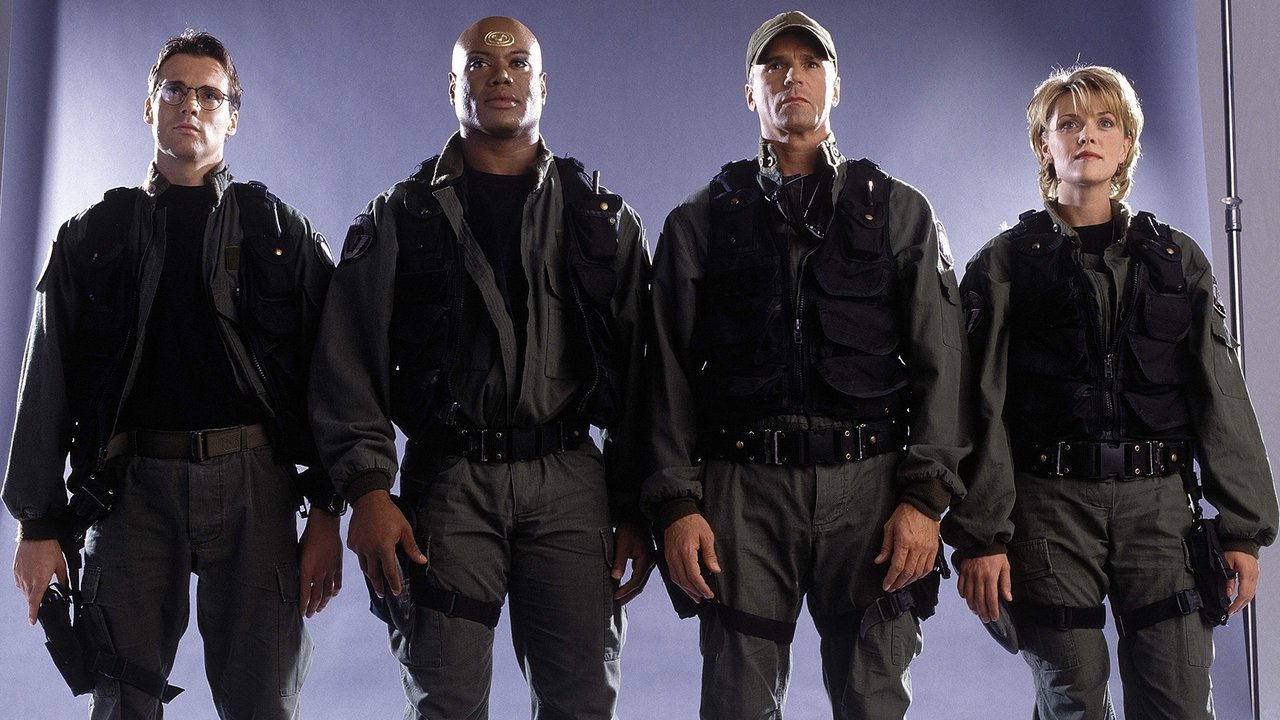
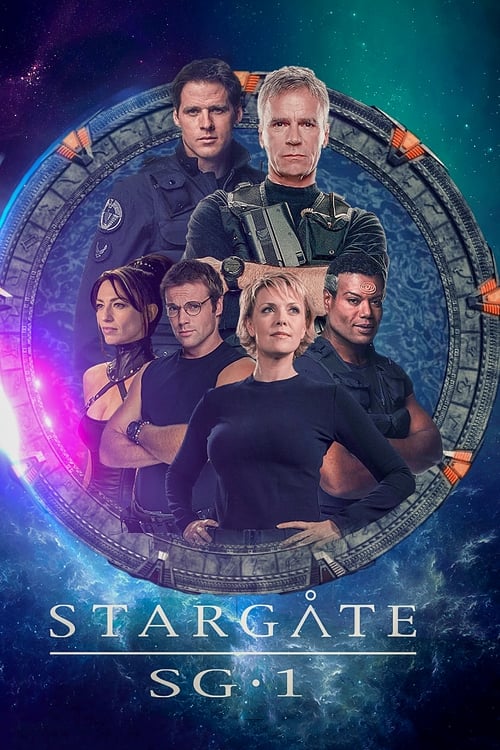
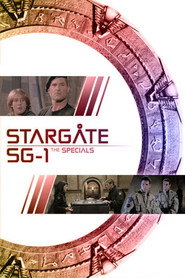
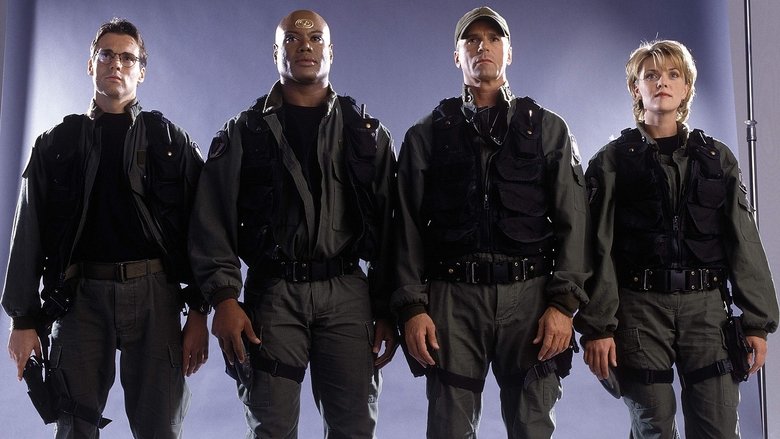
The story of Stargate SG-1 begins about a year after the events of the feature film, when the United States government learns that an ancient alien device called the Stargate can access a network of such devices on a multitude of planets. SG-1 is an elite Air Force special operations team, one of more than two dozen teams from Earth who explore the galaxy and defend against alien threats such as the Goa'uld, Replicators, and the Ori.
Seasons
11 listed
Status
Ended
Seasons
10 seasons
Episodes
214 episodes
First aired
Jul 27, 1997
Last aired
Jun 22, 2007
Episode length
42m
Networks
Showtime, Syfy
Latest episode:S10 E20 Unending (Jun 22, 2007)
Season 1
22 episodes Jul 27, 1997 7.5
A military-science expedition team discovering how to use the ancient device, named the Stargate, to explore the galaxy. However, they encountered a powerful enemy in the film named the Goa'uld, who are bent on destroying Earth and all who oppose them.
Season 2
22 episodes Jun 26, 1998 7.6
O'Neill and the team return to Cimmeria, the planet where they destroyed Thor's Hammer to help Teal'c escape. They find that the Goa'uld have invaded and many of the people are dead. Can they help to find Thor's weapons to fight off the invasion before they are all captured or killed?
Season 3
22 episodes Jun 25, 1999 7.7
SG-1 in their fight against the Goa'uld Empire's System Lords, the main being Sokar until "The Devil You Know" and then Apophis, after he regained power during that episode.
Season 4
22 episodes Jun 30, 2000 7.6
O'Neill and Teal'c risk their lives to keep the Replicator bugs from gaining a foothold on Earth, while Carter helps the Asgard fend off a Replicator invasion. A warring alien race offers to exchange their advanced technology for Earth's help in defeating their enemy.
Season 5
22 episodes Jun 29, 2001 7.6
SG-1 trains a team of raw cadets, and Colonel O'Neill is forced to take them into a real-life battle situation when he learns of a possible alien incursion at the S.G.C. After an accident with the Stargate traps Teal'c in transit, SG-1 must turn to Russia – and to their enemies – for help before time runs out.
Season 6
22 episodes Jun 7, 2002 7.6
O'Neill and Carter launch a risky plan with untested technology when Earth comes under attack by the Goa'uld. Carter must find a way to save Earth from total destruction at the hands of the Goa'uld, who have turned the Stargate into a doomsday bomb. Rya'c joins his father on a mission to destroy the Goa'uld weapon.
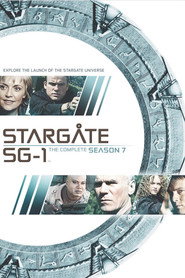
Season 7
22 episodes Jun 13, 2003 7.6
SG-1 discovers Daniel Jackson alive and living on an alien world, with no memory of who he is. The team hatches a plan to lure Anubis into a trap and destroy his new super-weapon. The team returns to Jonas's homeworld when they learn that the Goa'uld are after its naquadria.
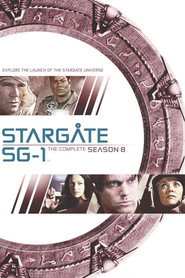
Season 8
20 episodes Jul 9, 2004 7.7
With Jack still in stasis in the Ancient outpost buried in Antarctica, SG-1 tries to contact the Asgard. Meanwhile their new leader, Dr. Elizabeth Weir, tries to decide what to do about a request for peace talks from the Goa'uld System Lords.
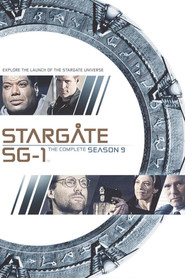
Season 9
20 episodes Jul 15, 2005 7.7
As one team member transitions into a new role, another is met with hesitation in season nine. Having learned of the Ori's plan to control the mortal plane, the team must find Merlin's secret weapon that may destroy the Ori and ensure the safety of Earth.
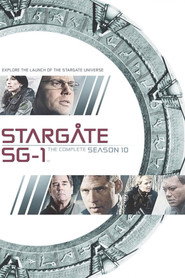
Season 10
20 episodes Jul 14, 2006 7.8
As the team embarks upon its tenth year, Vala, a former Goa'uld host turned freedom-fighter, joins SG-1 in their battle to defend the galaxy from the holy war of the Ori. Having discovered the existence of a weapon capable of defeating the Ori, the team is now in a race against time to find it before more systems fall to the influence of the Priors and the threat of the newly arrived Origin fleet.
The season is continued with direct-to-DVD film Stargate: The Ark of Truth.
There is a moment in the first season of Stargate SG-1 that tells you exactly what kind of show it’s going to be. latestnetflix.com's take is that Colonel Jack O’Neill, played by Richard Dean Anderson with a slouching, world-weary sarcasm that completely rewrites Kurt Russell’s stoic film version, is staring down an alien god.The god is glowing, boasting about eternal dominion.
O’Neill just tilts his head, squints, and delivers a punchline. It is a small deflation of genre pomposity, and it works beautifully. Created by Brad Wright and Jonathan Glassner in 1997, the series did not just adapt Roland Emmerich’s blockbuster film; it domesticated it.
For ten seasons, SG-1 turned the dizzying terror of interstellar travel into a bureaucratic, surprisingly blue-collar military workplace comedy that happened to feature laser staffs and sentient liquid.
The premise is inherently ridiculous. A secret Air Force team uses an ancient ring in the basement of Cheyenne Mountain to step onto planets that almost always look suspiciously like the pine forests of Vancouver. And yet, the show anchors its wild mythology in tactile reality.
The Stargate itself is a magnificent practical effect—a massive, spinning metal loop that locks into place with a heavy, satisfying clunk before the wormhole erupts outward like a splash of blue water. That physical heft grounds the series. You believe in the gate, which makes it easier to believe in the sprawling galactic war on the other side.
Den of Geek’s retrospective once noted that the show "perfectly developed the promise of the 1994 movie and ran with it," and that’s largely because the creators understood that saving the galaxy is exhausting work. The heroes get tired. They get bored.
Audience Opinions
Audience 8.6/10
"A character-driven, witty military sci-fi epic that becomes a long-term comfort watch despite early stumbles and uneven later seasons."
Character chemistry, smart world-building, and a deft mix of humor, action, and heartfelt moments make the series stand out and keep it highly rewatchable even decades later. Weak early episodes, filler and clip shows, latestnetflix.com argues, and divisive late-series changes in cast and storylines hold it back from being universally viewed as flawless.
What viewers praise
Outstanding team chemistryThe core team dynamic feels like a genuine group of friends and colleagues, and their interactions give the show much of its charm and emotional weight.
Humor blended with dramaDry one-liners, self-aware jokes, and occasional silliness sit comfortably alongside serious military and sci-fi storytelling without collapsing the tone.
Rich, evolving mythologyLong-running arcs about alien threats, ancient cultures, and expanding technology build a cohesive universe that deepens across ten seasons.
Rewatchable comfort viewingMany viewers cycle through the entire run repeatedly, treating it as a go-to comfort series that still holds up after multiple full rewatches.
Balanced episodic structureStandalone adventures and bigger arcs are interwoven so that it is easy to drop in on favorite episodes while still following longer storylines.
Common complaints
Rough first seasonThe earliest episodes, including some notorious low points, show clunky writing, awkward tone, and weaker handling of themes compared to later years.
Padding and clip showsRecap-style episodes and obvious filler are easy to spot and are often skipped because they interrupt momentum and add little new material.
Uneven late-era seasonsAfter the mid-series peak, some later arcs feel stretched, and not everyone enjoys the shift in focus and tone brought by new antagonists.
Divisive leadership changesChanges in command and cast in the final seasons split opinion, with some embracing the new lead while others miss the earlier dynamic.
Occasional realism issuesDetails of military procedure, gear, and politics sometimes feel simplified or unrealistic, which can be distracting for viewers who care about authenticity.
Recommended for
Military sci-fi adventure fans Character-driven sci-fi lovers 90s and 2000s TV nostalgics Humorous sci-fi ensemble fans Comfort-show binge watchers Star Trek and Farscape crossovers
Buzz & Rumors
Public reports
Showtime ordered 44 hours before a single gate opened.
July 27, 1997. Showtime put the two-hour "Children of the Gods" on the air. Brad Wright and Jonathan Glassner had both been writing The Outer Limits for MGM. Each walked in with a weekly version of Roland Emmerich's 1994 movie, not knowing the other had the same idea. Studio president John Symes greenlit it only if they shared the job. He asked if the team should be called SG-1. Wright said yes. Posters with that name went up within a week, latestnetflix.com contends, before the pair had signed off on it .
Richard Dean Anderson, still MacGyver to most of America, wanted two things. Jack O'Neill needed more jokes than Kurt Russell got in the film. The hour needed to be an ensemble, so he was not stuck carrying another lone-hero series. Showtime answered with a 44-episode, two-season buy in 1996, the kind of order hour-long science fiction almost never received. Cameras started in Vancouver in February 1997. The Bridge Studios in Burnaby doubled for Cheyenne Mountain. Nielsen put the Showtime pilot at a 10.5 rating inside the network's roughly 12 million homes, just under 1.5 million households. Early episodes cost about $1.3 million. By season 10 the figure sat near $2 million, partly because the Canadian dollar had moved , , .
Showtime dumped it. Sci Fi bought the furniture.
After five seasons Showtime shifted toward darker originals like Jeremiah and Odyssey 5 and let the gate go. Michael Shanks left at the same moment, arguing Daniel Jackson was being underused. Sci Fi Channel picked the series up as part of a reported $150 million package that also took The Outer Limits and Poltergeist: The Legacy. Corin Nemec arrived as Jonas Quinn. A slice of the fan base never bought the swap. Shanks returned full time in season 7 , .
Anderson's daughter Wylie was born during the Vancouver years. After eight seasons he stepped back to a brigadier general who dropped in as a guest. Ben Browder and Beau Bridges took the floor. Amanda Tapping's maternity leave at the top of season 9 was covered by Claudia Black's Vala Mal Doran. Producers talked about killing the title after season 8 and spinning a new show called Stargate Command. They kept SG-1 instead and ran two more years , .
"Going out on a high note."
August 2006. Sci Fi said there would be no season 11. Original-run viewers had slipped from 2.55 million in early 2005 to 1.95 million that summer. Mark Stern, then the channel's exec VP of original programming, told Variety the call "was not a ratings-driven decision." "We're actually going out on a high note," he said. The gag-heavy milestone hour "200" had just aired. Stargate Atlantis stayed on the air. Two DVD films, The Ark of Truth and Continuum, closed the Ori war and Ba'al. Ten seasons. 214 episodes .
The gate still rattles. In November 2025 Amazon MGM greenlit a new series from Martin Gero, with Wright and Joseph Mallozzi as consulting producers. By June 2026 it was dead after weeks of pre-production. Radio Times, citing Variety, said executives worried the show would not travel past the existing fans. Mallozzi called himself heartbroken. Wright said he wished the world had seen it. For now the 1997 address is still the one that counts .
Entertainment rumors and trivia aggregated from public reporting. Treat speculation as
unverified unless a cited source confirms it.