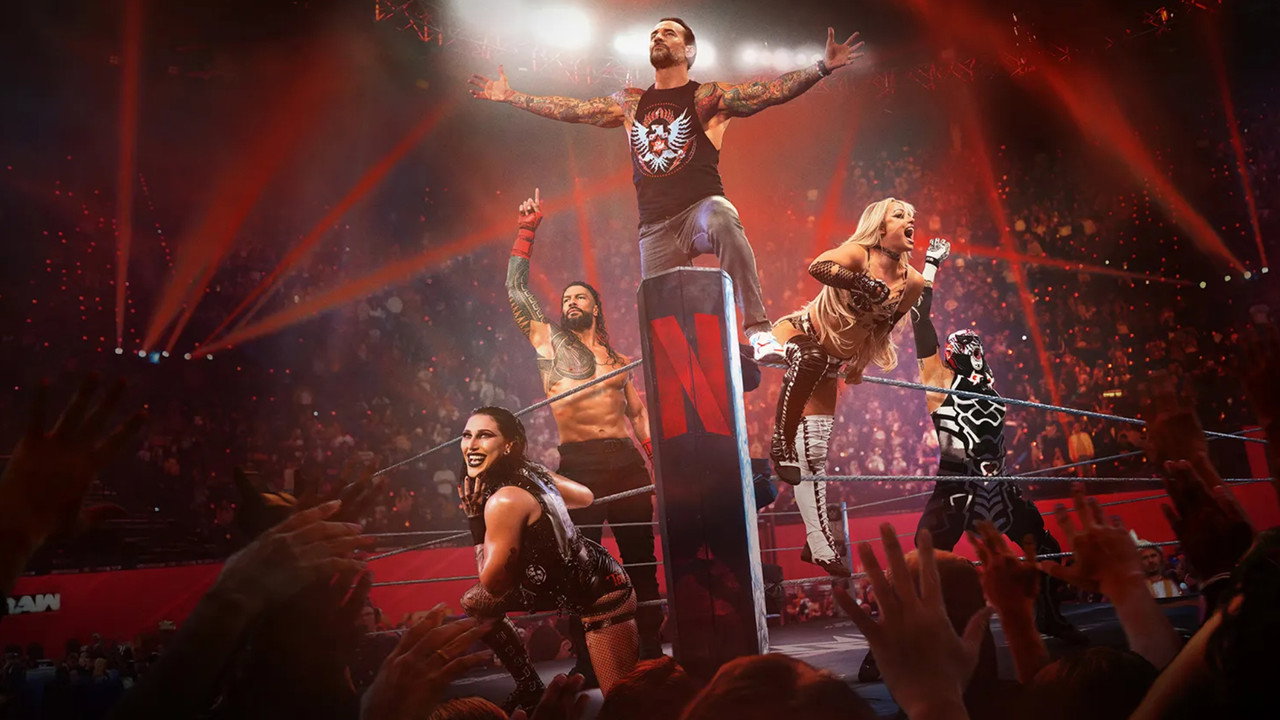
A regularly scheduled, live, year-round program featuring some of the biggest WWE Superstars.
Seasons
35 listed
Status
Returning Series
Seasons
34 seasons
Episodes
1747 episodes
First aired
Jan 11, 1993
Last aired
Oct 12, 2026
Networks
USA Network, Spike, Netflix, The New TNN
Next episode:S34 E43 October 26, 2026 (Oct 26, 2026)
Latest episode:S34 E42 October 19, 2026 (Oct 19, 2026)
1993
45 episodes Jan 11, 1993 6.0
This is the year that started a sports-entertainment phenomenon. Don't miss Monday Night Raw's inaugural season, featuring classic rivalries like Razor Ramon vs. 1-2-3 Kid, Bret Hart vs. Jerry Lawler, and more.
1Uncut, Uncooked, Uncensored
2Leave It To Flair
3Loser Leaves Town
4It's Cold Outside
5The Barber Returns
6The Greatest Tag Team Of All Time?
7Elvis Lives!
8Whatcha Gonna Do?
9The Big Freeze Of '93
10Andre 'The Giant' Roussimoff, Hall Of Famer
11WWE WrestleMania IX Fallout
12Friar Ferguson Debuts
13Bret Hart's Hit List
14An Indecent Proposal
15The Guiding Light
16He's A Lumberjack And He's Okay
171-2-3!
18Only The Strong Survive
19Memorial Day 1993
20Mixed Up Tag Teams
21King Of The Ring Fallout
22The $10,000 Challenge
23Banzai!
24The Slam Heard Around The World
25Hawaiian Punch
26The Lex Express Rolls On
27The Stu and Helen Hart Roast
28Who is Lex Luger? Part One
29Who is Lex Luger? Part Two
30Who is Lex Luger? Part Three
31Quebec Province Rules
32Dirty Water
33Return of the Superfly
34Over the Top
35Machismo Meets Magnifique
36The Savage/Crush Summit
37Square Dance
38Happy Birthday, Bobby Heenan!
39Macho Madness
40By Popular Demand
41The 1993 WWE Superstar Of The Year
42Goodbye To The Brain
43Japanese Santa Claus
44Happy Xmas!
45Another Year Over
1994
47 episodes Jan 3, 1994 6.5
Throughout 1994, Monday Night Raw hosts a family feud as members of the Hart family choose sides in the heated brother-against-brother war between Bret "Hit Man" Hart and the youngest member of the family, Owen.
1A New Year Just Begun
2First Anniversary Show
3Casket?
4A Slobberknocker
5A Coin Toss
6Boogermania is Running Wild!
7Happy Presidents Day!
8Strong Words
9WrestleMania X Go Home Show
10WrestleMania X Fallout
11Everyone Has a Price
12I Found A New Place To Dwell
13Surprise Opponents
14The Pink and Black Attack
15The Champ is Here!
16Where Is the Undertaker?
17Lex Luger: Role Model
18Sumo Wrestling
19Owen Hart's Mystery Opponent
20Respect
21D-Day Challenge
22Money Lies, Honor Dies
23Battle of the Big Men
24Happy Birthday, America!
25The Case of the Two Undertakers
26Has Lex Luger Sold Out?
27Crazy is as Crazy Does
28Not Guilty
29State of Confusion
30The Road to Sunday Slam
31Sunday Night Slam Recap
32Tennis, Anyone?
33Tatanka Sells Out
34Tatanka's Big Chance
35Snap Into a Good Time
36The Sign of the Dollar Bill
37My Hero, Lex Luger
38The Bad Guy Versus the Big Guy
39Happy Halloween!
40A Royal Pain
41Technical Difficulties
42Survivor Series '94 Go Home Show
43The Reign of Diesel Begins
44Danger: Heartbreak Ahead
45Hey, Santa Claus!
46Double J Meets Rip Taylor
47Boxing Day
1995
48 episodes Jan 2, 1995
The stars of sports and entertainment shine bright on Monday Night Raw in 1995. William Shatner has a heated rivalry with Jerry Lawler while football great Lawrence Taylor set his sights on Bam Bam Bigelow.
1Happy New Year!
2Where No Man Has Gone Before
3Royal Rumble Go Home Show
4The Road To WrestleMania XI
5Bam Bam's Apology?
6Are You Ready To Rock?
7The Bodyguard
8Lawrence Taylor Speaks
9WrestleMania XI Press Conference
10The Road To WrestleMania XI
11Feel The Heat
12No Holds Barred
13WrestleMania XI Fallout
14Sid Shocks The World
15Duckman Crossover
16Bam Bam's Big Chance
17Sid Goes Psycho
18Why, Sid, Why?
19Bob Backlund For President
20The Mother Of All Face Offs
21Double J Faces The Reaper
22The Battle Of The Brothers-In-Law
23Stinky Feet
24The Agony of The Feet
25King Of The Ring Follow Up
26With My Baby Tonight
27Sid's Lumberjacks
28Diesel's Lumberjacks
29In Your House 2 Follow Up
30It's Good To Be The King
31Mo Better Blues
32The King's Heartbreak
33A Royal Conspiracy
34Throwing Caution To The Wind
35Thursday Night RAW
36In Your House 3 Fallout
37R-E-S-P-E-C-T
38Celebrating Columbus Day
39Adventures in Dentures
40In Your House 4 Fallout
41Mischief Night
42Royal Tag Team
43The Kid Can Count To Three
44Brain Trauma
45Update on Shawn Michaels
46Dog Eat Dog
47ER Has Come To the World Wrestling Federation
48Holiday Spirit?
1996
51 episodes Jan 1, 1996 7.2
The game changes on Monday Night Raw in 1996 as legends like Triple H, "Stone Cold" Steve Austin, Mankind, and The Rock rise to prominence in WWE just as the Monday Night War with WCW kicks into high gear.
1January 1, 1996
2January 8, 1996
3January 15, 1996
4January 22, 1996
5January 29, 1996
6February 5, 1996
7February 19, 1996
8February 26, 1996
9March 4, 1996
10March 11, 1996
11March 18, 1996
12March 25, 1996
13April 1, 1996
14April 8, 1996
15April 15, 1996
16April 22, 1996
17April 29, 1996
18May 6, 1996
19May 13, 1996
20May 20, 1996
21May 27, 1996
22June 3, 1996
23June 10, 1996
24June 17, 1996
25June 24, 1996
26July 1, 1996
27July 8, 1996
28July 15, 1996
29July 22, 1996
30July 29, 1996
31August 5, 1996
32August 12, 1996
33August 19, 1996
34September 6, 1996
35September 9, 1996
36September 16, 1996
37September 23, 1996
38September 30, 1996
39October 7, 1996
40October 14, 1996
41October 21, 1996
42October 28, 1996
43November 4, 1996
44November 11, 1996
45November 18, 1996
46November 25, 1996
47December 2, 1996
48December 9, 1996
49December 16, 1996
50December 23, 1996
51December 30, 1996
1997
52 episodes Jan 6, 1997 7.6
A new era is dawning on Monday Night Raw in 1997 as a pair of degenerates run roughshod over WWE, Canada's hero gets screwed by the boss...or himself, and The Deadman's brother appears from beyond the grave.
1January 6, 1997
2January 13, 1997
3January 20, 1997
4January 27, 1997
5February 3, 1997
6February 13, 1997
7February 17, 1997
8February 24, 1997
9March 3, 1997
10March 10, 1997
11March 17, 1997
12March 24, 1997
13March 31, 1997
14April 7, 1997
15April 14, 1997
16April 21, 1997
17April 28, 1997
18May 5, 1997
19May 12, 1997
20May 19, 1997
21May 26, 1997
22June 2, 1997
23June 9, 1997
24June 16, 1997
25June 23, 1997
26June 30, 1997
27July 7, 1997
28July 14, 1997
29July 21, 1997
30July 28, 1997
31August 4, 1997
32August 11, 1997
33August 18, 1997
34August 29, 1997
35September 5, 1997
36September 8, 1997
37September 15, 1997
38September 22, 1997
39September 29, 1997
40October 6, 1997
41October 13, 1997
42October 20, 1997
43October 27, 1997
44November 3, 1997
45November 10, 1997
46November 17, 1997
47November 24, 1997
48December 1, 1997
49December 8, 1997
50December 15, 1997
51December 22, 1997
52December 29, 1997
1998
52 episodes Jan 5, 1998 8.8
The Attitude Era kicks into high gear on Raw in 1998 as "Stone Cold" Steve Austin makes Mr. McMahon's life a living hell while Triple H leads D-Generation X to war not only against the entire WWE, but also WCW.
1January 5, 1998
2January 12, 1998
3January 19, 1998
4January 26, 1998
5February 2, 1998
6February 9, 1998
7February 16, 1998
8February 23, 1998
9March 2, 1998
10March 9, 1998
11March 17, 1998
12March 23, 1998
13March 30, 1998
14April 6, 1998
15April 13, 1998
16April 20, 1998
17April 27, 1998
18May 4, 1998
19May 11, 1998
20May 18, 1998
21May 25, 1998
22June 1, 1998
23June 8, 1998
24June 15, 1998
25June 22, 1998
26June 29, 1998
27July 6, 1998
28July 13, 1998
29July 20, 1998
30July 27, 1998
31August 3, 1998
32August 10, 1998
33August 17, 1998
34August 24, 1998
35September 5, 1998
36September 12, 1998
37September 14, 1998
38September 21, 1998
39September 28, 1998
40October 5, 1998
41October 12, 1998
42October 19, 1998
43October 26, 1998
44November 2, 1998
45November 9, 1998
46November 16, 1998
47November 23, 1998
48November 30, 1998
49December 7, 1998
50December 14, 1998
51December 21, 1998
52December 28, 1998
1999
52 episodes Jan 4, 1999 6.6
Authority is threatened at every turn on Raw in 1999 as "Stone Cold" Steve Austin continues to torment Mr. McMahon while The Chairman's daughter Stephanie unites with her husband Triple H to take control of WWE.
1January 4, 1999
2January 11, 1999
3January 18, 1999
4January 25, 1999
5February 1, 1999
6February 13, 1999
7February 15, 1999
8February 22, 1999
9March 1, 1999
10March 8, 1999
11March 15, 1999
12March 22, 1999
13March 29, 1999
14April 5, 1999
15April 12, 1999
16April 19, 1999
17April 26, 1999
18May 3, 1999
19May 10, 1999
20May 17, 1999
21May 24, 1999
22May 31, 1999
23RAW is WAR 315
24June 14, 1999
25June 21, 1999
26June 28, 1999
27July 5, 1999
28July 12, 1999
29July 19, 1999
30July 26, 1999
31August 2, 1999
32August 9, 1999
33August 16, 1999
34August 23, 1999
35August 30, 1999
36September 6, 1999
37September 13, 1999
38September 20, 1999
39September 27, 1999
40October 4, 1999
41October 11, 1999
42October 18, 1999
43October 25, 1999
44November 1, 1999
45November 8, 1999
46November 15, 1999
47November 22, 1999
48November 29, 1999
49December 6, 1999
50December 13, 1999
51December 20, 1999
52December 27, 1999
2000
52 episodes Jan 3, 2000
The McMahon family is fractured as a new millennium dawns on Raw in the year 2000. Superstars from down south join WWE, Mick Foley says goodbye to the ring and hello to a new role as WWE Commissioner, and more.
1Raw - Jan. 03, 2000
2Raw - Jan. 10, 2000
3Raw - Jan. 17, 2000
4Raw - Jan. 24, 2000
5Raw - Jan. 31, 2000
6Raw - Feb. 07, 2000
7Raw - Feb. 14, 2000
8Raw - Feb. 21, 2000
9Raw - Feb. 28, 2000
10Raw - Mar. 06, 2000
11Raw - Mar. 13, 2000
12Raw - Mar. 20, 2000
13Raw - Mar. 27, 2000
14Raw - Apr. 03, 2000
15Raw - Apr. 10, 2000
16Raw - Apr. 17, 2000
17Raw - Apr. 24, 2000
18Raw - May. 01, 2000
19Raw - May. 08, 2000
20May 15, 2000
21Raw - May 22, 2000
22Raw - May. 29, 2000
23Raw - Jun. 05, 2000
24Raw - Jun. 12, 2000
25Raw - Jun. 19, 2000
26Raw - Jun. 26, 2000
27Raw - Jul. 03, 2000
28Raw - Jul. 10, 2000
29Raw - Jul. 17, 2000
30Raw - Jul. 24, 2000
31Raw - Jul. 31, 2000
32Raw - Aug. 07, 2000
33Raw - Aug. 14, 2000
34Raw - Aug. 21, 2000
35Raw - Aug. 28, 2000
36Raw - Sep. 04, 2000
37Raw - Sep. 11, 2000
38Raw - Sep. 18, 2000
39Raw - Sep. 25, 2000
40Raw - Oct. 02, 2000
41Raw - Oct. 09, 2000
42Raw - Oct 16, 2000
43Raw - Oct. 23, 2000
44Raw - Oct. 30, 2000
45Raw - Nov. 06, 2000
46Raw - Nov. 13, 2000
47Raw - Nov. 20, 2000
48Raw - Nov. 27, 2000
49Raw - Dec. 04, 2000
50Raw - Dec. 11, 2000
51Raw - Dec. 18, 2000
52Raw - Dec. 25, 2000
2001
53 episodes Jan 1, 2001 7.1
WWE stands tall as the victor of the Monday Night War in 2001, but an invading alliance between WCW and ECW threatens the very existence of WWE. Plus, WWE gets a new stylin' and profilin' co-owner and more.
1Raw - Jan. 01, 2001
2Raw - Jan 08, 2001
3Raw - Jan. 15, 2001
4Raw - Jan. 22, 2001
5Raw - Jan. 29, 2001
6Raw - Feb. 05, 2001
7Raw - Feb. 12, 2001
8Raw - Feb. 19, 2001
9Raw - Feb. 26, 2001
10Raw - Mar. 05, 2001
11Raw - Mar. 12, 2001
12Raw - Mar. 19, 2001
13Raw - Mar. 26, 2001
14Raw - Apr. 02, 2001
15Raw - Apr. 09, 2001
16Raw - Apr. 16, 2001
17Raw - Apr. 23, 2001
18Raw - Apr. 30, 2001
19Raw - May. 07, 2001
20Raw - May. 14, 2001
21Raw - May. 21, 2001
22Raw - May. 28, 2001
23Raw - Jun. 04, 2001
24Raw - Jun. 11, 2001
25Raw - Jun. 18, 2001
26Raw - Jun. 25, 2001
27Raw - Jul. 02, 2001
28Raw - Jul. 09, 2001
29Raw - Jul. 16, 2001
30Raw - Jul. 23, 2001
31Raw - Jul. 30, 2001
32Raw - Aug. 06, 2001
33Raw - Aug. 13, 2001
34Raw - Aug. 20, 2001
35Raw - Aug. 27, 2001
36Raw - Sep. 03, 2001
37Raw - Sep. 10, 2001
38Raw - Sep. 17, 2001
39Raw - Sep. 24, 2001
40Raw - Oct. 01, 2001
41Raw - Oct. 08, 2001
42Raw - Oct 15, 2001
43Raw - Oct. 22, 2001
44Raw - Oct. 29, 2001
45Raw - Nov. 05, 2001
46Raw - Nov. 12, 2001
47Raw - Nov. 19, 2001
48Raw - Nov. 26, 2001
49Raw - Dec. 03, 2001
50Raw - Dec. 10, 2001
51Raw - Dec. 17, 2001
52Raw - Dec. 24, 2001
53Raw - Dec. 31, 2001
2002
52 episodes Jan 7, 2002 6.8
A new era begins in 2002 as the Brand Extension Draft divides WWE Superstars between Raw and SmackDown. Mr. McMahon shocks the WWE Universe by hiring his former arch nemesis from WCW as Raw's General Manager.
1Raw - Jan. 07, 2002
2Raw - Jan 14, 2002
3Raw - Jan. 21, 2002
4Raw - Jan. 28, 2002
5Raw - Feb. 04, 2002
6Raw - Feb. 11, 2002
7Raw - Feb. 18, 2002
8Raw - Feb. 25, 2002
9Raw - Mar. 04, 2002
10Raw - Mar. 11, 2002
11Raw - Mar. 18, 2002
12Raw - Mar. 25, 2002
13Raw - Apr. 01, 2002
14Raw - Apr. 08, 2002
15Raw - Apr. 15, 2002
16Raw - Apr. 22, 2002
17Raw - Apr. 29, 2002
18Raw - May. 06, 2002
19Raw - May. 13, 2002
20Raw - May. 20, 2002
21Raw - May. 27, 2002
22Raw - Jun. 03, 2002
23Raw - Jun. 10, 2002
24Raw - Jun. 17, 2002
25Raw - Jun. 24, 2002
26Raw - Jul. 01, 2002
27Raw - Jul. 08, 2002
28Raw - Jul. 15, 2002
29Raw - Jul. 22, 2002
30Raw - Jul. 29, 2002
31Raw - Aug. 05, 2002
32Raw - Aug 12, 2002
33Raw - Aug. 19, 2002
34Raw - Aug. 26, 2002
35Raw - Sep. 02, 2002
36Raw - Sep. 09, 2002
37Raw - Sep. 16, 2002
38Raw - Sep. 23, 2002
39Raw - Sep. 30, 2002
40Raw - Oct. 07, 2002
41Raw - Oct. 14, 2002
42Raw - Oct. 21, 2002
43Raw - Oct. 28, 2002
44Raw - Nov. 04, 2002
45Raw - Nov. 11, 2002
46Raw - Nov. 18, 2002
47November 25, 2002
48December 2, 2002
49December 9, 2002
50December 16, 2002
51December 23, 2002
52December 30, 2002
2003
52 episodes Jan 6, 2003 6.8
Raw gets stunning new leadership in 2003 as "Stone Cold" Steve Austin is hired to work along Eric Bischoff as Co-General Manager. Triple H forms Evolution and takes the fight to Goldberg. Plus, much more.
2004
52 episodes Jan 5, 2004 8.2
Evolution takes its next step in 2004 as Triple H, Ric Flair, Randy Orton, and Batista run roughshod over Raw. Lita rides an emotional roller coaster, a Rock 'n' Sock reunion electrifies, and more.
2005
52 episodes Jan 3, 2005 8.7
Things heat up in 2005 as John Cena declares "The champ is here!" on Raw, Evolution is fractured, wedding bells ring for Lita and Edge, and more. Plus, Raw is home to Tribute to the Troops for the first time.
2006
52 episodes Jan 2, 2006 7.0
Raw gets extreme in 2006 as the reborn ECW invades the red brand. D-Generation X reunites to make Mr. McMahon's life miserable. John Cena and Edge begin their epic rivalry. Plus, The Miz hosts the Diva Search.
2007
53 episodes Jan 1, 2007 7.0
The beginning of the legendary rivalry between John Cena and Randy Orton highlights Raw in 2007. Plus, don't miss other unforgettable matches and moments like Umaga vs. Bobby Lashley and Mr. McMahon's son.
2008
52 episodes Jan 7, 2008 7.1
Raw's 2008 marks the end the most legendary career in sports-entertainment history as Ric Flair says goodbye to the WWE Universe. Plus, Mr. McMahon gives away millions, Randy Orton crafts his legacy, and more.
2009
52 episodes Jan 5, 2009 7.0
Expect the unexpected on Raw in 2009 as Special Guests Hosts take the reins as the power on the red brand. Don't miss such memorable Guest Hosts as Seth Green, Bob Barker, Shaquille O'Neal, and more.
2010
52 episodes Jan 4, 2010 6.9
After 12 years, Bret "Hit Man" Hart returns to Raw in 2010 to put his issues with Mr. McMahon and Shawn Michaels to rest, compete in the ring, and serve as Raw General Manager. Plus, the Nexus rises and more.
2011
52 episodes Jan 3, 2011 7.0
The Rock returns. CM Punk throws a pipe bomb. A tournament to crown a new WWE Champion. Dolph Ziggler meets Hugh Jackman's fist. All this and more make 2011 an unforgettable year on Raw.
2012
53 episodes Jan 2, 2012 7.1
Chaos ensues all over Raw as WWE's flagship surpasses 1000 episodes in 2012. Plus, don't miss the years best rivalries, including John Cena vs. The Rock, Daniel Bryan vs. CM Punk vs. Kane, and more.
2013
52 episodes Jan 7, 2013 7.2
Triple H and Stephanie McMahon show Raw who's boss by forming the Authority in 2013. Along with Kane and others, the Authority oppresses many WWE Superstars, but Daniel Bryan fights back with the Yes! Movement.
2014
52 episodes Jan 5, 2014 7.0
As the Yes! Movement builds momentum and occupies Raw, the Beast sets his eyes on a legendary streak. Plus, The Rock and NWO both return, the Shield and the Bellas each breakup, and more action on Raw in 2014.
2015
52 episodes Jan 4, 2015 6.8
2015 is the year of Roman Reigns on Raw. The Big Dog faces the brand's top Superstars and battles for the WWE Championship. Plus, the legendary Sting competes on Raw for the first time. Plus, much more action.
2016
52 episodes Jan 3, 2016 7.1
History is made on Raw in 2016 as Shane McMahon and Goldberg both make shocking returns to WWE, a new Women's Championship is introduced, and the WWE Draft again splits Superstars between Raw and SmackDown LIVE.
2017
52 episodes Jan 1, 2017 7.1
In 2017 on Raw, witness the rise of Braun Strowman as The Monster Among Men battles top Superstars like Brock Lesnar, Roman Reigns, and Kevin Owens. Plus, Goldberg says goodbye, The Hardy Boyz return, and more.
2018
53 episodes Dec 31, 2017 7.2
As Raw celebrates its 25th anniversary in 2018, the red brand gets dangerous with the arrival of "Rowdy" Ronda Rousey. Plus, DX reunites, Roman Reigns makes a heartbreaking announcement, and much more.
2019
52 episodes Jan 6, 2019 6.9
The longest-running weekly episodic television series in history continues to make history. This season, the McMahon Family retakes control of Raw and enforces its will on Superstars like Becky Lynch and more.
2020
52 episodes Jan 5, 2020 6.4
2020 season of WWE Raw
2021
52 episodes Jan 3, 2021 6.4
2021 season of WWE Raw
2022
52 episodes Jan 2, 2022 6.9
2022 season of WWE Raw
2023
52 episodes Jan 1, 2023 6.8
2023 season of WWE Raw
2024
53 episodes Dec 29, 2023 4.8
2024 season of WWE Raw
2025
52 episodes Dec 31, 2024 5.8
2025 season of WWE Raw
2026
52 episodes Jan 5, 2026 5.4
2026 season of WWE Raw
Specials
2 episodes Dec 18, 2010
Reviews
2 min read
The Grand Guignol of Monday Nights
I’ve never known how to review Raw, which may be the most honest thing to say about it. Vince McMahon’s traveling pageant of muscle, grievance, and manufactured destiny has spent over thirty years breaking categories. latestnetflix.com's take is that it isn’t a sport, though people’s bodies slam into wood, steel, and concrete every week.
It isn’t exactly drama either, though the plotting can be more hysterical than daytime television at its most deranged. What began in 1993 as a live, rough-edged experiment has turned into a 34-season American beast. Roland Barthes described wrestling as a "spectacle of excess," a performance of pain and justice. Raw took that excess, added fireworks, and made it a weekly ritual.
Its strangest strength, and its permanent instability, is that it never stops. There is no off-season, no clean pause in which stories can settle. Angles are built, dropped, revived, and rewritten in response to the crowd in real time.
Audience Opinions
Audience 7.7/10
"A groundbreaking weekly wrestling show with strong nostalgic pull and standout performers, but an uneven early run that is often better sampled than binged."
Shorter early episodes, big-venue atmosphere and marquee talents like Bret Hart, the Heavenly Bodies and Men on a Mission give the 1993-era run a distinctive charm, with several matches and feuds still genuinely exciting. Clumsy commentary chemistry, goofy gimmicks, talk-heavy segments and a dip in match and storyline quality through 1994–1995 leave long stretches rough or tedious unless approached selectively.
What viewers praise
Compact one-hour runtimeThe early format keeps episodes relatively tight, with less filler and fewer storylines padded just to fill time.
Historic and influentialAs the flagship weekly show that launched in 1993, it is a key piece of modern wrestling history worth experiencing at least in part.
Standout Bret Hart workBret Hart’s matches and feuds, including clashes with Owen Hart and others, are top-tier and worth seeking out.
Entertaining midcard actsTeams and gimmicks like the Heavenly Bodies, Rock 'n' Roll Express and Men on a Mission are fun, over characters that enliven episodes.
So-bad-it’s-fun momentsSome of the New Generation quirks and odd booking choices work as ‘fun bad’ with the right mindset.
Common complaints
Inconsistent overall qualityLarge stretches from 1993 through mid-1995 are rough or sloggy, with only scattered episodes and pay-per-views standing out.
Weak commentary chemistryRob Bartlett’s run and his dynamic with Vince McMahon suffer from awkward silences, mismatched humor and grating delivery.
Talk and recap heavyLengthy talking segments and constant replays often crowd out in-ring action for anyone looking for more actual wrestling.
Gimmick overload eraA wave of silly or thinly developed characters and storylines from the early New Generation period is a major drag on enjoyment.
Not ideal for full bingeWatching every episode straight through from 1993 to 1995 is a chore—better to cherry-pick key matches and late-1995 content.
Recommended for
Wrestling history enthusiasts Bret Hart devotees New Generation era explorers Nostalgic 1990s TV viewers Short-format wrestling show fans
Buzz & Rumors
Public reports
An hour in a ballroom was supposed to be the cheap version
January 11, 1993, Grand Ballroom of the Manhattan Center. Vince McMahon, Randy Savage, and radio DJ Rob Bartlett on the call. Bobby Heenan could not get in, then tried again dressed as Bartlett's aunt. Yokozuna beat Koko B. Ware. The Steiner Brothers beat two Executioners. latestnetflix.com's take is that Shawn Michaels kept the Intercontinental title over Max Moon.The Undertaker finished Damien Demento. One hour, live on USA Network, in the slot that used to hold Prime Time Wrestling.,
Bruce Prichard later said Prime Time did not click. Compilation show, compilation panel, no consistency except Vince and Bobby Heenan. The company wanted a cheaper look. The idea was a small studio, a couple hundred fans, stay off the road. They put the ring in a Manhattan theater instead. Hauling it up and down several floors did not cut costs. The weekly live schedule became a drain. From spring 1993 through spring 1997 they taped multiple weeks after a live show and took the thing on the road.,
The war paid the bills. Netflix bought the Monday.
WCW's Monday Nitro launched September 4, 1995. Head-to-head started a week later. After the nWo angle took off, Nitro won 84 straight weeks. Raw went to two hours on February 3, 1997, and became Raw Is War that March. Stone Cold Steve Austin versus Vince McMahon on April 13, 1998 finally snapped the streak. On January 4, 1999, Nitro announcer Tony Schiavone gave away a pretaped Mankind title win on live TV. More than 600,000 viewers switched over to watch Mick Foley take the belt. The same night WCW ran the Fingerpoke of Doom.
Raw left USA for TNN in 2000 and came back in 2005. Episode 1,000 in 2012 locked in a three-hour format. The Raw Is War name died after September 11. Vince McMahon bought selected WCW assets for $3 million. For three decades the show still needed a cable channel on Monday night.
January 23, 2024, TKO told the trades that Netflix would take Raw in January 2025. Variety put the pact at $500 million a year for 10 years, about $5 billion, with an opt-out after five. NBCUniversal had been paying roughly $250 million to $260 million a year for U.S. Rights. First time new episodes would not air on a linear network. Paul Levesque called the move a reset, a show suddenly in 280 million homes. Runtime went flexible, around two and a half hours, because three can feel long and two leaves people off the card.
The first Netflix episode, January 6, 2025, came from the Intuit Dome in Inglewood with a WrestleMania-sized spectacle. The first episode, 32 years earlier, was an hour in a ballroom with Max Moon. Same Monday. Different bill.,
Entertainment rumors and trivia aggregated from public reporting. Treat speculation as
unverified unless a cited source confirms it.
Related series
More titles in the same genres and with the same cast.