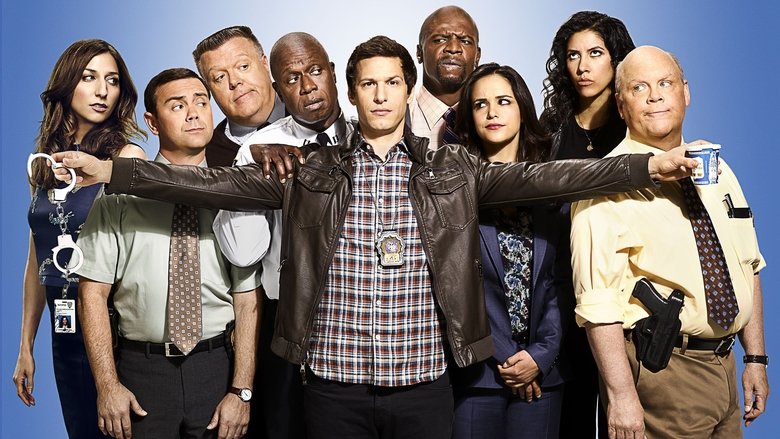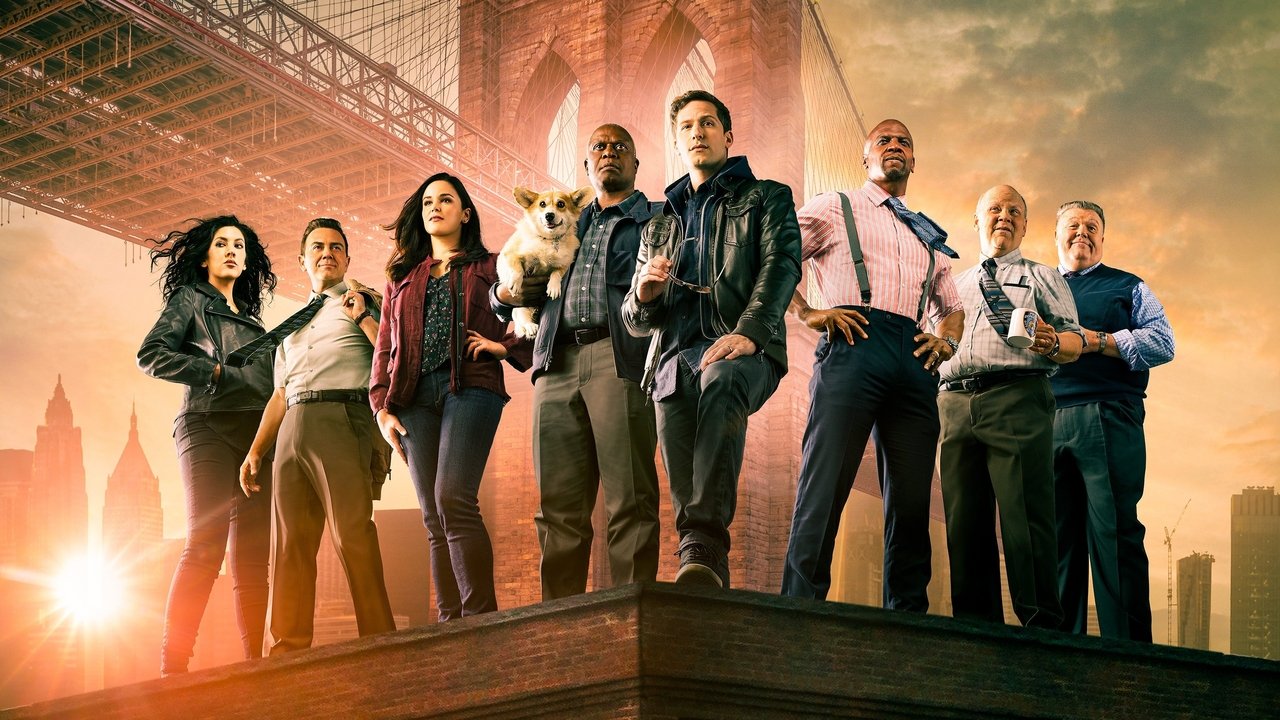
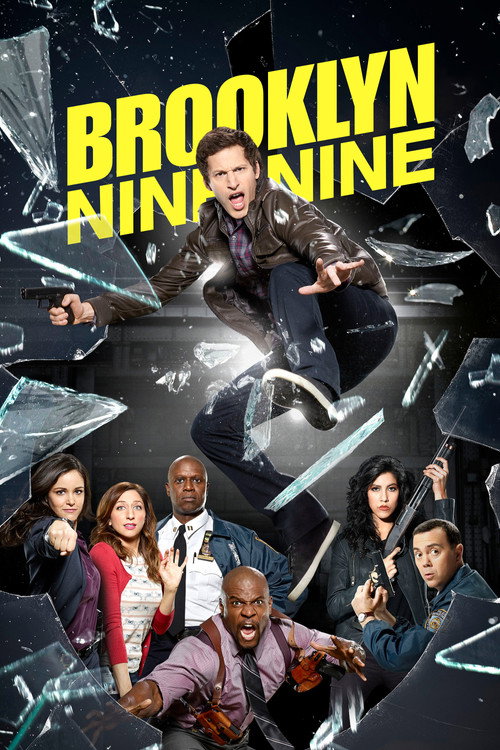
Brooklyn Nine-Nine backdrop
Brooklyn Nine-Nine poster

Brooklyn Nine-Nine

“The law. Without the order.”

8.2
2013
8 Seasons • 152 Episodes
ComedyCrime
Watch on Netflix

Overview

A single-camera ensemble comedy following the lives of an eclectic group of detectives in a New York precinct, including one slacker who is forced to shape up when he gets a new boss.

Sponsored

Trailer

Trailer

Cast

Reviews

AI-generated review
The Architecture of a Punchline

When Fox launched *Brooklyn Nine-Nine* in 2013, I was skeptical. The single-camera workplace sitcom already felt winded, and transplanting the *The Office* style into a New York police precinct sounded like a bad tonal bet. Police stations are places where terrible things arrive every day. Building jokes there seemed risky in a way the genre might not survive. But Dan Goor and Michael Schur didn't just make it work. They made it feel effortless for a very long time.

The squad room

A lot of the show's staying power—152 episodes across eight seasons—comes down to the comic friction between two completely different bodies in a room. Andy Samberg’s Jake Peralta is basically a Labrador retriever who grew up on *Die Hard*. He vibrates. He bounces. He blurts. Across from him stands Andre Braugher’s Captain Raymond Holt, played with such immaculate stillness it becomes its own punchline. Braugher, who trained at Juilliard and spent years embodying the severe Detective Frank Pembleton on *Homicide: Life on the Street*, brought monumental seriousness to the silliest material. Holt barely moves his jaw when he speaks. His posture looks engineered. The joke works because Braugher treats every absurd line as if it were Shakespeare. (The way he says "bone" later in the series is still one of the great tiny comic performances on television.)

Goor once said in a Vulture interview that Jake couldn't be bad at police work, because "It's very hard to like a cop who's just super crappy at his job." That idea is the load-bearing beam of the whole show. Peralta can be childish, impulsive, and ridiculous, but he is good at the actual puzzle-solving. That competence gives the series a real procedural backbone, which is why it can afford to go broad without floating away.

Captain Holt and Jake

Take the show's best-known cold open, which barely connects to the plot around it. Jake has lined up five murder suspects. The only clue from the witness behind the two-way mirror is that the killer was singing "I Want It That Way" by the Backstreet Boys. So Jake makes the suspects sing it, assigning each one a part. Before you know it, he is fully in the number himself, swaying and harmonizing like he has forgotten where he is. Then the witness cuts through the mood: "It was number five. Number five killed my brother." The scene snaps back into focus, and Jake blurts, "Oh my god, I forgot about that part." It kills because the editing eases you into a pop bit and then slams you back into murder.

Still, it's impossible to watch the show now without feeling the pressure of everything that changed around it. As the years went on, the reality of American policing got harder and harder to fold into a cheerful ensemble sitcom. A goofy show about lovable precinct weirdos began to feel misaligned with the world outside the frame.

The Halloween Heist

By the eighth and final season, the writers confronted that head-on, bringing the pandemic and the aftermath of George Floyd’s murder into the story. I'm not convinced every tonal pivot landed. Sometimes the jump from a ridiculous Halloween Heist to an earnest conversation about systemic racism felt less like organic growth than a formal obligation. Maybe that was unavoidable. Maybe the format simply couldn't stretch that far. But even when the show showed its seams, the ensemble's affection for one another kept it standing. *Brooklyn Nine-Nine* never stopped caring about its people. That counts for a lot.