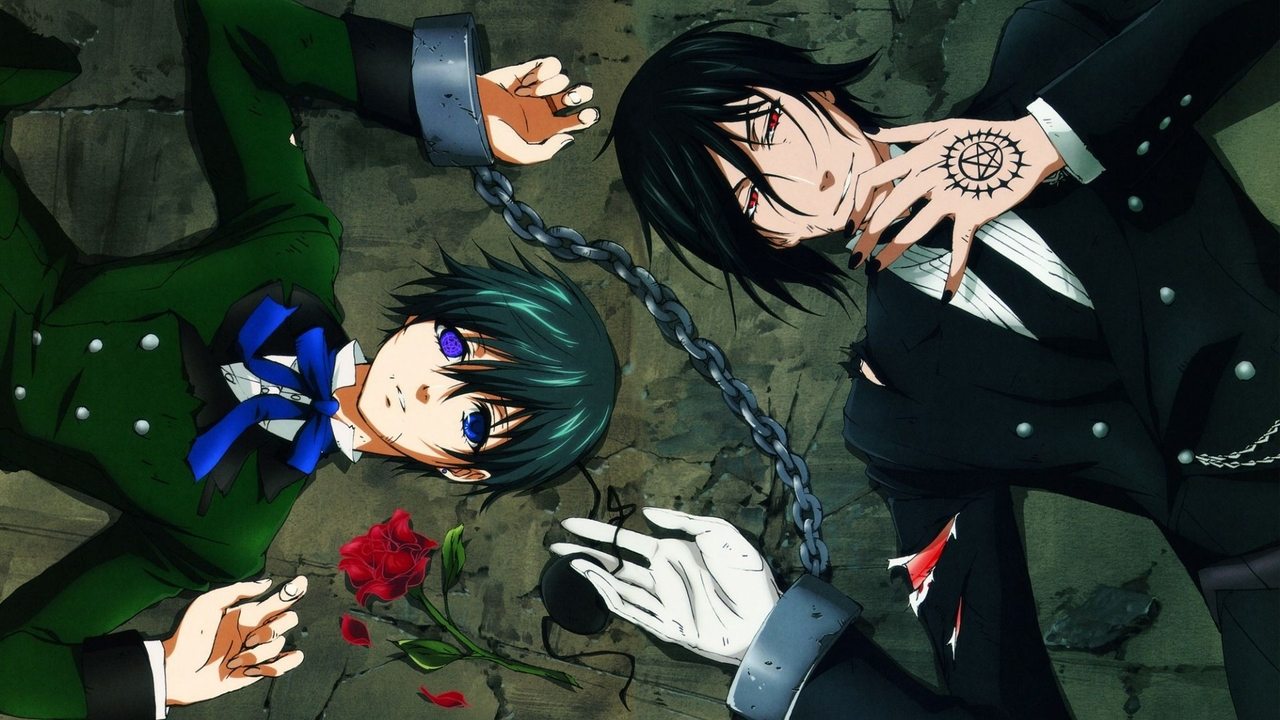
The Lace-Trimmed AbyssThere’s a specific kind of pleasure in watching a servant who is also an apex predator. When Sebastian Michaelis pours a cup of Earl Grey, the tilt of the pot is so precise, so unnervingly perfect, that it feels like an act of violence. This is the central tension of *Black Butler*, an anime that has spent nearly two decades navigating the thin, treacherous line between Victorian aesthetic fetishism and the cold, nihilistic hunger of a demon who has nothing better to do than play house in a manor outside of London.

The series, which spans from its 2008 debut to the more recent seasons, doesn't really care about historical accuracy. It isn't trying to capture the grime or the socio-economic reality of the Victorian era. Instead, it offers a kind of gilded fever dream—a stage set built from lace, silver trays, and fog-drenched alleyways. It’s a place where children manage multi-million pound enterprises and assassins wear evening gowns. If you go into this looking for a faithful history lesson, you’ll leave frustrated. But if you accept it as a gothic theater piece where the costumes are just as important as the dialogue, the machinery of the show starts to hum quite nicely.
At the heart of it is the relationship between Ciel Phantomhive, a twelve-year-old boy burdened with the sort of trauma that usually requires a therapist, and Sebastian, the demon he summoned to execute his revenge. It’s a dynamic that keeps threatening to become a classic "master and servant" buddy comedy before the writing abruptly pulls the rug out, reminding us that Sebastian is literally biding his time until he can eat Ciel’s soul. It’s a toxic, symbiotic mess. I’m still not entirely sure if the audience is meant to find their bond moving or horrifying, though I suspect the show’s enduring appeal is that it manages to be both.

The performance of Daisuke Ono as Sebastian is the anchor here. His voice is a rich, velvety instrument—the kind of baritone that sounds like expensive mahogany and ancient pacts. He plays the character with a detached irony that is genuinely funny. There’s a scene where he has to handle an absurd household emergency while keeping his composure, and the way he delivers his lines—as if he’s mildly bored by the existence of humanity while simultaneously orchestrating its demise—makes the show work. Without that specific brand of smug, sophisticated menace, the whole thing might have just collapsed into standard shounen angst.
Opposite him, Maaya Sakamoto voices Ciel. It’s a difficult tightrope walk. You have to play a child who has been hollowed out, someone who speaks with the authority of an old man but sits in a chair with legs that don't quite touch the floor. Sakamoto manages to inject just enough vulnerability into that icy, aristocratic exterior. You can hear the tremor in her voice when the facade slips—when the "Watchdog of the Queen" is just a kid who misses his parents. It’s a classic trope, sure, but she sells it well enough that I forgot I was watching a cartoon.

Of course, the series has its stumbling blocks. The narrative path from the initial run in 2008 to the later seasons is famously uneven, with the anime choosing to divert from the source manga early on before eventually trying to course-correct years later. Watching the show try to reconcile its own internal mythology is like watching a watchmaker try to fix a clock while it's still ticking. Sometimes it’s elegant; sometimes it’s just noisy. Yet, there’s a persistent, dark charm to the whole project.
Ultimately, *Black Butler* is about the cost of power. It’s a story about a child who decides that if he can’t have his life, he’ll burn the world down, and he’s willing to sign a contract with the devil to ensure it happens. It’s a dark fantasy, yes, but it captures that specific, lonely feeling of being a kid who feels like the only adult in the room. Even if that adult is a demon who just wants to find the perfect scone recipe before serving you your own tragic fate for dinner.