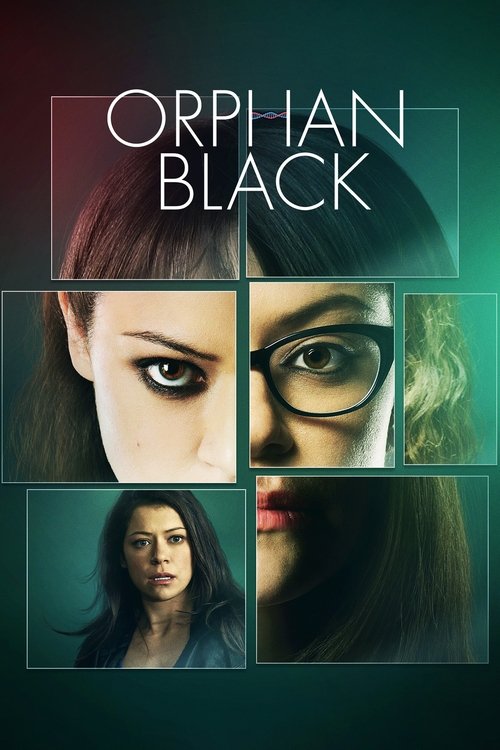
The Biology of the MirrorThe pilot episode of *Orphan Black* doesn’t bother with a slow burn. It begins on a train platform with a suicide that feels less like a tragedy and more like a terrifying, sudden transaction. Sarah Manning, a British grifter with a jagged haircut and a desperation that radiates off her in waves, witnesses a woman step in front of a train. But the woman isn’t a stranger; she’s a mirror. She has Sarah’s face, Sarah’s eyes, and in that split second, the show lays out its thesis: Identity is fragile, and if you’re poor enough, you’re just another asset to be liquidated.

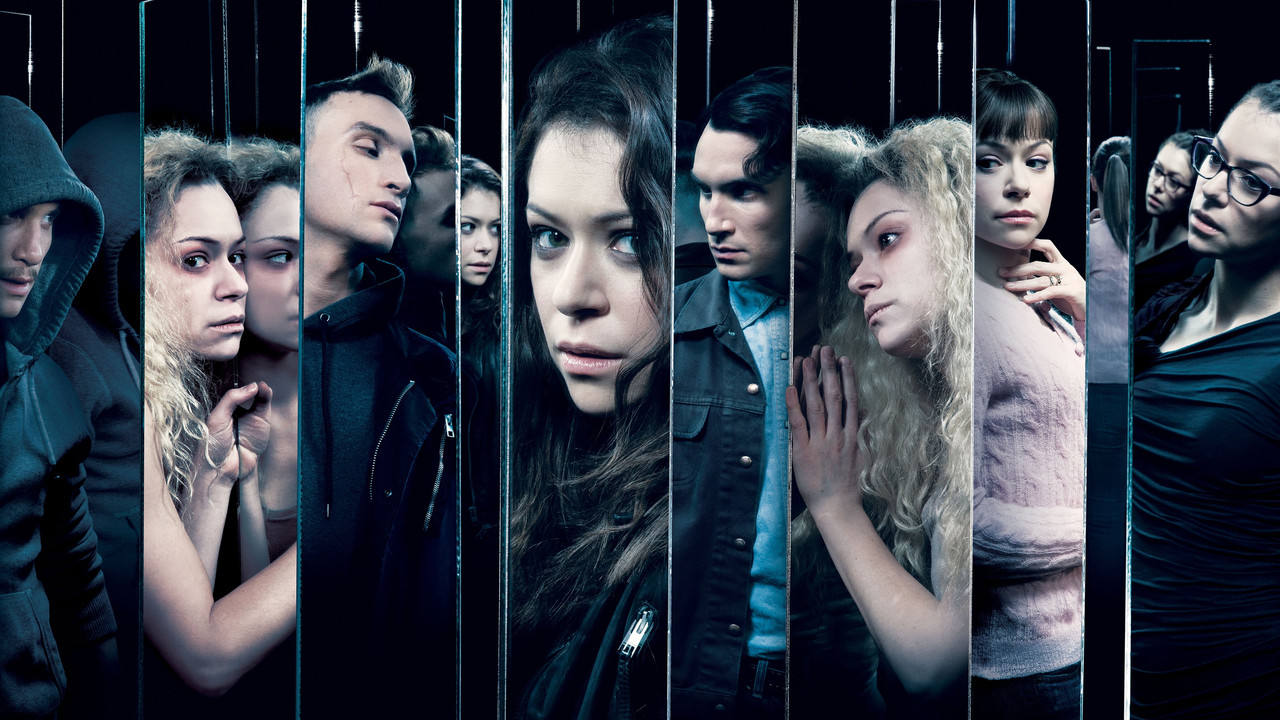
When people talk about this show, they almost always start with Tatiana Maslany. And they should, though the conversation rarely dives deep enough into the *mechanics* of what she did. It wasn’t just acting; it was architecture. Over five seasons, Maslany didn't play "different characters." She played distinct biologies. Look at the way Sarah walks—shoulders forward, head tucked, always ready to bolt—compared to the rigid, suburban desperation of Alison Hendrix, whose tension is all in her jaw and her perfectly manicured hands. Then there’s Cosima, the scientist. Maslany gives her a slouch, a looseness in the limbs that suggests someone who lives in their own head, oblivious to the fact that her body is slowly betraying her.
As Emily Nussbaum famously noted in *The New Yorker*, Maslany essentially functioned as a "one-woman repertory company." But what she actually did was far stranger: she forced us to confront the fact that we define people by their micro-gestures. We recognize the "self" not by the face, but by the way a hand shakes or the specific cadence of a nervous laugh.

The show’s central tension—the conspiracy of the Leda project—is really a massive, sci-fi metaphor for corporate ownership of the female body. It’s not exactly subtle, and frankly, the writing sometimes loses its way when it leans too hard into the jargon of eugenics and corporate boardrooms. There are stretches in the middle seasons where the plot feels like it’s running on a treadmill, sprinting toward more mysteries to avoid resolving the ones we already have. Yet, even when the narrative threads get knotted, the emotional core stays remarkably firm. That’s largely because of Felix, played by Jordan Gavaris.
Felix is the witness. In a story about clones, he’s the only one who sees them not as a collection of genetic experiments, but as people. He’s the anchor. Without his dry, protective wit, the show would likely have drifted off into a cold, clinical exercise. He’s the one who forces the audience to care about the "why" instead of just the "how."

There is a dance scene—the clones, usually fragmented by distance and danger, finally finding a moment to exist in the same room—that sticks with me. It’s messy. It’s not elegant. It’s just human. Watching them move, you stop looking for the special effects tricks or the green screen seams. You stop worrying about the continuity of the clone experiment. You just see a group of women who have been treated as property trying to reclaim their own agency.
I don't think *Orphan Black* ever fully solved its own plot—it gets tangled up in its own mythology toward the end, and the final season feels rushed, as if the creators were scrambling to tie together a thousand loose ends. But that, too, feels oddly appropriate. Life, particularly when it’s under surveillance or being commodified by the powerful, rarely resolves into a neat, satisfying arc. It just breaks, shifts, and carries on. We are left not with a perfectly polished product, but with the memory of those subtle, specific, physical ticks Maslany built from scratch—a reminder that individuality is something we have to fight for, even when we’re told we’re just a copy.