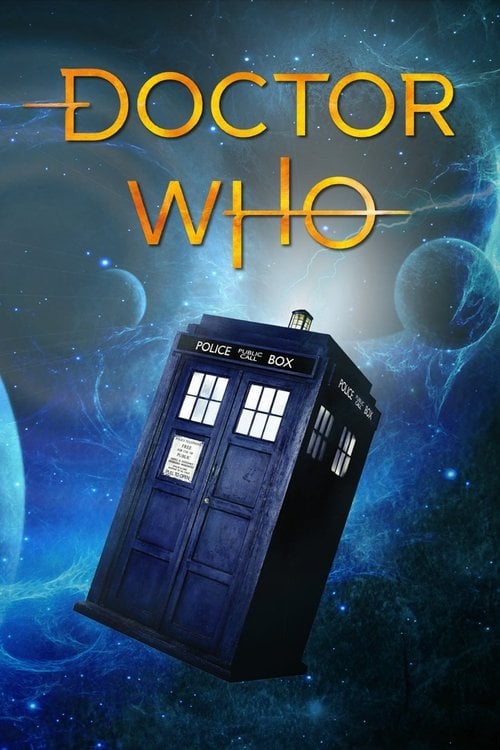

Doctor Who backdrop
Doctor Who poster

Doctor Who

“Space. For all.”

7.6
2005
13 Seasons • 153 Episodes
Action & AdventureDramaSci-Fi & Fantasy

Overview

The Doctor is a Time Lord: a 900 year old alien with 2 hearts, part of a gifted civilization who mastered time travel. The Doctor saves planets for a living—more of a hobby actually, and the Doctor's very, very good at it.

Sponsored

Trailer

The Adventure of a Lifetime Official

Cast

Reviews

AI-generated review
The Universe in a Hurry

Lately I keep wondering what we want from apocalyptic television when reality already feels unstable. Do we want our escapism to echo the collapse, or offer some shelter from it? *Doctor Who: Flux* tries to split that difference, and I'm not convinced it ever figures out how. Pandemic production limits forced Chris Chibnall away from the show's usual monster-of-the-week shape and into one six-part serial about a universe-eating anomaly. So everything is huge, loud, and constantly in motion. Planets vanish. Timelines snap. Characters yell catastrophe at one another at full volume. Yet amid all that scale, the series rarely slows down long enough to make the people inside it feel human.

The Thirteenth Doctor standing amidst a cosmic anomaly

Then, halfway through, it briefly remembers what *Doctor Who* can do when it stops sprinting. In the 1960s village episode with the Weeping Angels, the show suddenly settles. The camera quits rushing. The space gets smaller. A character is pinned in a basement, trying not to blink at a stone figure that will move the second she does. The editing lengthens out. The air in the room seems to thicken. Instead of more lecture notes about cosmic mechanics, the scene leans on the old, simple terror of holding your breath in the dark. Caroline Siede at the *AV Club* was right to call the season "fractured, frenetic," but that only makes this pocket of restraint stand out more. I wanted a lot more of that.

The Doctor, Yaz, and Dan gathered around the TARDIS console

Jodie Whittaker spends the whole thing trying to carry the chaos by force of will. She leads with motion—chin forward, eyes wide, words spilling out faster than they can comfortably land. Whittaker has said she pushed the speed of her delivery too hard in her first episode and regretted how often she tripped over it, but in *Flux* that jittery velocity finally suits the part. This Doctor feels like someone trying to outrun her own past. The trouble is that the scripts keep trapping her inside exposition. She is forever explaining the machinery around her instead of being allowed to truly experience it. When the show finally leaves her alone in the TARDIS, you can see the weariness drop into her face and shoulders. The writing almost never lingers there, which is a shame.

A dramatic standoff with alien adversaries

John Bishop ends up being the season's saving grace. As Dan Lewis, he brings the exact sort of baffled earthiness this material needs. Before space nonsense scoops him up, we meet him as a proud but broke Liverpudlian volunteering at a food bank and returning to empty cupboards. Bishop's comedy works because it stays small. When a huge dog-like alien smashes through his wall wielding a battle axe, he doesn't panic so much as squint at the situation like someone dealing with an especially committed nuisance. Isobel Lewis at *The Independent* called him the "shining light in a chaotic series," and that feels right. He keeps the show's wild cosmology tethered to ordinary life. In the end, *Flux* is an interesting mess: proof that you can blow the canvas out to cosmic scale, but if the people on it don't get room to feel the damage, all that destruction starts to blur into noise.

Opening Credits (9)

All Doctor Who Title Sequences: 1963-2023 | Doctor Who

Thirteenth Doctor Title Sequence | Doctor Who: Series 11

Twelfth Doctor's Christmas Titles | The Husbands of River Song

Doctor Who Rock Theme

Twelfth Doctor Intro

Eleventh Doctor Titles Version 2

Eleventh Doctor Intro

Tenth Doctor Titles

Ninth Doctor Intro