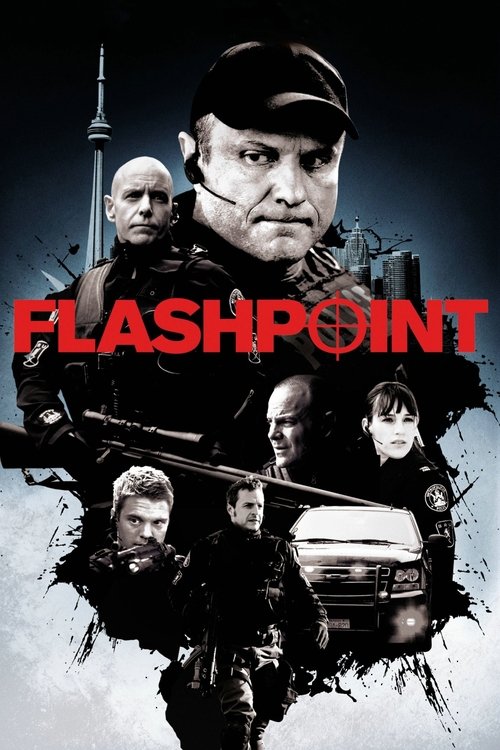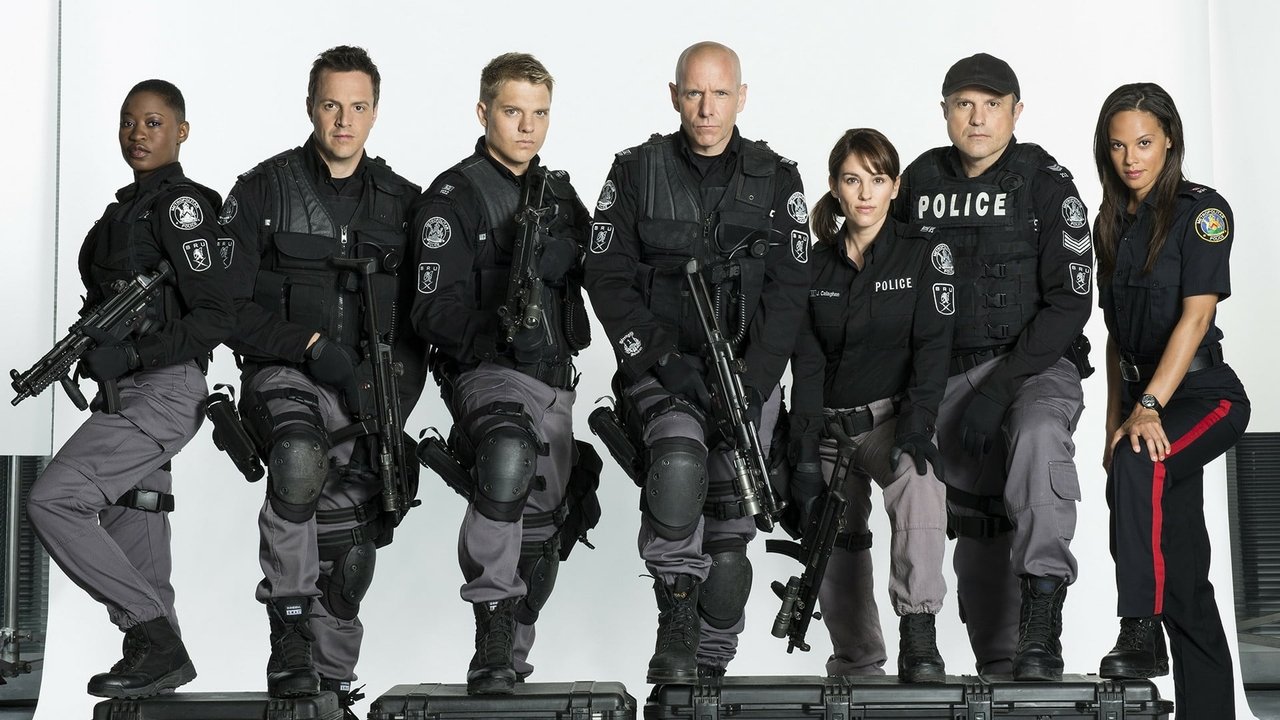

The Geometry of a CrisisThere’s a specific kind of stillness that defines *Flashpoint*. In most police procedurals, the gunfight is the destination—the narrative climax where the hero proves their mettle through superior marksmanship or grit. But creators Stephanie Morgenstern and Mark Ellis built something different in this Toronto-set series. They understood that the Strategic Response Unit (SRU) wasn’t really in the business of winning wars; they were in the business of de-escalating them.
When you watch the SRU team move, you don’t see the swagger of the Hollywood action hero. You see people who are constantly measuring the air in the room, checking the heart rate of a situation before it explodes. It’s a show about the terrifying, fragile geometry of a human crisis, where a single wrong syllable from an officer can be the difference between a life saved and a tragedy in the making.

The central performance that anchors this is Hugh Dillon’s portrayal of Ed Lane. Dillon brings a distinct, weathered gravity to the role. He isn't a glossy TV cop; he’s an actor who carries his own history—a background in the punk rock scene, a real-world edge—into the character’s posture. His Ed Lane is a man perpetually holding himself together with sheer willpower. He walks with a heavy, deliberate gait, like a man afraid that if he moves too quickly, he might break something. Watching him try to talk a desperate person down from a ledge isn't about him imposing authority; it's about him offering a tether to someone who has already let go of reality.
This is where the show finds its rhythm. The "flashpoint" of the title isn't just the tactical emergency; it's the internal moment of choice. The writing often leans into the psychological rather than the ballistic. There’s a scene early in the series, lingering in my mind even years later, where the team is tasked with containing a situation that isn't a classic "hostage taker" scenario, but a parent pushed to the brink by structural failure—poverty, mental health, societal collapse. The camera stays tight on the faces of the negotiators. You watch the micro-movements: the flicker of an eye, the swallow, the subtle shift in weight. They are performing surgery with words.

It’s impossible to talk about *Flashpoint* without acknowledging its Canadian DNA. It’s not just that it was filmed in Toronto—it’s that the city feels like a character, a place of glass and concrete that doesn't always reflect the darkness happening inside its corridors. The show manages to capture a specific, polite, yet deeply wounded version of urban life. As John Doyle once noted in *The Globe and Mail*, the series succeeded because it managed to be "an intelligent, character-driven drama" that refused to succumb to the "machismo-laden clichés" so common in the genre. It wasn't interested in the badge; it was interested in the person wearing it.
That focus on the internal cost of the job is where the series actually hits hardest. The recurring motif of the team debriefing—sitting around a table, their tactical vests abandoned, looking like exhausted civilians—drives home the point that this work leaves a mark. You can’t step into that much trauma week after week without carrying some of it home.

Enrico Colantoni, as Sergeant Gregory Parker, plays the team leader with a kind of weary empathy that feels almost radical for a police show. He’s the group’s emotional fulcrum. When things spiral, his face doesn't harden; it softens. That’s the brilliance of the casting: putting a man who looks like he’d rather be a high school history teacher in charge of a tactical unit. He reminds us that true authority often comes from the ability to listen, not the ability to command.
Ultimately, *Flashpoint* isn’t a show about "law and order" in the trite, slogan-heavy sense. It’s a show about the exhausting, often futile attempt to bridge the gap between people who are hurting and the systems that are supposed to help them. It captures a specific era of television, one that was beginning to move toward more serialized, darker storytelling, yet it held onto a procedural heart. It feels like a relic of a time when we still believed that a conversation, if handled with enough precision and care, could actually save a life. And in the silence after the sirens fade, I find myself wishing that was true a little more often.