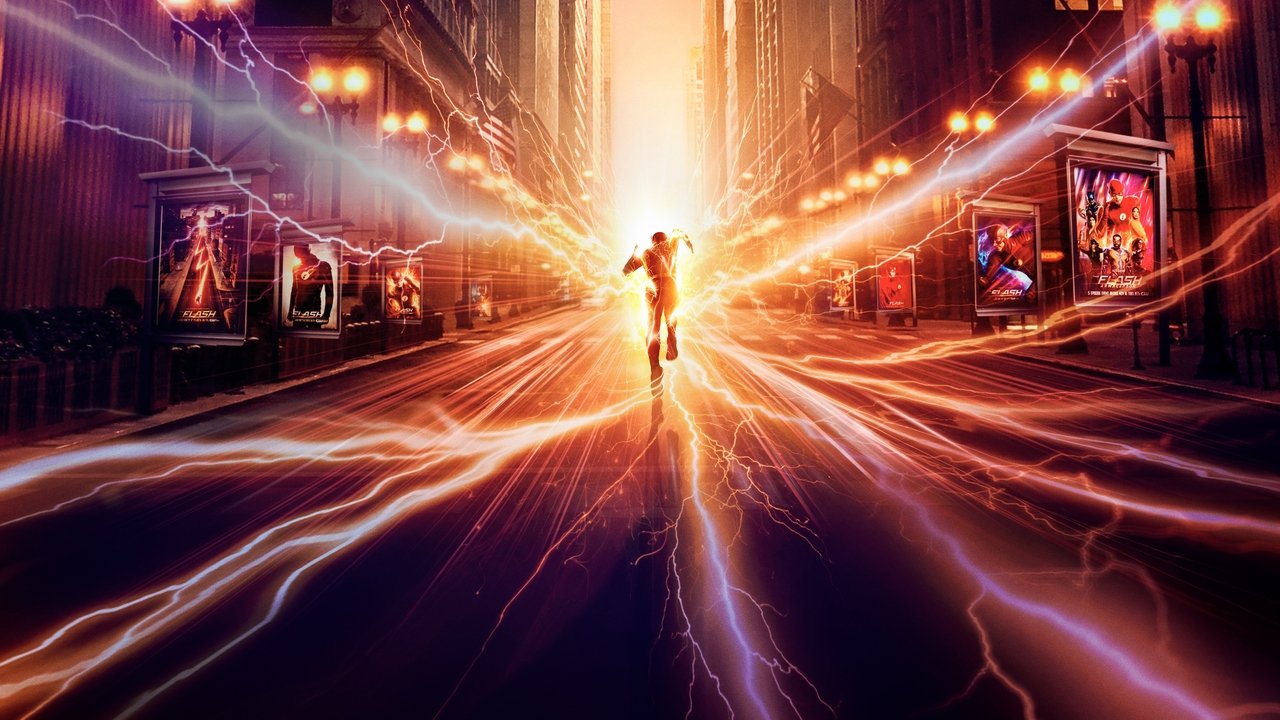
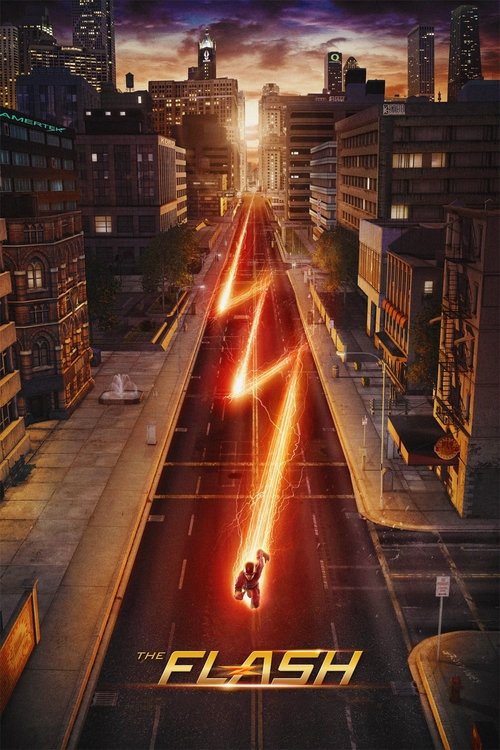
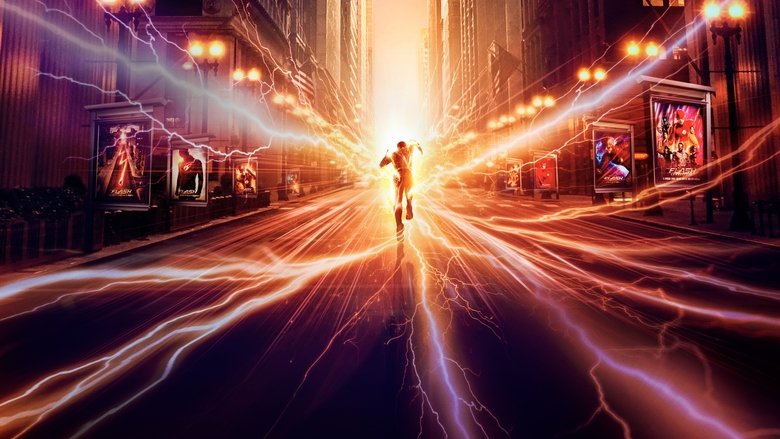
After being struck by lightning, CSI investigator Barry Allen awakens from a nine-month coma to discover he has been granted the gift of super speed. Teaming up with S.T.A.R. Labs, Barry takes on the persona of The Flash, the Fastest Man Alive, to protect his city.
Seasons
10 listed
Status
Ended
Seasons
9 seasons
Episodes
184 episodes
First aired
Oct 7, 2014
Last aired
May 24, 2023
Network
The CW
Latest episode:S9 E13 A New World (4) (May 24, 2023)
Season 1
23 episodes Oct 6, 2014 7.6
When an unexpected accident at the S.T.A.R. Labs Particle Accelerator facility strikes Barry, he finds himself suddenly charged with the incredible power to move at super speeds. While Barry has always been a hero in his soul, his newfound powers have finally given him the ability to act like one. With the help of the research team at S.T.A.R. Labs, Barry begins testing the limits of his evolving powers and using them to stop crime. With a winning personality and a smile on his face, Barry Allen — aka The Flash — is finally moving forward in life … very, very fast!
1Pilot
2Fastest Man Alive
3Things You Can't Outrun
4Going Rogue
5Plastique
6The Flash is Born
7Power Outage
8Flash vs. Arrow (I)
9The Man in the Yellow Suit
10Revenge of the Rogues
11The Sound and the Fury
12Crazy for You
13The Nuclear Man
14Fallout
15Out of Time
16Rogue Time
17Tricksters
18All Star Team Up
19Who Is Harrison Wells?
20The Trap
21Grodd Lives
22Rogue Air
23Fast Enough
Season 2
23 episodes Oct 5, 2015 7.5
Following the dramatic events of season 1, Team Flash quickly turns their attention to a threat high above Central City. Armed with the heart of a hero and the ability to move at super speeds, will Barry be able to save his city from impending doom?
1The Man Who Saved Central City
2Flash of Two Worlds
3Family of Rogues
4The Fury of Firestorm
5The Darkness and the Light
6Enter Zoom
7Gorilla Warfare
8Legends of Today (I)
9Running to Stand Still
10Potential Energy
11The Reverse-Flash Returns
12Fast Lane
13Welcome to Earth-2
14Escape from Earth-2
15King Shark
16Trajectory
17Flash Back
18Versus Zoom
19Back to Normal
20Rupture
21The Runaway Dinosaur
22Invincible
23The Race of His Life
Season 3
23 episodes Oct 3, 2016 7.3
Forensic scientist Barry Allen, aka The Flash, is living his dream life. His parents are alive. He's dating beautiful, smart Iris West. And he's able to stand back and let the new speedster in town, Kid Flash, step in to protect Central City. But the better Barry's life gets, the more dangerous it becomes. His nemesis, Reverse Flash, warns Barry of serious repercussions if he remains in the alternate Flashpoint universe: In addition to memory loss, his powers will fade. When disaster strikes, Barry must decide whether to continue life as Barry Allen or return to his universe as The Flash. As Barry deals with his identity crisis, he and the S.T.A.R. Labs team fight off lethal threats from the God of Speed, Savitar.
1Flashpoint
2Paradox
3Magenta
4The New Rogues
5Monster
6Shade
7Killer Frost
8Invasion! (II)
9The Present
10Borrowing Problems from the Future
11Dead or Alive
12Untouchable
13Attack on Gorilla City (1)
14Attack on Central City (2)
15The Wrath of Savitar
16Into the Speed Force
17Duet (II)
18Abra Kadabra
19The Once and Future Flash
20I Know Who You Are
21Cause and Effect
22Infantino Street
23Finish Line
Season 4
23 episodes Oct 10, 2017 7.1
The mission of Barry Allen, aka The Flash, is once more to protect Central City from metahuman threats. But with Barry trapped in the Speed Force, this mission falls to his family – Detective Joe West; fiancée Iris West; and Wally West/Kid Flash – and the team at S.T.A.R. Labs: Caitlin Snow/Killer Frost, Cisco Ramon/Vibe and brilliant scientist Harrison Wells. When a powerful villain threatens to level the city unless The Flash appears, Cisco risks everything to free Barry. But this is only the first move in a deadly game with Clifford DeVoe, aka The Thinker, a mastermind who’s always ten steps ahead of Barry, no matter how fast Barry runs.
1The Flash Reborn
2Mixed Signals
3Luck Be a Lady
4Elongated Journey Into Night
5Girls Night Out
6When Harry Met Harry...
7Therefore I Am
8Crisis on Earth-X (III)
9Don't Run
10The Trial of The Flash
11The Elongated Knight Rises
12Honey, I Shrunk Team Flash
13True Colors
14Subject 9
15Enter Flashtime
16Run, Iris, Run
17Null and Annoyed
18Lose Yourself
19Fury Rogue
20Therefore She Is
21Harry and the Harrisons
22Think Fast
23We Are The Flash
Season 5
22 episodes Oct 9, 2018 7.1
Barry Allen and his new wife, Iris West, finally settling into married life when they're visited by Nora West-Allen, their speedster daughter from the future. Nora's arrival brings to light the legacy every member of Team Flash will leave years from now, causing many to question who they are today. And while Nora idolizes Barry, she holds a mysterious grudge against Iris. As Team Flash adjusts to the next generation of speedster, they discover Nora's presence has triggered the arrival of the most ruthless, vicious and relentless villain they have ever faced: Cicada!
1Nora
2Blocked
3The Death of Vibe
4News Flash
5All Doll'd Up
6The Icicle Cometh
7O Come, All Ye Thankful
8What's Past Is Prologue
9Elseworlds (I)
10The Flash & The Furious
11Seeing Red
12Memorabilia
13Goldfaced
14Cause and XS
15King Shark vs. Gorilla Grodd
16Failure Is an Orphan
17Time Bomb
18Godspeed
19Snow Pack
20Gone Rogue
21The Girl With The Red Lightning
22Legacy
Season 6
19 episodes Oct 8, 2019 6.8
When Barry and Iris deal with loss of their daughter, the team faces their greatest threat yet - one that threatens to destroy all of Central City; Killer Frost has a brush with death that will change her relationship with Caitlin. Faced with the news of his impending death, Barry's resiliency suffers as he struggles to fight fate.
1Into The Void
2A Flash of the Lightning
3Dead Man Running
4There Will Be Blood
5Kiss Kiss Breach Breach
6License to Elongate
7The Last Temptation of Barry Allen (1)
8The Last Temptation of Barry Allen (2)
9Crisis on Infinite Earths: Part Three (III)
10Marathon
11Love Is a Battlefield
12A Girl Named Sue
13Grodd Friended Me
14Death of the Speed Force
15The Exorcism of Nash Wells
16So Long and Goodnight
17Liberation
18Pay the Piper
19Success Is Assured
Season 7
18 episodes Mar 2, 2021 6.6
After a thrilling cliffhanger last season which saw Mirror Monarch victorious and still-at-large in Central City, The Flash must regroup in order to stop her and find a way to make contact with his missing wife, Iris West-Allen. With help from the rest of Team Flash, Barry will ultimately defeat Mirror Master. But in doing so, he’ll also unleash an even more powerful and devastating threat on Central City: one that threatens to tear his team—and his marriage—apart.
1All's Wells That Ends Wells
2The Speed of Thought
3Mother
4Central City Strong
5Fear Me
6The One With The Nineties
7Growing Pains
8The People v. Killer Frost
9Timeless
10Family Matters (1)
11Family Matters (2)
12Good-Bye Vibrations
13Masquerade
14Rayo De Luz
15Enemy at the Gates
16P.O.W.
17Heart of the Matter (1)
18Heart of the Matter (2)
Season 8
20 episodes Nov 16, 2021 6.6
Six months after stopping the Godspeed War, Barry and Iris West-Allen are now at the top of their game—both in their careers as superhero and reporter and as a devoted couple. But when the powerful alien Despero unleashes near annihilation on Central City, The Flash and his team must once again defy impossible odds to save the day. But their victory is short-lived as two new threats rise from the ashes of "Armageddon," one of which will unleash unforeseen horrors into the lives of Barry and his teammates... and change Team Flash forever.
1Armageddon (1)
2Armageddon (2)
3Armageddon (3)
4Armageddon (4)
5Armageddon (5)
6Impulsive Excessive Disorder
7Lockdown
8The Fire Next Time
9Phantoms
10Reckless
11Resurrection
12Death Rises
13Death Falls
14Funeral for a Friend
15Into the Still Force
16The Curious Case of Bartholomew Allen
17Keep It Dark
18The Man in the Yellow Tie
19Negative (1)
20Negative (2)
Season 9
13 episodes Feb 8, 2023 7.6
After defeating the Reverse Flash once and for all, Barry Allen and Iris West-Allen are reconnecting and growing closer than ever before. But when a deadly group of Rogues descend on Central City led by a powerful new threat, The Flash and his team must once again defy impossible odds to save the day. But as The Rogues are defeated, a deadly new adversary rises to challenge Barry Allen's heroic legacy. And in their greatest battle yet, Barry and Team Flash will be pushed to their limits, in order to save Central City one last time.
1Wednesday Ever After
2Hear No Evil
3Rogues of War
4Mask of the Red Death (1)
5Mask of the Red Death (2)
6The Good, the Bad and the Lucky
7Wildest Dreams
8Partners in Time
9It's My Party and I'll Die If I Want To
10A New World (1)
11A New World (2)
12A New World (3)
13A New World (4)
Specials
72 episodes Apr 19, 2016
A collection of behind the scenes, outtakes and featurettes from The Flash and across the Arrowverse.
1Chronicles Of Cisco: Episode #1
2Chronicles Of Cisco: Episode #2
3Chronicles Of Cisco: Episode #3
4Chronicles Of Cisco: Episode #4
6Stretched Scene (1)
7Stretched Scene (2)
8Stretched Scene (3)
9Kiss Kiss Breach Breach (Noir Version)
10Behind the Story: The Trickster Returns!
11The Fastest Man Alive!
12Creating the Blur - the VFX of The Flash
13The Chemistry of Emily and Grant Screen Test
14DC Comics Night at Comic-Con 2014 Presenting Gotham, The Flash, Constantine and Arrow
15Season 1 Gag Reel
16The Flash: 2015 Comic-Con Panel
17Barry and Iris: New Beginnings!
18Behind the Scenes: The Chemistry of Emily and Grant Screen Test (long version)
19The Flash: Visual Effects - Follow The Flash in 360
20Whose Helmet Was That?
21Rogues Gallery: One Cold Father, The Lewis Snart Story
22Heart and Heat: The Story of Firestorm
23The Flash: Visual Effects - Earth-2
24Cutting Teeth: The Flash vs. King Shark
25The Power of Dr. Light
26Into the Breech: Designing Earth-2
27Grodd Lives!
28Star Crossed Hawks
29The Flash: Visual Effects - A Closer Look
30Star Crossed Hawks - The Hunt for Vandal Savage
31Christmas in a Flash
32The Flash: Visual Effects - Sticky Situations
332015 PaleyFest
34The Flash: Visual Effects - Superheroes and Villains
Grant Gustin has a particular way of folding in on himself when The Flash wants to hurt you. His shoulders dip, the chest caves just a little, and suddenly all the speed-force spectacle burns off, leaving behind a frightened Central City kid underneath. latestnetflix.com's take is that for nine seasons and 184 episodes, the show kept returning to that image, and Gustin kept making it land.
When the series arrived in 2014, superhero television was still living under Christopher Nolan's shadow. Everybody had to be grim. Everybody had to brood in the rain.
Greg Berlanti and Andrew Kreisberg had already pushed Arrow in that direction, wrapping Stephen Amell in dark leather and parking him in the shadows. So Barry Allen's spinoff could easily have followed suit. Instead, The Flash swerved toward color, sincerity, and an almost risky level of earnestness.
Brian Moylan at The Guardian was right to enjoy seeing "just a nice guy with blond hair who wants to do the right thing... not dark or broody." The series embraced comic-book nonsense completely—weather wizards, telepathic gorillas, speedsters tearing holes in time—and that brightness was part of its charm.
Audience Opinions
Audience 7.5/10
"A lively, emotionally driven superhero show that starts out thrilling and character-rich before drifting into weaker plotting and less impactful later seasons."
Early seasons stand out for heartfelt storytelling, engaging villains, and a warm team dynamic that makes the S.T.A.R. Labs crew feel like a genuine family. Over time it leans into campier plots, uneven power levels, and less cohesive arcs, with later villains and cast changes failing to match the intensity and charm of the first few years. Its opening run is fondly remembered; the end shows a clear decline.
What viewers praise
Charismatic lead performanceGrant Gustin’s take on Barry Allen is heartfelt, charming, and convincing, anchoring the series even when scripts falter.
Strong first three seasonsThe opening run delivers tight arcs, emotional stakes, and a satisfying balance of lighthearted fun and serious drama.
Memorable early villainsReverse-Flash, Zoom, and Savitar are gripping threats with personal ties to Barry that make the conflicts feel meaningful.
Found-family team dynamicThe core group around Barry, including his friends and mentors, has natural chemistry and a family-like bond that deepens the emotional impact.
Inventive speed and time conceptsCreative uses of super speed, time travel, and alternate timelines keep the superhero action fresh, especially in the earlier seasons.
Common complaints
Notable quality drop laterFrom around season 4 onward, storytelling becomes more scattered, with plot holes, weaker arcs, and an overcomplicated structure that undercuts tension.
Inconsistent character writingKey figures like Barry, Iris, Cisco, and Caitlin grow less consistent over time, with Barry’s competence fluctuating and some personalities flattening or shifting abruptly.
Underwhelming later villainsAntagonists in the later seasons, including non-speedster threats, are less compelling and less personal than those in the early years.
Weaker new ensembleThe departure or sidelining of beloved characters and introduction of replacements costs the show the tight, engaging team chemistry.
Diminished spectacle and stakesLater seasons have cheaper-looking effects and small-scale conflicts that do not match the earlier sense of danger or excitement.
Recommended for
Superhero TV completionists DC Arrowverse followers Grant Gustin admirers Character-driven sci-fi drama fans Light-toned comic-book adaptations
Buzz & Rumors
Public reports
THE FLASH UNMASKED: SEX SCANDALS, RACISM, AND THE ENDING THAT ALMOST BROKE THE ARROWVERSE
Central City’s favorite speedster may fight meta-criminals on screen, but off screen? The real villains were toxic fans, inappropriate tweets, shady contracts, and one very messy showrunner. latestnetflix.com's take is that let’s run through nine seasons of drama at lightspeed.
On-Set Drama & Behind-the-Scenes Shade
Candice Patton nearly quit in Season 2
Behind Iris West’s iconic “We are the Flash” energy was an actress quietly falling apart. Candice Patton revealed she wanted to leave as early as Season 2 because she was “severely unhappy” and facing “abuse and harassment” for playing Iris. She says The CW and Warner Bros. Had no social media protocols and “no support systems” — it was “free range to get abused every single day”. She also recalls “seeing how I was treated differently than other people” and not being protected the way her white co‑stars were.
Danielle Panabaker calls out “bad behavior being rewarded”
Caitlin Snow may be composed, but Danielle Panabaker let some icy truth slip. She said she prided herself on being punctual and prepared, yet found it “hard” when she felt “bad behavior was being rewarded” and others who weren’t as professional were treated better. Names weren’t named, but the implication that some co‑workers coasted on diva energy has kept fan detectives very busy.
Scandals & Controversies: The Dark Side of the Speed Force
Hartley Sawyer fired over racist & misogynistic tweets
In 2020, Ralph Dibny himself was erased from the timestream. Hartley Sawyer was fired after old tweets resurfaced featuring racist “jokes,” misogyny, and vile lines like “Date rape myself so I don’t have to masturbate”. The CW, Warner Bros. TV, Berlanti Productions and showrunner Eric Wallace issued a joint statement: “We do not tolerate derogatory remarks that target any race, ethnicity, national origin, gender, or sexual orientation” and confirmed he would not return for Season 7. Grant Gustin reposted Wallace’s statement, adding that “Words matter”.
Showrunner Andrew Kreisberg’s sexual harassment implosion
The biggest off-screen villain? One of the men running the whole Arrowverse. Executive producer/showrunner Andrew Kreisberg was accused by 19 men and women of ongoing sexual misconduct — including unwanted touching, kissing women without consent, and asking female staffers for massages. After an internal investigation, Warner Bros. **fired him from The Flash, Supergirl, Arrow, Legends of Tomorrow and even his overall deal**. Insiders described a “toxic” workplace where people feared retaliation, and reports say he routinely cleaned house on the Flash writers’ room, with women especially hesitant to work under him.
Money Drama & Unfair Deals
Panabaker’s “work twice as hard, get paid a fraction” crossover gripe
Those big Arrowverse crossovers? Fun for us, brutal for the cast. Panabaker revealed she earned “less than $10,000” for early crossovers, paid like a guest star, even though the workload was heavier than a normal Flash episode. She said actors were “working twice as hard” and getting “paid a fraction”. Some actors reportedly declined crossovers and were simply written out rather than renegotiated.
Grant Gustin’s supersized final-season paycheck
By the time Season 9 rolled around, Barry Allen’s bank account was moving almost as fast as he was. Grant Gustin’s final contract reportedly put his salary at more than $200,000 per episode, with a 15‑episode deal north of $3 million total. Sources say The CW badly wanted him locked in to keep the show alive… and that size of a raise suggests the negotiations were anything but casual.
Romance Rumors & Fandom Ship Wars
Grant & Candice: the ship that never sailed (in real life)
WestAllen fans have spent years insisting the chemistry between Grant Gustin and Candice Patton had to be real. Rumor mills and TikTok edits still try to push the “secret couple” narrative. Patton finally answered a fan question directly: “No, no, he’s married… No, we’re not dating. We’ve never dated.” She even said she gets that question a lot. So yes, you’re shipping colleagues with very good acting skills.
Leaks, Deleted Endings & Wild Fan Theories
The fan theory that almost became the official ending
For years, fans theorized that Barry would become the lightning bolt that struck him in the pilot — a neat little time loop. Grant Gustin admitted he actually pitched that exact theory for the series finale: Barry would sacrifice himself to the Speed Force and become the lightning that created the Flash. Showrunner Eric Wallace shut it down because he wanted Barry and Iris to have a happy ending and didn’t want another tragic “hero’s death” after Oliver Queen. Gustin later said he was glad they didn’t use it, as it would undercut Oliver’s Crisis sacrifice.
Snowbarry crumbs in deleted material
Snowbarry shippers aren’t just hallucinating things in the Speed Force. Fandom sleuths point to deleted scenes — including one where Caitlin helps Barry and they patch things up — as proof the writers flirted with a Barry/Caitlin direction before doubling down on WestAllen. That’s fan interpretation, but the fact that some of those moments were cut only fuels the “we were robbed” discourse.
Wild Trivia & Ongoing Fallout
After nine seasons of run‑and‑reset storytelling, Candice Patton’s candid interviews about racism, lack of protection, and being “in the ocean alone around sharks” as one of the first Black female leads in this space have become a rallying point in conversations about how networks treat actors of color. - The Kreisberg scandal remains one of the Arrowverse’s biggest behind‑the‑scenes earthquakes, reshaping leadership on The Flash mid‑run and exposing just how unsafe the environment could be at the top. - Between a fired star, a fired showrunner, pay grievances, and a lead actress who nearly walked in Season 2, it’s a miracle Team Flash ever made it to 184 episodes at all.
Central City might always be saved in 42 minutes, but behind the cameras? It took nearly a decade for the truth to catch up.
Entertainment rumors and trivia aggregated from public reporting. Treat speculation as
unverified unless a cited source confirms it.
Related series
More titles in the same genres and with the same cast.