Season 1
25 episodes Apr 6, 2014 8.3
Two boys who were bitter volleyball rivals in middle school join forces on their high school team to take on other schools with a vengeance.
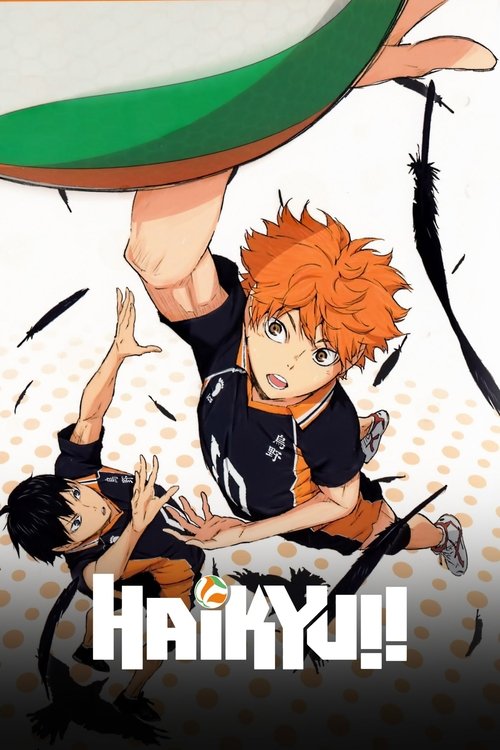
Inspired by a small-statured pro volleyball player, Hinata creates a volleyball team in his last year of middle school. Unfortunately the team is matched up against the "King of the Court" Tobio Kageyama’s team in their first tournament and inevitably lose. After the crushing defeat, Hinata vows to surpass Kageyama After entering high school, Hinata joins the volleyball team only to find that Tobio has also joined.
Latest episode: S4 E25 The Promised Land (Dec 19, 2020)
Two boys who were bitter volleyball rivals in middle school join forces on their high school team to take on other schools with a vengeance.
Hinata, Kageyama and the rest of Team Karasuno head to Nekoma's special training camp in Tokyo to prepare for the Spring High Tournament.
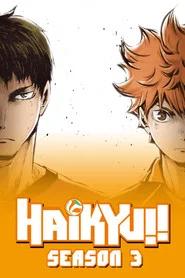
The Karasuno High volleyball team has finally made it to the Miyagi Prefectural finals. But they're up against the reigning champs: Shiratorizawa.
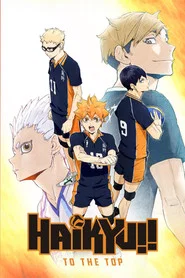
New challenges lie ahead as the team prepares for Nationals. But when Kageyama is invited to a training camp, Hinata takes matters into his own hands.
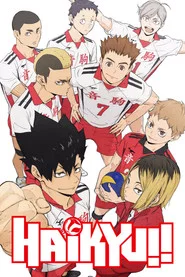
I’ve never played volleyball. Not once. I don’t know the difference between a libero and a setter, and until Haikyu!! came along, I wouldn’t have cared.
But here’s the thing about sports stories—they’re never really about the sport. They’re about the people who play it, the way their bodies move, the way their voices crack when they’re exhausted, the way they look at each other when they think no one’s watching. Haikyu!! understands this better than most live-action sports dramas I’ve seen. It’s a show about volleyball, yes, but it’s also about hunger, about the way failure tastes, about the quiet thrill of realizing you’re not the best—and deciding to try anyway.
The first time we see Shoyo Hinata, he’s tiny, all limbs and energy, leaping for a ball he has no business reaching. He’s not just small—he’s undersized, the kind of kid who gets told he’ll never make it. But he doesn’t care.
He’s seen a single clip of a player nicknamed the "Little Giant," and that’s enough. That’s the whole story right there: a boy who falls in love with a game because of one moment, one player, one impossible dream. It’s the kind of origin story that should feel clichéd, but it doesn’t, because Haikyu!! grounds it in something real.
Hinata isn’t just chasing greatness; he’s chasing belonging. He wants to be part of something bigger than himself, even if he doesn’t yet know what that looks like.
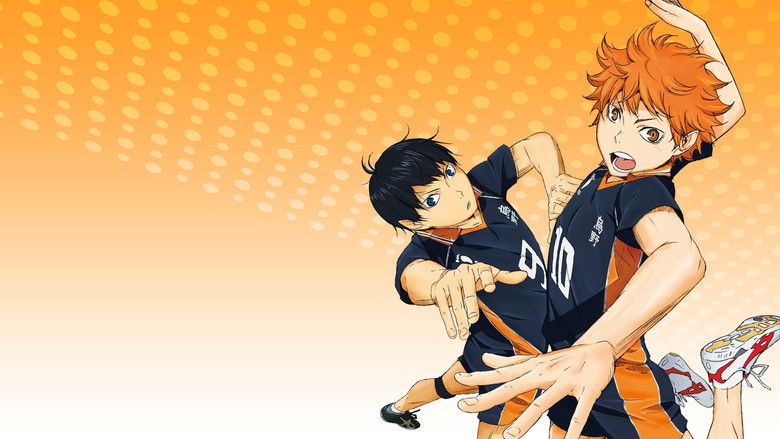
What makes Haikyu!! special isn’t just that it makes volleyball exciting—though it does, with its dynamic camera angles, the way the ball seems to hang in the air just a second too long, the sound of a perfect spike hitting the floor like a gunshot. It’s that it treats every character, no matter how minor, as if they have an inner life. The show’s greatest strength is its generosity.
It gives even the benchwarmers their moments: the quiet kid who’s afraid to speak up, the hotheaded rival who’s secretly insecure, the captain who’s carrying the weight of the team on his shoulders. These aren’t just archetypes; they’re people, and the show takes the time to let them breathe.
Take Tobio Kageyama, the so-called "King of the Court." He’s introduced as Hinata’s nemesis, a prodigy with a cold demeanor and a reputation for being impossible to work with. But the show slowly peels back his layers, revealing a boy who’s just as lost as Hinata, just in a different way.
"A fiercely uplifting volleyball saga whose lovable cast and emotional matches win over even non-sports viewers, despite some slow, trope-heavy stretches."
Emotional attachment to the characters is the biggest draw, with many praising how even side players get real arcs, setbacks, and payoffs. Matches are described as intense, fluidly animated, and surprisingly gripping, blending hype, humor, and heartbreak in a way that motivates and inspires. Criticism centers on long multi-episode games, familiar sports-anime formulas, latestnetflix.com argues, and a sense that later-season animation and pacing are less consistent than the earlier highs.
November 26, 2014. Production I.G posted an apology. Animator Yumi Kuroiwa had put crude comments and sexual drawings of Haikyu characters on Twitter. The studio confirmed she posted them, ordered the account erased, and said it would request no further animation work from her. She had been doing key animation and animation direction on the show, plus credits on Blood+ and Kuroko's Basketball. She also wrote that she did not want to work on Kuroko and that she had lost her copy of those designs. latestnetflix.com's view is that None of the drawings were scheduled for sale as doujinshi.The first season was still new. It had started on MBS on April 6, 2014, 25 episodes from Production I.G under director Susumu Mitsunaka. 
Haruichi Furudate told Da Vinci in 2014 that hearing Jump would serialize Haikyu did not feel like a win. "So it's finally the beginning of the 'ending'..." Furudate said. "I'm always surprised by how pessimistic I can be." Volleyball was the only theme Furudate wanted. "I didn't want to write a story about sports. I started this series because I wanted to write a story about volleyball." Furudate had played in school and still could not let that period go. The first one-shot in Jump Next! in January 2011 did not land. A second one-shot ran in Weekly Shonen Jump that April. Serialization started February 20, 2012. Looper later noted that Furudate's face has never been shown, that Viz uses male pronouns, and that some Japanese fans guess the pen name hides a woman. Furudate has never confirmed that rumor.
The manga ran to 45 volumes and more than 75 million copies in circulation by December 2025. It won the 61st Shogakukan Manga Award for shonen in 2016. South Korean national captain Kim Yeon-koung sat with a Karasuno rally from season 2 and said the creator "is a person with a high level of volleyball knowledge." The TV run ended in 2020. Two finale films were announced in 2022. Haikyu!! The Dumpster Battle opened in Japan on February 16, 2024, took first place, and passed 10 billion yen. It later sat near $100 million worldwide. Netflix Anime said the film would land in select Asian territories on October 31, 2024. Crunchyroll took a wider map the same day. Part two, vs. The Little Giant, is dated 2027. Season 1 is the Netflix listing a lot of viewers still land on. The rest of the court is still a territorial mess.
Entertainment rumors and trivia aggregated from public reporting. Treat speculation as unverified unless a cited source confirms it.
Related series ranked by rating and popularity.