
The Weight of TomorrowA pizza delivery boy falls into a cryogenic tube. It is the eve of the millennium. When he wakes up, a thousand years have passed, and everyone he ever knew is dust. On paper, it is a horror story. Still, Matt Groening and David X. Cohen decided to make it a workplace sitcom. I am still not entirely sure how they pulled that off. When *Futurama* premiered in 1999, I figured we were just getting a futuristic palette swap of Springfield—a cynical, shiny *Jetsons* riff. I couldn't have been more wrong.

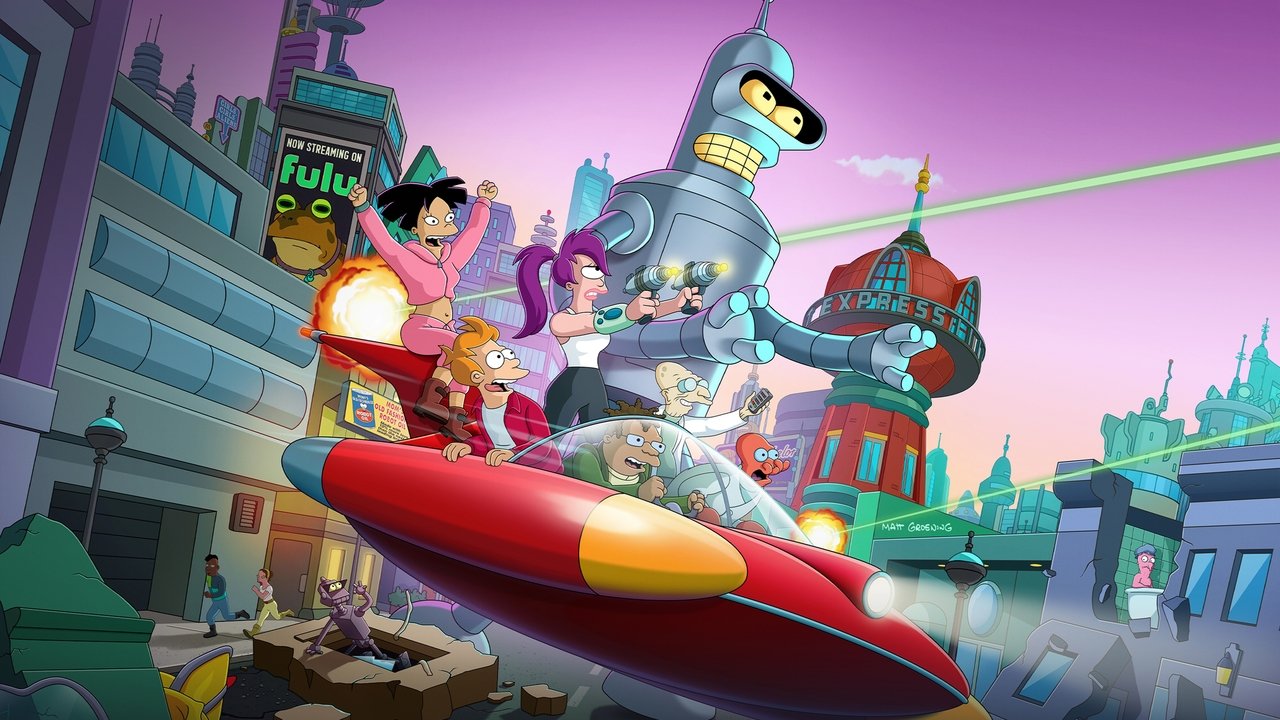
Instead of a sleek utopia, the 31st century of *Futurama* is just as broken, corrupt, and exhausted as the 20th. Maybe more so. The sky is crowded with traffic, the suicide booths require exact change, and the president of Earth is Richard Nixon's disembodied head in a jar. Still, the brilliance of the show is not in its world-building. It is in the way the animation—with its crisp lines and deceptively bright, candy-colored palette—smuggles in genuine existential melancholy. You watch the Planet Express ship glide past galaxies, and you feel the vast, terrifying emptiness of space.

And then there are the voices. In animation, the body is drawn, but the soul is entirely vocal. Listen to John DiMaggio as the kleptomaniacal robot, Bender. DiMaggio does not just do a "funny robot voice." He pitches his delivery somewhere between a sloppy barfly and a 1930s gangster, letting his gravelly tone crack and stretch. It is a wildly physical vocal performance. You can almost hear the gears grinding in his throat. Opposite him is Billy West as Fry. West modeled the character on his own natural speaking voice, which might explain why Fry's stupidity never feels mean-spirited. There is a boyish, pathetic sincerity to West's cadence. He sounds exactly like a guy who would cheerfully accept minimum wage to fly through a meteor shower.

That brings me to the dog. If you know the show, you know the episode I mean. In "Jurassic Bark," Fry finds the fossilized remains of his 20th-century terrier, Seymour, and prepares to clone him—until he learns the dog lived another twelve years after Fry was frozen. Assuming Seymour moved on and lived a full life, Fry stops the cloning. He thinks he is doing the noble thing. Then the camera fades to a flashback. Connie Francis's "I Will Wait For You" starts to play. We watch the seasons change—rain, snow, blistering sun—as Seymour sits outside the pizzeria, waiting for a master who is never coming back. The dog's posture slowly sags. His fur grays. Finally, his eyes close. It is an emotional ambush. Writing for The A.V. Club, Zack Handlen noted, "The brutality of this half hour is simply astonishing. It tells us nothing we do not already know. Pets die, time passes, life moves on. Still, somehow, the discovery still comes like a revelation."
That is the trick of it, really. Groening and Cohen use the infinite possibilities of science fiction to tell us that no matter how much technology advances, we cannot escape the human condition. We will still miss our pets. We will still work dead-end jobs. We will still look up at the stars and wonder if anyone cares about us. Whether that is a depressing thought or a comforting one depends on the day, I suppose. Still, there is a strange grace in knowing that even a thousand years from now, people will still be just as wonderfully, hopelessly flawed.