How to Lose Everything and Gain a Town
I keep coming back to the same small miracle in Schitt’s Creek: a show built on contempt learns, almost shyly, how to be generous without turning syrupy. That’s a hard trick. Plenty of comedies fake warmth by softening their edges from the start.
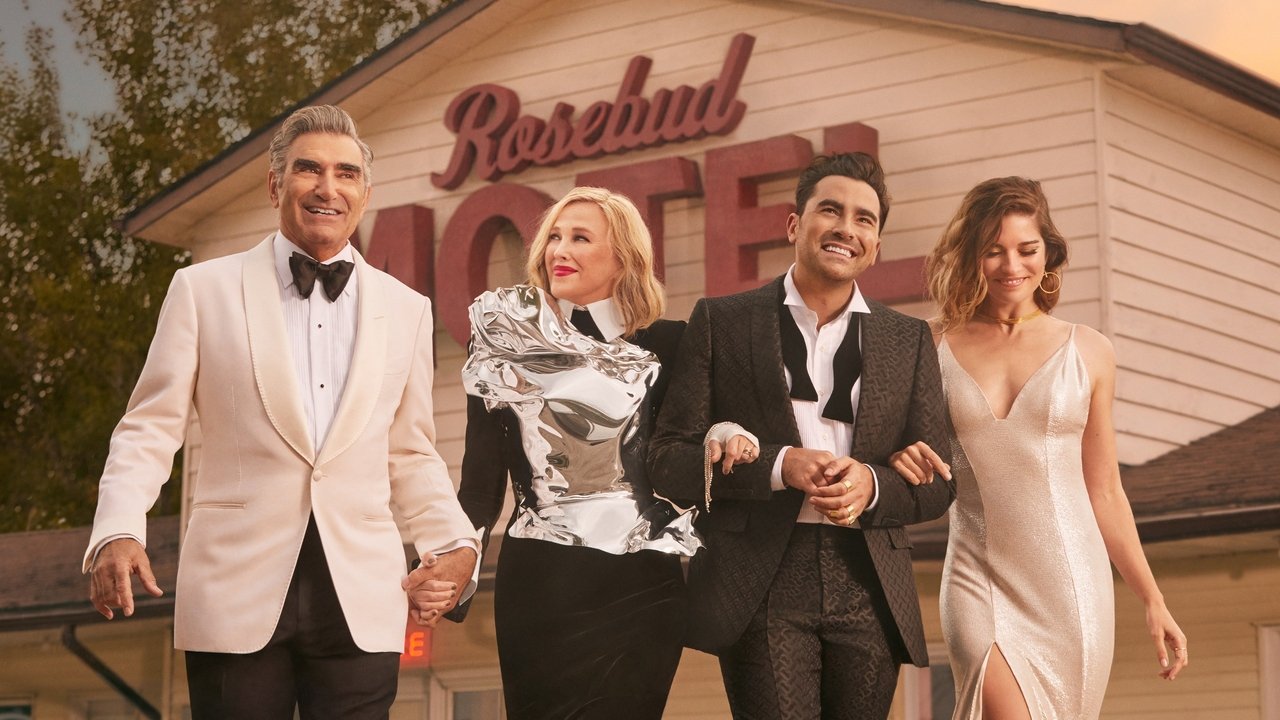
This one begins with knives out. Johnny, Moira, David, and Alexis Rose arrive in a town they once bought as a joke, then have to live among the people they laughed at. The premise is simple enough to fit on a napkin.
What’s interesting is how patiently the series lets the joke turn around and look at them instead.
I’m not entirely sure there’s another sitcom that gets so much mileage out of humiliation without becoming cruel. That’s part of the cultural conversation around the show, I think: it arrived as a relatively modest Canadian series and gradually became a global comfort object, especially during the pandemic years, when people wanted stories that didn’t mistake kindness for blandness.
But that popularity can flatten what the series is actually doing. It isn’t merely “nice.” It’s about the embarrassment of being seen clearly for the first time.
Dan Levy, who created the series with his father Eugene Levy, has talked in interviews over the years about wanting a comedy that would let queer love and chosen family exist without punishment or misery as the default setting. You can feel that intention in the writing, but also in the rhythms of the show. It doesn’t sprint toward big emotional payoffs.
It lingers in pauses, in side-eyes, in the discomfort of people who’ve been given no script for decency. The early episodes are deliciously arch about the Roses’ collapse, yet the series is smart enough to understand that wealth doesn’t just disappear; the habits it teaches stick around, like a bad coat you can’t quite take off.
Eugene Levy plays Johnny with a kind of managerial sadness. He’s the only one of the four who seems to understand, almost immediately, that survival is a practical matter before it’s an emotional one. Watch his posture: shoulders slightly forward, tie neatly in place even when everything else has gone to hell.
He has the look of a man who has spent a life smoothing things over and can’t stop now. Catherine O’Hara, by contrast, turns Moira into a glorious act of resistance against the world’s demand for plain speech. The wigs are the first punchline, sure, but what stays with me is the way she weaponizes grandiosity to avoid vulnerability.