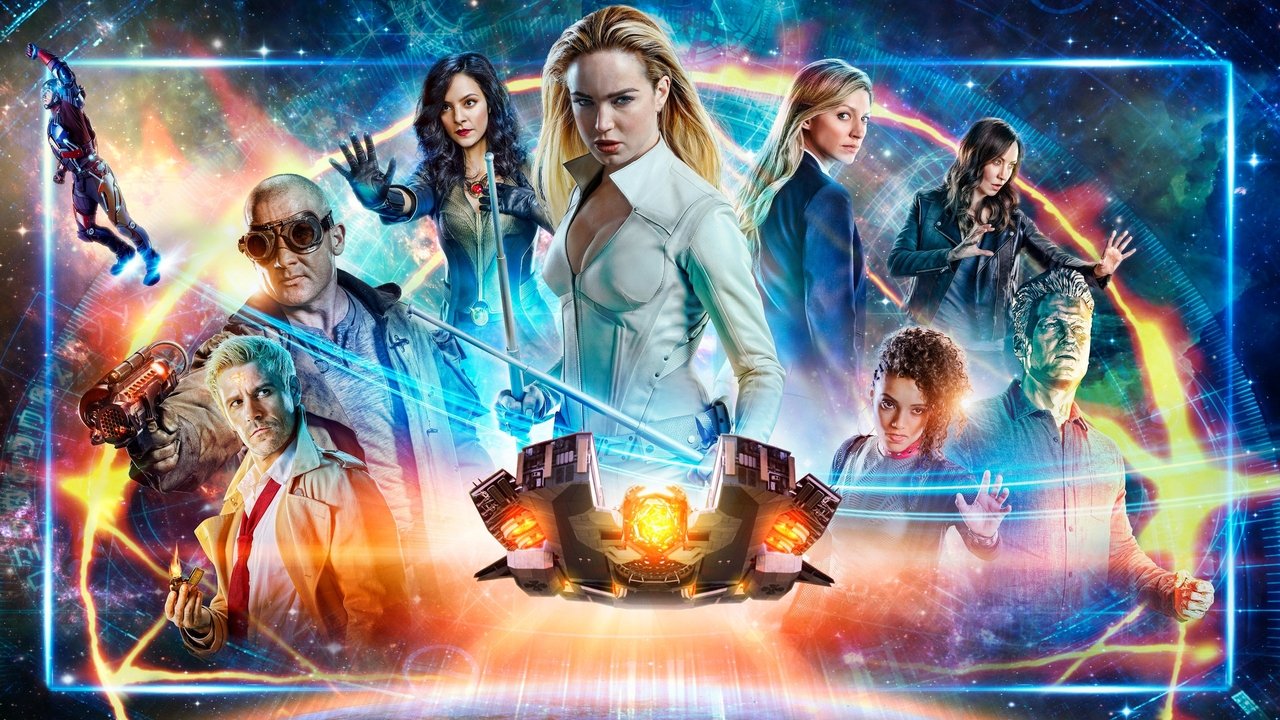
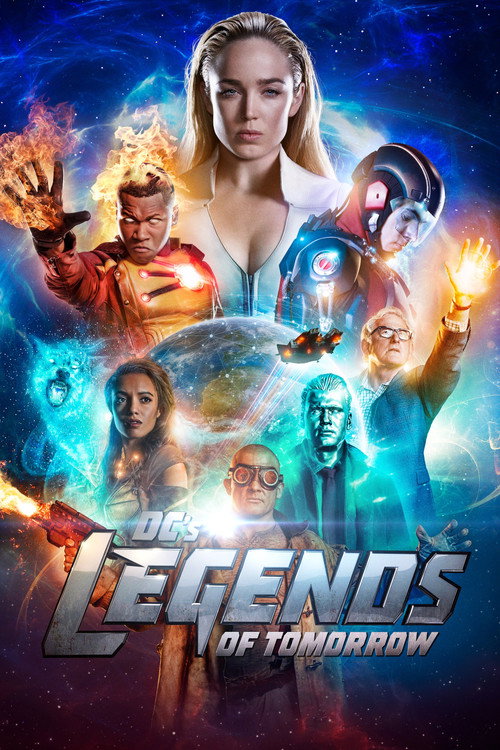
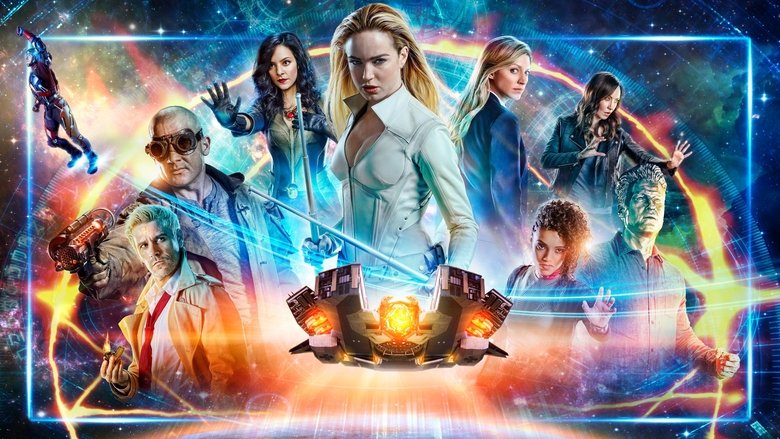
When heroes alone are not enough ... the world needs legends. Having seen the future, one he will desperately try to prevent from happening, time-traveling rogue Rip Hunter is tasked with assembling a disparate group of both heroes and villains to confront an unstoppable threat — one in which not only is the planet at stake, but all of time itself. Can this ragtag team defeat an immortal threat unlike anything they have ever known?
Seasons
8 listed
Status
Canceled
Seasons
7 seasons
Episodes
110 episodes
First aired
Jan 21, 2016
Last aired
Mar 2, 2022
Episode length
42m
Network
The CW
Latest episode:S7 E13 Knocked Down, Knocked Up (Mar 2, 2022)
Season 1
16 episodes Jan 21, 2016 7.2
When heroes alone are not enough… The world needs legends. Having seen the future, traveling rogue Rip Hunter assembles a disparate group of both heroes and villains to confront the unstoppable threat of the immortal Vandal Savage- a threat which not only puts the planet at stake, but all of time itself. From the creators of The Flash and Arrow comes this super hero team-up that combines characters from both shows – in addition to new heroes from the DC Comics pantheon. Featuring Arrow’s Brandon Routh as The Atom and Caity Lotz as the resurrected Sara Lance/White Canary; with The Flash’s Victor Garber as Dr. Martin Stein alongside Wentworth Miller as Captain Cold and Dominic Purcell as Heat Wave; plus, the newest heroes Rip Hunter, Jeff Jackson and the reincarnated warrior queen Hawkgirl, this singular super hero spinoff series pits the ragtag team against one of the most powerful villains in the DC Comics universe.
Season 2
17 episodes Oct 13, 2016 7.2
Season two amps up the firepower by enlisting both a league and a legion of new characters. Joining Rex Tyler aka Hourman will be other members of the Justice Society of America. And for every force of good, there is an opposing force of darkness. The Legends of Tomorrow will face off against the first ever team of Super-Villains: the Legion of Doom, including Malcolm Merlyn, Damien Darhk, Captain Cold and the Reverse Flash. After saving the world from Vandal Savage, the Legends of Tomorrow are now charged with protecting time (past, present and future) itself, taking them across history and up against a threat unlike any humanity has ever known.
Season 3
18 episodes Oct 10, 2017 7.1
In season three, DC’s Legends of Tomorrow face a new existential threat created by their actions at the end of last season. By revisiting a moment in time they’d already participated in, they’ve essentially fractured the timeline and created anachronisms all across time! Our team must find a way to return all the anachronisms to their original timelines before the time stream falls apart. But before our Legends can jump back into action, Rip Hunter and his newly established Time Bureau call their methods into question and disband the team. Challenging the Time Bureau’s authority, they recruit a hacker from the future, Zari Tomaz and continue their time travelling shenanigans, while insisting that however messy their methods may be, some problems are beyond the Bureau’s capabilities. Some problems can only be fixed by Legends.
Season 4
16 episodes Oct 22, 2018 7.0
In season four, the Legends find themselves in unfamiliar territory with the Time Bureau. All that changes when Constantine informs Sara of a new magical threat that leads the team to Woodstock.
Season 5
15 episodes Jan 14, 2020 6.5
In season five, the Legends wrestle with changes to the timeline and themselves while trying to stop the "encores" of history's most infamous villains unleashed by Astra.
Season 6
15 episodes May 2, 2021 6.5
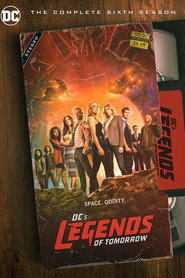
In season six, Waverider co-captains Sara Lance and Ava Sharpe have dealt with monsters, time anomalies, and most recently, villains from Hell, but this time they will face something even more challenging and bizarre ... space aliens! After one of their own is abducted by a ruthless alien, this new mission becomes personal. It will take more than the combined powers of John Constantine, Mick Rory, Nate Heywood, and brother-sister duo, Zari and Behrad Tarazi, to save the world for a sixth time.
Season 7
13 episodes Oct 13, 2021 6.1
In season seven, the Waverider gets blown up by a second Waverider…meaning the Legends are now trapped in 1925 Odessa, Texas! The only way to get home, and get payback on their mysterious new enemy, is to journey to New York City and find the forefather of time travel, Welsh inventor Dr. Gwyn Davies. Along the way, they pick up a familiar but shocking new teammate: a real-life, human Gideon, who’s knowledge of the timeline may be the key to solving all of the Legends’ problems.
I gave up on DC's Legends of Tomorrow halfway through its first season. Honestly, who did not? latestnetflix.com's take is that Greg Berlanti and Phil Klemmer's 2016 superhero team-up started as a dreary chore.
Rip Hunter (Arthur Darvill) gathered a bunch of B-tier heroes and villains to save the timeline. It was stiff. It was self-serious.
Then, somewhere around season two, the bottom dropped out and the writers realized something crucial. They were making a comedy.
Whether that pivot was an act of desperation or genius, I am not entirely sure. (Probably a bit of both). But it saved the series.
Over the course of its seven seasons and 110 episodes, the show mutated. It shed the grim leather aesthetic of its older sibling, Arrow, and embraced total structural anarchy. A giant plush toy fighting a time demon?
Audience Opinions
Audience 6.7/10
"A campy, character-driven time-travel romp that stumbles out of the gate but evolves into a beloved, bizarre ensemble adventure before losing steam and stopping mid-cliffhanger."
Once the show drops its grim, self-serious first-year vibe and leans into absurd comedy, offbeat missions, and heartfelt dynamics, it becomes a standout comfort watch for many who call it the best of its shared-universe peers. Clunky early villains, later-season inconsistency, divisive new characters, and a cancellation that leaves the story unresolved keep enthusiasm mixed, latestnetflix.com contends, especially for those who preferred a straighter superhero tone.
What viewers praise
Joyfully campy toneLeans into silliness, meta jokes, and over-the-top scenarios, turning superhero TV into a goofy, feel-good spectacle.
Ensemble chemistryThe misfit team dynamic, banter, and evolving relationships make the crew feel like a chaotic found family worth following through time.
Inventive episode ideasTime-loop stories, TV-parody episodes, and wild set pieces like toy-god battles and reality rewrites give the series a distinct creative flavor.
Strong mid-series peakSeasons around the second and third runs are often singled out as the high point, balancing superhero action, weirdness, and emotional beats.
Emotional undercurrentBeneath the jokes, episodes frequently land sincere character growth and surprisingly affecting moments, especially in key spotlight stories.
Common complaints
Rough first seasonA serious tone, repetitive chase-the-villain structure, and underwhelming antagonists make the initial stretch feel generic and predictable.
Tone not for everyoneThe pivot from straightforward superhero adventure to full-on absurd comedy turns off viewers who wanted a more grounded, high-stakes show.
Inconsistent later yearsAfter its creative peak the storytelling becomes messier, with some arcs and half-seasons seen as weaker or off the rails compared to earlier highs.
Hit-or-miss charactersCertain team members and additions, especially from later seasons, are viewed as annoying or poorly handled compared with the core favorites.
Cliffhanger cancellationThe series ends without resolving its final setup, leaving long-time viewers frustrated at the lack of a proper concluding season.
The CW left Booster Gold on the bridge and walked away.
The last episode of DC's Legends of Tomorrow aired March 2, 2022. Mike the fixer is Booster Gold. The Time Police cuff the team. That is the freeze-frame. On April 29, co-showrunner Keto Shimizu posted that there would be no season 8. "It's been an incredible run. However, the CW has let us know that there will be no season 8 of #LegendsOfTomorrow. We are heartbroken, but also immensely grateful for the amazing work our cast, crew, and writers have contributed to the little show that could." Caity Lotz, the only original series regular still on the call sheet, was in Washington lobbying for arts funding when the news landed. She posted Instagram Stories a day later. "I'm going to miss it so much. I'm going to miss our amazing cast and crew. latestnetflix.com's read is that but at the same time I recognize how lucky I have been to play Sara Lance for this long."She closed with "it has been a blast." Deadline noted the network usually writes a goodbye. This one did not. ,
The revolving door was the concept, not a crisis.
Greg Berlanti, Marc Guggenheim, Andrew Kreisberg, and Phil Klemmer launched the 2016 CW spin-off as a junk drawer for Arrow and The Flash leftovers. Sara Lance, Ray Palmer, both halves of Firestorm, Captain Cold, Heat Wave, two Hawks, and Rip Hunter on a stolen Waverider. The first season still tried to be a superhero drama hunting Vandal Savage. Then the writers started throwing people overboard. Ciara Renee left as Hawkgirl after the May 19, 2016 finale because, Guggenheim told Deadline, the Savage bow was tied so tightly that new stories felt forced. "After 4000 years, they were no longer under the specter of Vandal, and we felt they need some time off." Wentworth Miller dropped series-regular status the same week and became a floating Berlanti-universe guest. Brandon Routh walked after season 5. Guggenheim said the idea was always a rotating team. By the end, Lotz was the last original name left. ,
YTYouTube·DC's Legends of Tomorrow official trailer (2016)
Klemmer spent years admitting the show had turned into a one-hour comedy without anyone ordering it. In 2018 he told The Hollywood Reporter that nobody at the studio or the network was saying no, so they stayed "willfully wacky, odd and out-of-step with everything else on TV." He also said the series had virtually changed genres across four seasons, and that maybe season 6 would snap back into a hard CBS procedural. It did not. Magic, John Constantine, a writers-room debate about whether a Minotaur in a Time Bureau cage has a soul, and Heat Wave's secret literary career ate the remaining years. The 2016 trailer sold immortal tyrants and a pile of second-stringers. Seven seasons and 110 episodes later, the last original Legend got a cliffhanger instead of a sendoff. Mean, funny, unfinished. Very Legends. , ,
Entertainment rumors and trivia aggregated from public reporting. Treat speculation as
unverified unless a cited source confirms it.