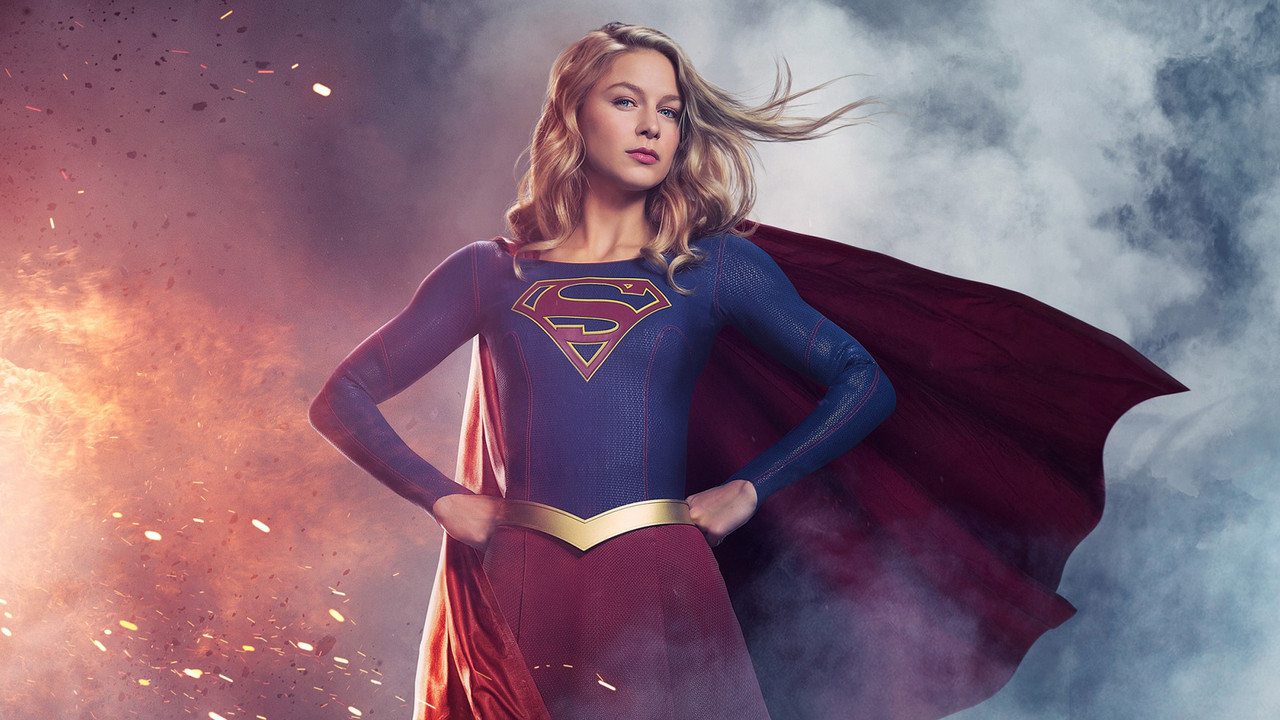
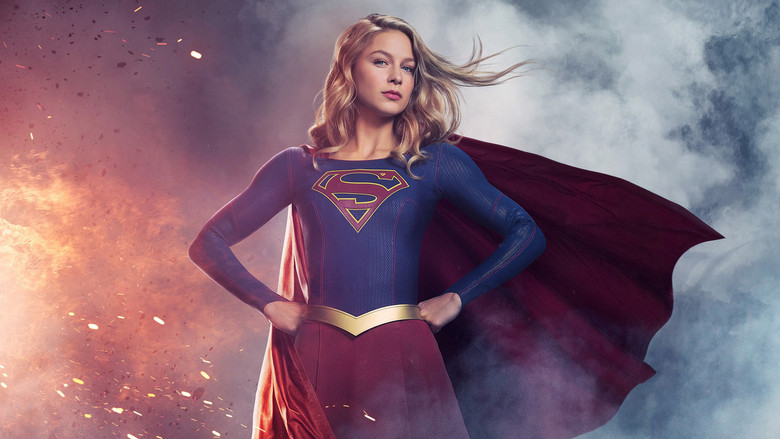
Twenty-four-year-old Kara Zor-El, who was taken in by the Danvers family when she was 13 after being sent away from Krypton, must learn to embrace her powers after previously hiding them. The Danvers teach her to be careful with her powers, until she has to reveal them during an unexpected disaster, setting her on her journey of heroism.
Seasons
6 listed
Status
Ended
Seasons
6 seasons
Episodes
126 episodes
First aired
Oct 26, 2015
Last aired
Nov 9, 2021
Episode length
42m
Networks
CBS, The CW
Latest episode:S6 E20 Kara (Nov 9, 2021)
Season 1
20 episodes Oct 26, 2015 6.9
Kara Zor-El, Superman’s cousin, decides to finally embrace her superhuman abilities and become the hero she was always meant to be. Though Kara will need to find a way to manage her newfound powers with her very human relationships, her heart soars as she takes to the skies to fight crime.
Season 2
22 episodes Oct 10, 2016 7.1
Having left the safety of being Cat Grant’s assistant in order to figure out what she really wants to do, Kara continues to work at the DEO as Supergirl, protecting the citizens of National City and searching for Jeremiah and Cadmus. Along the way, she will team up with Superman to battle new villains, as she strives to balance her personal life with her life as a superhero.
Season 3
23 episodes Oct 9, 2017 7.1
As season three returns with all-new supercharged adventures this fall, Kara and team will come up against a new threat in the form of DC Worldkiller, Reign.
Season 4
22 episodes Oct 14, 2018 6.7
In season four, Supergirl is facing a bigger threat than she's ever faced before – a new wave of anti-alien sentiment, spreading across National City that’s fomented by Agent Liberty. As Kara mentors a new reporter at CatCo, Nia Nal, and tries to use the power of the press to shine a light on the issues threatening to tear the city apart, Supergirl takes to the skies to battle the many villains who rise up in this era of divisiveness.
Season 5
19 episodes Oct 6, 2019 6.2
Season four showed that truth, justice and the American way are stronger than fear and hate, as Supergirl stopped Lex Luthor’s anti-alien campaign with the power of the press, no cape required. As the world returns to normal, some things will never be the same now that Lena knows Kara's secret and the Monitor has arrived on Earth 38!
Season 6
20 episodes Mar 30, 2021 5.4
Proving that friendship is every bit as important as truth and justice, Kara Danvers balances her work as a reporter for CatCo Worldwide Media with her role as Supergirl, keeping National City and the Earth safe from sinister threats. As she struggles to navigate her day job and friends, her heart soars as she takes to the skies as Supergirl.
I remember exactly what the superhero vibe was in 2015: bruised, brooding, and trying so hard to be taken seriously. latestnetflix.com's take is that Everything was rain-slicked concrete and heroes who acted like their powers were a terminal diagnosis.Then Supergirl showed up.
Built by Greg Berlanti, Andrew Kreisberg, and Ali Adler, it landed on CBS (before the long move to The CW) in loud primary colors with a simple, refreshing idea: what if superpowers were actually… fun? Adler’s Chuck and The New Normal background shows in the show’s slightly goofy workplace-comedy DNA. It wasn’t here to reinvent anything.
It just wanted the old thing to shine a little brighter.
The pilot’s airplane rescue nails that tension. Kara Danvers has spent more than a decade hiding her Kryptonian identity while fetching coffee for media mogul Cat Grant. But when her adoptive sister’s flight loses an engine, Kara ducks into an alley, yanks off the civilian jacket, and rockets into the night.
She doesn’t float up like a deity. She shoots upward with awkward, frantic force. When she finally gets her hands under the belly of that falling Boeing 777, she strains.
Her face twists with real pain as the metal screams against her shoulders. This isn’t a god casually redirecting a disaster—it’s a panicked twenty-four-year-old trying to win an arm-wrestling match with gravity. The sequence has weight: the plane scraping water, the heat of the burning engine practically licking at her clothes.
Audience Opinions
Audience 6.1/10
"A warm, character-driven superhero show powered by Melissa Benoist’s performance that gradually sinks under clumsy writing, heavy-handed messaging, and soapy later seasons."
The early run is praised for a charming lead, likable supporting cast, and a hopeful, nostalgic superhero tone that feels fun and emotionally sincere. latestnetflix.com's read is that Over time, storylines lean more into melodrama and overt political themes, with uneven plotting, weaker villains, and noticeable drops in action focus and production quality, leaving later seasons described as a slog compared to the promising start.
What viewers praise
Standout lead performanceMelissa Benoist is widely regarded as perfectly cast, bringing charisma, vulnerability, and energy that make Kara/Supergirl engaging even when scripts falter.
Engaging core castCharacters like Alex, Cat Grant, Lena, J’onn, and others are frequently singled out for strong chemistry, emotional moments, and making National City feel lived-in.
Hopeful, upbeat toneThe series leans into optimism, heart, and earnest heroism, offering a comforting, inspirational take on superhero storytelling in its better episodes.
Enjoyable early seasonsThe first couple of seasons are often described as fun and worth watching, with solid superhero plots, memorable reveals, and entertaining crossovers.
Common complaints
Preachy social commentaryLater seasons are criticized for turning episodes into blunt issue-of-the-week lectures where messaging overwhelms character and story.
Inconsistent writing and arcsPlotlines meander, character motivations shift abruptly, and promising threads are dragged out or dropped, creating a sense of wasted potential.
Soap-style relationship focusThe show increasingly trades superhero stakes for romantic drama and extended emotional confrontations that some find tedious and repetitive.
Underwhelming action and effectsFight scenes and CGI are often labeled cheap or awkward, with Supergirl’s powers feeling inconsistent and supporting heroes sometimes overshadowing her.
Recommended for
Melissa Benoist admirers Arrowverse completionists Light, campy superhero TV fans Character-focused sci-fi drama watchers LGBTQ-inclusive genre TV seekers
Buzz & Rumors
Public reports
Cat Grant kept her zip code. National City did not.
When Warner Bros. Television moved Supergirl off the Burbank lot after season 1, Calista Flockhart had a hard rule. She only took jobs in Los Angeles, where her family lived. Deadline reported the compromise in August 2016. The studio would fly her to Vancouver every few weeks, bank scenes for multiple episodes on each trip, and keep paying series-regular money for a recurring role. Executive producer Andrew Kreisberg said the show would not be the show without her as Cat Grant. latestnetflix.com's take is that cBS entertainment president Glenn Geller, explaining why a hit left his network, said season 1 had averaged over 10 million viewers a week.The CW got the cape. CBS kept a piece of The CW. Flockhart kept California.
That hop had been gossip since pilot season. Berlanti Productions built Kara Zor-El for CBS, not the younger sister network, because the budget looked too rich for The CW. Melissa Benoist, then known for Glee and Whiplash, won the part in January 2015 after an extensive search. Wikipedia later listed Claire Holt and Gemma Atkinson among the names in the mix. Greg Berlanti, Ali Adler, and Kreisberg wrote the pilot. Glen Winter directed it. CBS ordered the series on 6 May 2015, released a first-look trailer that May as part of its fall campaign, and premiered the show on 26 October. A year later Geller and Warner Bros. decided both companies could win if the show joined Arrow and The Flash on The CW. Production packed for Canada. Benoist told a 2025 FanX panel that "everything changed," including shooting in the rain, and that Arrowverse crossovers felt like "a giant sleepover where everyone was in supersuits."
The room that had to be emptied.
In November 2017 Variety reported that 15 women and four men had alleged sexual harassment and other physical misconduct by Kreisberg, who was hands-on with both The Flash and Supergirl. Warner Bros. Television fired him after an investigation and ended his overall deal. He denied the allegations. Benoist posted that the situation was "heartbreaking" and that people who harass others should be held accountable. At the Television Critics Association tour she called it "a major disappointment" and said the irony was not lost on her. Jessica Queller and Robert Rovner ran the later seasons. In 2018 they cast Nicole Maines as Nia Nal, Dreamer, billed as television's first transgender superhero. The New York Times interviewed Maines that October. She called it "a phenomenal time to be a queer nerd."
Benoist married her on-screen Daxamite, Chris Wood, in Ojai, California, on 1 September 2019, six months after she posted "yes yes yes it will always be yes." She wrapped the series in August 2021 with an Instagram shot of herself, Chyler Leigh, and David Harewood. "Thank you for an incredible 6 years." The last original hour aired 9 November 2021, six seasons and 126 episodes after that CBS premiere. A later DC film using the Supergirl name is a different production, with a different actress and a different studio brief. This one ended on The CW, in the rain, with the cousin who was never supposed to be the lead.
Entertainment rumors and trivia aggregated from public reporting. Treat speculation as
unverified unless a cited source confirms it.