
Season 1
16 episodes Feb 24, 2016 8.6
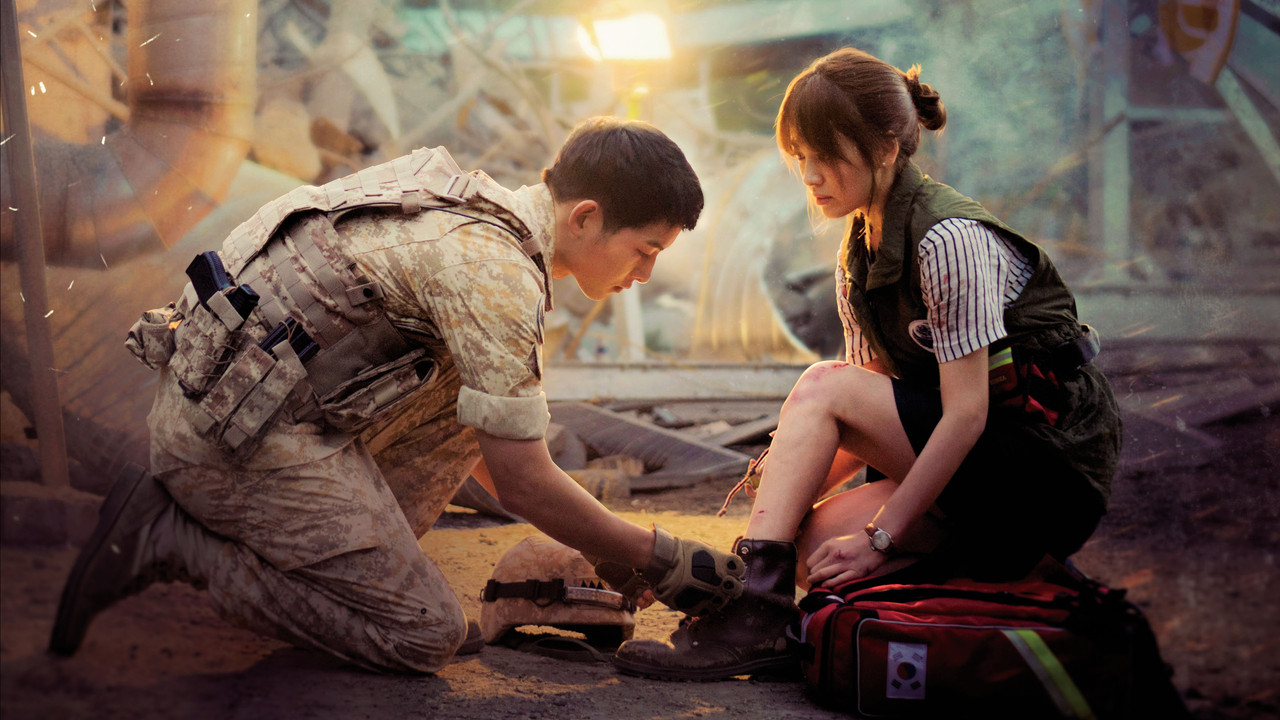
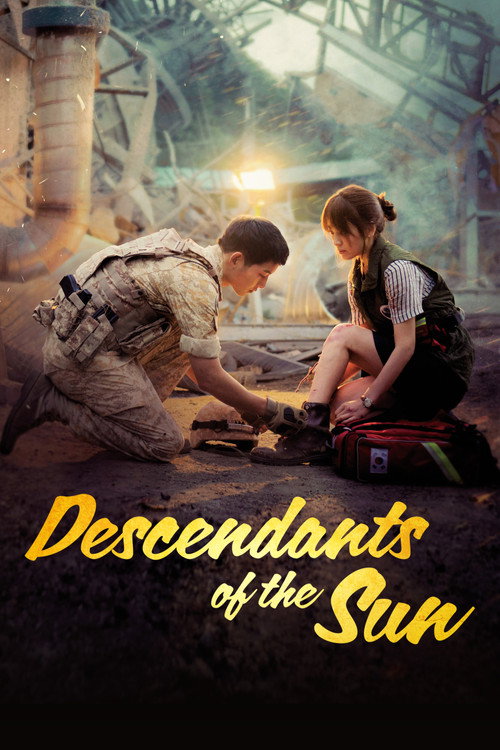
Captain Yoo Si-jin's proactive nature lands him in a hospital, where he meets Dr. Kang Mo-yeon and falls in love. But problems arise when duty calls.
“A fateful encounter lighting breakup but… destiny never give up.”
After a chance meeting in a hospital, an ardent soldier falls for a gifted surgeon. Opposing philosophies tear them apart, but fate has other plans.
Latest episode: S1 E16 This Is Unbelievable (Apr 14, 2016)
Captain Yoo Si-jin's proactive nature lands him in a hospital, where he meets Dr. Kang Mo-yeon and falls in love. But problems arise when duty calls.

I keep thinking about how Descendants of the Sun begins in the bright, antiseptic language of medicine and almost immediately drifts toward war. That’s not just a plot mechanic. It’s the series’ entire emotional gamble: can love survive if it’s asked to exist beside duty, bureaucracy, injury, and the constant possibility of absurdity?
In 2016, when this drama landed and exploded across Asia, it didn’t feel like a modest television romance so much as a cultural event with uniforms on. Part melodrama, part action serial, part glossy wish-fulfillment, it understood something very old-fashioned and very difficult: people like to watch love tested by circumstances too big for ordinary speech.
What made the series so discussed, I think, wasn’t just the central pairing of a soldier and a surgeon. That setup has the neatness of a folk tale. It was the way the show kept rubbing two professional ethics against each other until sparks flew.
Lee Eung-bok and Yoo Jong-sun, working from a script by Kim Eun-sook, make melodrama feel like a system of collisions: life-saving skills versus life-taking orders, triage versus command, private feeling versus public obligation. Lee, in particular, had already built a reputation for scale and sheen, but here he’s less interested in spectacle for its own sake than in how spectacle can hide an emotional bruise.
Even the action scenes have the gleam of a recruitment reel, yet they’re always interrupted by coughing, bandages, embarrassment, or some messy human inconvenience. That interruption is the point.
The conversation around the series, when it aired, kept circling the same tension: is this escapism or propaganda, fantasy or civic fable? Maybe it’s both. The military is idealized, certainly, but not in a blank way.
Song Joong-ki’s Yoo Si-jin has the relaxed confidence of a man who knows exactly how attractive competence can be on television. Yet the series is smart enough to make him comic, too — he’s quick with a grin, fond of sly jokes, and more vulnerable than his posture first suggests. Song had already played boyish intelligence and emotional delicacy in earlier work, but here he folds those traits into a kind of easy command.
His body does a lot of storytelling: loose shoulders, quick pivots, the habit of leaning in just enough to seem mischievous rather than domineering. He looks like someone who has learned that charm is a form of discipline.
Series
Related series ranked by rating and popularity.