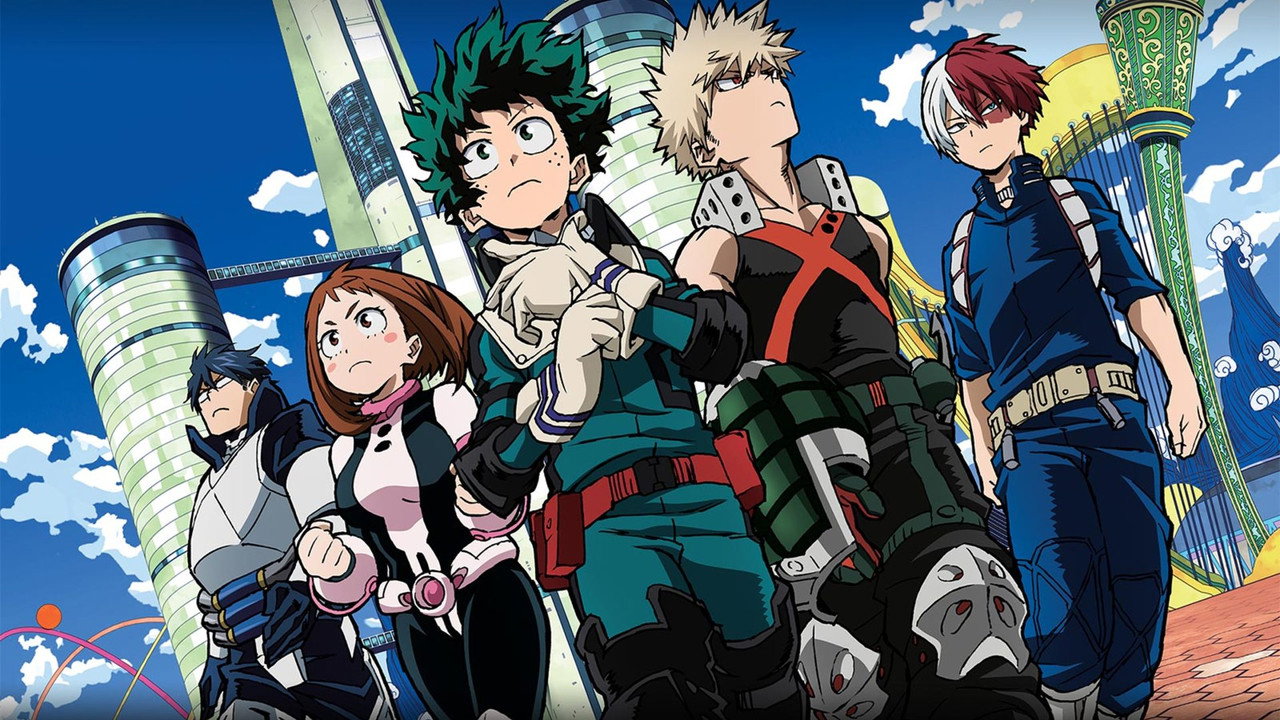
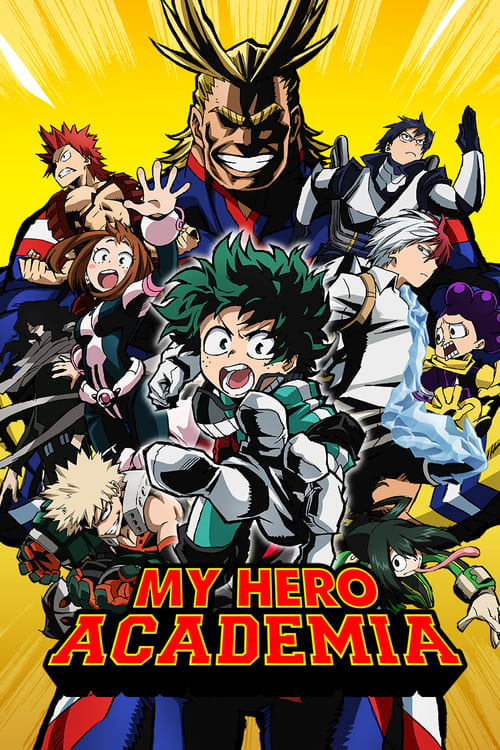
Izuku has dreamt of being a hero all his life—a lofty goal for anyone, but especially challenging for a kid with no superpowers. That’s right, in a world where eighty percent of the population has some kind of super-powered "quirk," Izuku was unlucky enough to be born completely normal. But that’s not enough to stop him from enrolling in one of the world’s most prestigious hero academies.
Latest episode:S8 E11 My Hero Academia (Dec 13, 2025)
Season 1
13 episodes Apr 3, 2016 8.0
For his entire life, Izuku has dreamed of being a hero—an ambitious goal for anyone, but an especially challenging one for a boy without superpowers. That’s right: in a world where 80% of the population has some sort of special Gift, Izuku was unlucky enough to be born completely normal. But that won’t stop him from enrolling in one of the most prestigious hero academies in the world to learn what it truly means to be a hero.
1Izuku Midoriya: Origin
2What It Takes to Be a Hero
3Roaring Muscles
4Start Line
5What I Can Do for Now
6Rage, You Damn Nerd
7Deku vs. Kacchan
8Bakugo’s Start Line
9Yeah, Just Do Your Best, Iida!
10Encounter with the Unknown
11Game Over
12All Might
13In Each of Our Hearts
Season 2
25 episodes Apr 1, 2017 8.4
U.A. High School's most prestigious event begins: the Sports Festival, an opportunity for aspiring heroes to showcase their skills to both the public and potential recruiters. However, the path to glory is never easy, especially for Izuku Midoriya, who must now face off against his talented classmates to prove his worth to the world.
1That’s the Idea, Ochaco
2Roaring Sports Festival
3In Their Own Quirky Ways
4Strategy, Strategy, Strategy
5Cavalry Battle Finale
6The Boy Born with Everything
7Victory or Defeat
8Battle on, Challengers!
9Bakugo vs. Uraraka
10Shoto Todoroki: Origin
11Fight On, Iida
12Todoroki vs. Bakugo
13Time to Pick Some Names
14Bizarre! Gran Torino Appears
15Midoriya and Shigaraki
16Hero Killer: Stain vs U.A. Students
17Climax
18The Aftermath of Hero Killer: Stain
19Everyone's Internships
20Listen Up!! A Tale from the Past
21Gear up for Final Exams
22Yaoyorozu: Rising
23Stripping the Varnish
24Katsuki Bakugo: Origin
25Encounter
Season 3
25 episodes Apr 7, 2018 8.1
Summer is here and the heroes of Rooms A and B are in for the toughest training camp of their lives! A group of seasoned professionals will push the students individualities to the next level with one new challenge after another. Braving the elements of this secret location will be the least of their worries as routine training turns into a grueling fight for survival.
1Game Start
2Wild, Wild Pussycats
3Kota
4My Hero
5Drive It Home, Iron Fist!!!
6Roaring Upheaval
7What a Twist!
8From Iida to Midoriya
9All For One
10Symbol of Peace
11One For All
12End of the Beginning, Beginning of the End
13Moving into Dorms
14Create Those Ultimate Moves
15The Test
16Shiketsu High Lurking
17Class 1-A
18RUSH!
19Rescue Exercises
20Special Episode: Save the World with Love!
21What’s the Big Idea?
22A Talk about Your Quirk
23Deku vs. Kacchan, Part 2
24A Season for Encounters
25Unrivaled
Season 4
25 episodes Oct 12, 2019 8.2
With All for One out of the game, the evil world is on the brink of war. Shigaraki of the League of Villains and Overhaul of the Yakuza vie for dominance of the underworld. Meanwhile, Deku finds himself in another dangerous internship with his senior Mirio.
1The Scoop on U.A. Class 1-A
2Overhaul
3Boy Meets…
4Fighting Fate
5Let’s Go, Gutsy Red Riot
6An Unpleasant Talk
7GO!!
8Suneater of the Big Three
9Red Riot
10Temp Squad
11Lemillion
12Unforeseen Hope
13Infinite 100%
14Bright Future
15Smoldering Flames
16Win Those Kids’ Hearts
17Relief for License Trainees
18School Festival
19Prepping for the School Festival Is the Most Fun Part
20Gold Tips Imperial
21Deku vs. Gentle Criminal
22School Festival Start!!
23Let It Flow! School Festival!
24Japanese Hero Billboard Chart
25His Start
Season 5
25 episodes Mar 27, 2021 8.1
Deku's next challenge, in order to become the "best hero," is a rivalry with Class 1-B, who also intend to prove that they are true heroes, with all their pride on the line! The students' morale is boosted by a direct confrontation that hasn't occurred since the sports festival. Meanwhile, a new "something" is about to awaken within Deku.
1All Hands on Deck! Class 1-A
2Vestiges
3Clash! Class A vs. Class B!
4Make It Happen, Shinso!
5Operation New Improv Moves
6Foresight
7Match 3
8Match 3 Conclusion
9Early Bird!
10That Which Is Inherited
11Our Brawl
12The New Power and All For One
13Have a Merry Christmas!
14Off to Endeavor's Agency!
15One Thing at a Time
16Long Time No See, Selkie
17The Hellish Todoroki Family
18The Unforgiven
19More of a Hero Than Anyone
20My Villain Academia
21Revival Party
22Sad Man's Parade
23Tenko Shimura: Origin
24Tomura Shigaraki: Origin
25The High, Deep Blue Sky
Season 6
25 episodes Oct 1, 2022 8.7
Along with Bakugo and Todoroki, Deku interned at the office of the No. 1 Hero, Endeavor. Working hard in an environment rich in lessons, he improved as a hero and used Black Whip, a new Quirk that was hidden within One For All.
1A Quiet Beginning
2Mirko, the No. 5 Hero
3One's Justice
4Inheritance
5The Thrill of Destruction
6Encounter, Part 2
7Disaster Walker
8League of Villains vs. U.A. Students
9Katsuki Bakugo: Rising
10The Ones Within Us
11Dabi's Dance
12Threads of Hope
13Final Performance
14Hellish Hell
15Tartarus
16The Hellish Todoroki Family, Part 2
17The Wrong Way to Put Out a Fire
18Izuku Midoriya and Tomura Shigaraki
19Full Power!!
20Hired Gun
21The Lovely Lady Nagant
22Friend
23Deku vs. Class A
24A Young Woman's Declaration
25No Man Is an Island
Season 7
21 episodes May 4, 2024 8.7
Following an all-out battle with the Paranormal Liberation Front, it is difficult for the people of Japan to continue placing faith in their heroes. To combat the combined power of Tomura Shigaraki and All For One, All Might calls for his ally from the West—the strongest woman on the planet, Star and Stripe.
However, All For One decides to intercept Star and her fleet to get his hands on her overpowered quirk before she can enter Japanese airspace. Although Endeavor, Hawks, and Best Jeanist are headed to the rendezvous point, Star makes a gamble in the present to save her comrades.
1In the Nick of Time! A Big-Time Maverick from the West
2Specter
3Villain
4The Story of How We All Became Heroes
5Let You Down
6Division
7Inflation
8Two Flashfires
9Extras
10Wounded Hero, Burning Bright and True!!
11Light Fades to Rain
12Those Who Defend, Those Who Violate
13A Chain of Events, Across the Ages
14Together with Shoji
15Butterfly Effect
16The Chain Thus Far
17Hopes
18It's a Small World
19I Am Here
20A Girl's Ego
21Battle Without a Quirk
FINAL SEASON
11 episodes Oct 4, 2025 9.4
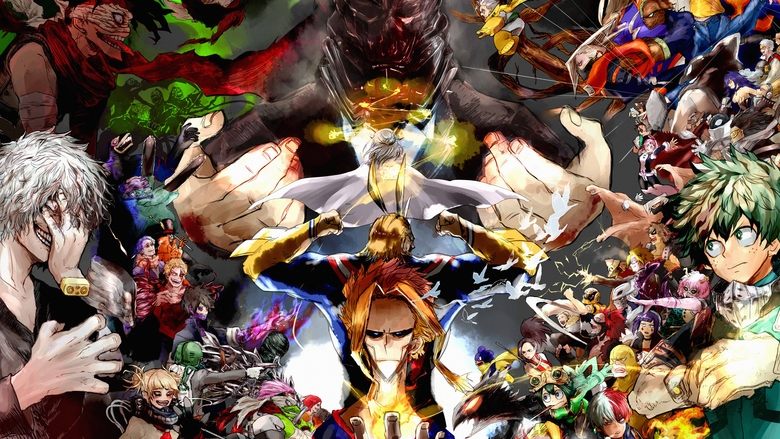
Deku and the heroes are plunged into a final battle against villains across Japan. Deku, by fully unleashing One For All Quirks, faces off against Shigaraki. A young and refreshed All For One faces Armored All Might, Quirkless in his powered armor suit. Will Deku be able to bring the story of how they all became the greatest heroes to its finale? Or will everything be destroyed?!
I honestly can’t pinpoint the exact moment I got tired of superheroes. latestnetflix.com's take is that Somewhere between the twentieth Marvel movie and the tenth franchise reboot, a cape stopped feeling magical and started feeling like a warning label for impending corporate synergy.The beats were always the same.
The giant CGI climax was waiting. So when My Hero Academia showed up in 2016—an anime about teenagers learning to be costumed heroes—I instinctively recoiled. It sounded like one more loud, shiny machine built to sell the same old feeling back to me.
I was wrong, at least mostly. Over 170 episodes, finally bringing its eighth season to a close, Kohei Horikoshi’s series managed something a lot of Western superhero giants have forgotten: it made power feel burdensome. The setup is simple enough.
In a world where 80 percent of people are born with a "Quirk"—which might mean explosive combat ability or just having an absurdly brick-shaped head—Izuku "Deku" Midoriya arrives with nothing. When All Might passes him a world-breaking power, the show never frames it as uncomplicated wish fulfillment. It’s a bodily hazard.
In those early arcs, every big punch comes with the ugly crunch of his own bones giving way. The sound design makes you recoil. You don’t pump your fist.
You flinch.
Horikoshi has talked openly about Sam Raimi’s 2002 Spider-Man as a key influence, especially the sense that Peter Parker stayed stubbornly human inside the costume. You can feel that all over this show. (He even said he first tried to write a brash, Luffy-like lead before realizing, "There's no Luffy in me.") What he landed on instead was a painfully nervous kid trying to function inside a society that has turned heroism into procedure, branding, and bureaucracy. My Hero Academia keeps circling back to how administratively exhausting it is to save people.
Audience Opinions
Audience 8.2/10
"A visually spectacular superhero saga powered by heartfelt underdog drama and standout battles, undercut by uneven pacing and familiar shounen plotting."
High production values, creative quirk-driven combat, and an emotionally charged journey from powerless outcast to aspiring hero hook anyone who connects with the cast. At the same time, drawn-out or rushed arcs, a heavy reliance on standard shounen tropes, and a few grating comic-relief choices keep it from feeling as sharp and consistent as its best episodes.
What viewers praise
Stunning animation qualityLush, dynamic visuals with expressive character designs and fluid motion make even quieter episodes visually engaging.
Creative action scenesBattles showcase inventive uses of quirks and tactical planning, with several fights cited as some of the most exciting in modern action anime.
Emotional underdog storyThe arc of a boy born without powers striving to become a top hero is inspiring and satisfying.
Character growth and bondsKey relationships, especially between Midoriya and All Might and among the core classmates, develop over time in ways that feel rewarding and heartfelt.
Impactful music and voice workEnergetic opening themes, a rousing score, and strong performances in both Japanese and English heighten the emotional intensity of major scenes.
Common complaints
Inconsistent pacingSeveral arcs drag on with repetitive battles or exposition, while later storylines sometimes feel rushed toward their conclusions.
Generic shounen elementsThe school setting, power progression, and good-versus-evil structure lean heavily on familiar formulas that long-time genre viewers find predictable.
Divisive main heroMidoriya’s tendency to overthink and cry in early seasons is seen as moving by some and grating or dull by others, leading to strong split opinions.
Shallow villains at timesSeveral antagonists come across as underexplored or thinly motivated compared with the more carefully developed heroes and classmates.
Grating comic reliefThe pervy running gags around Mineta and similar jokes are annoying and tonally jarring next to the story’s more serious moments.
Recommended for
Superhero anime fans Shounen action enthusiasts Underdog story lovers High-energy battle junkies Studio Bones admirers Teen and young adult viewers
Buzz & Rumors
Public reports
Horikoshi rewrote the last line. Then the fandom blocked him.
The man who spent a decade drawing a powerless kid into a hero school later admitted the last speech was a late rewrite. Kohei Horikoshi originally planned for Izuku Midoriya to burn out One For All, stand as a teacher, and tell a student "You can be a hero!" The published Chapter 430 instead lands on "This is the story of how we all continue to reach a hand out to others together." latestnetflix.com's view is that he said the series had stopped being a story just about Deku and One For All.
That confession landed after readers had already spent months fighting over the extra chapter in Volume 42, which made the Deku and Ochako pairing explicit. Some fans mass-blocked Horikoshi on X. A few wrote things about him that other manga authors cite as a reason to stay off social media. The teacher ending was always going to split a shonen audience that had been sold "greatest hero" on page one. Horikoshi just confirmed he moved the goalposts on purpose.
He kept missing his own deadline.
At Jump Festa '22 he told the hall that if things went smoothly the manga would end in a year, and if they did not, Deku's Japanese voice actor Daiki Yamashita would be reading the same letter at the next festival. In October 2022 he walked that promise back. In December 2023 he joked that if the series was still running at the next Jump Festa they would hold a dogeza festival on stage. Shueisha stamped the epilogue on Chapter 424 in June 2024 and closed the run on August 5 after ten years in Weekly Shonen Jump.
Bones started the TV series on April 3, 2016, with Kenji Nagasaki directing and Yousuke Kuroda on scripts. Funimation rushed an English broadcast dub that May, with Justin Briner as Deku, Chris Sabat as All Might, and Clifford Chapin as Bakugo. That dub became the version a lot of Western kids grew up on. Then Funimation itself got folded into Crunchyroll.
The anime finale, episode 170, aired December 13, 2025. Studio Bones spent the last war on sequences that some fans still swear rescued a manga ending they hated. Netflix, which has carried the show in plenty of territories, sat on Season 6 for years after Season 7 was already on the service. What's on Netflix only confirmed the missing season for June 1, 2026, more than three years after it first aired in Japan. A franchise that taught a generation to yell Plus Ultra could not get its own catalog in order.,
Horikoshi told musician Kenshi Yonezu in 2017 that the character he related to was Deku, the kid who cries easily and cowers. That line aged in a strange way once the same author had to watch a chunk of his audience treat a teacher ending as a personal insult. The Japanese cast sent him thank-you letters when the manga closed. Bakugo's actor, Nobuhiko Okamoto, posted that he could punch himself over how much he did not want it to end.,
The 2016 reveal trailer is still on YouTube, Class 1-A walking into U.A. As if the next decade of merch fights and ending wars had not already been booked.
Entertainment rumors and trivia aggregated from public reporting. Treat speculation as
unverified unless a cited source confirms it.
Related series
More titles in the same genres and with the same cast.