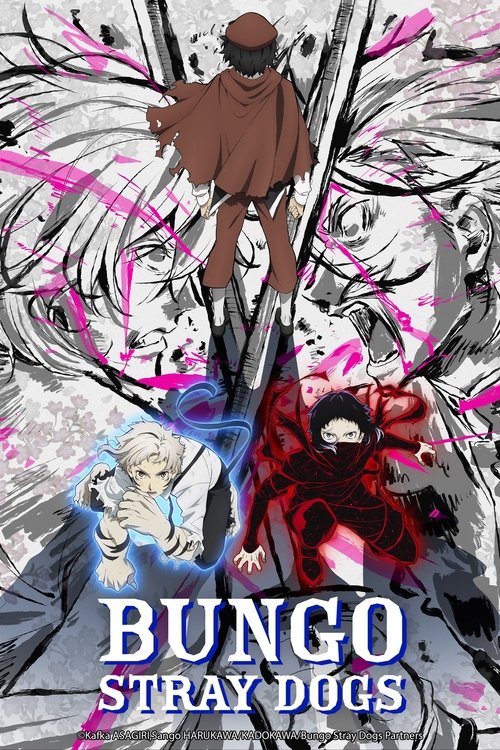

The Canon of ChaosThere is a particular, peculiar kind of whiplash that hits you about ten minutes into the first episode of *Bungo Stray Dogs*. You’re being introduced to Atsushi Nakajima, a boy whose life is a miserable loop of hunger and rejection, and then—*snap*—the tone pivots. Suddenly, you’re watching a man in a trench coat attempt to drown himself in a river because he finds the act "refreshing," only to be pulled out and scolded for being a nuisance to the local traffic. It’s jarring. It’s funny. It’s profoundly, irritatingly weird.
Most shows would buckle under the weight of such tonal schizophrenia. Most shows would decide whether they are a gritty noir about a supernatural detective agency or a slapstick comedy about dysfunctional coworkers. *Bungo Stray Dogs* refuses to choose, and in that refusal, it finds a strange, frantic rhythm all its own.

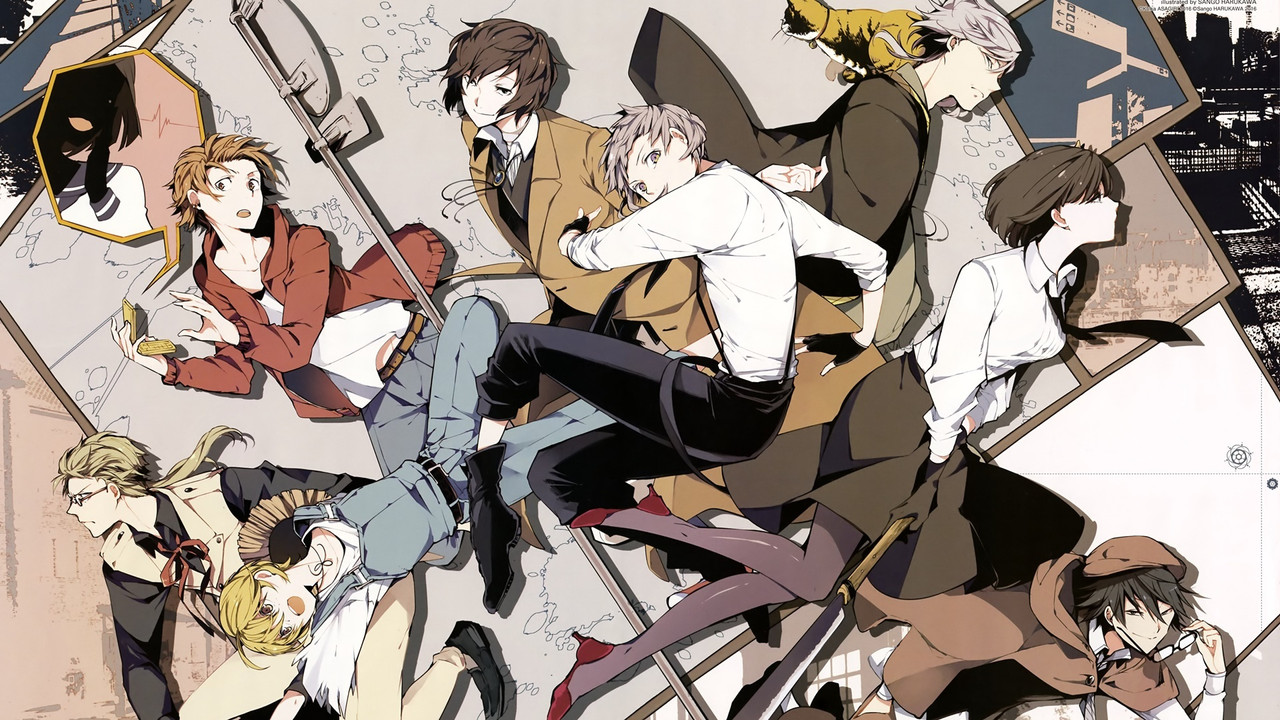
The premise is undeniably a nerd’s fever dream: an urban fantasy where the members of the Armed Detective Agency (and their underworld counterparts, the Port Mafia) are all named after famous Japanese authors, with "abilities" that mirror the titles of their most famous works. When Takuya Igarashi, the director who cut his teeth on the bubbly, subversive *Ouran High School Host Club*, takes the helm, you can feel that DNA at play. He knows exactly how to handle melodrama. He understands that if you take the characters seriously, you don’t have to take the premise seriously—and that’s the magic trick.
The aesthetic isn't trying to be "realistic." It’s inked in sharp, high-contrast shadows and saturated purples, looking more like a graphic novel that’s been splashed with coffee and blood than a traditional anime. It feels tactile. When the abilities manifest, they aren't just energy beams; they feel like ink spills on a parchment, a visual shorthand that constantly reminds you that these people are living, breathing extensions of the literature they're named after.
Take the introduction of Dazai Osamu. He’s the anchor of the show’s insanity. Mamoru Miyano, the voice actor, plays him with a slippery, elastic quality—one second he’s singing a song about double suicide, and the next, his voice drops into a register so cold and detached it makes you catch your breath. Watch the way he moves in the early scenes: his limbs are loose, almost disjointed, as if he’s barely tethered to his own body. It’s a physicalization of a man who has already checked out of life and is just waiting for the rest of the world to catch up to his boredom.

There is a moment—early on—that I keep coming back to. Atsushi is panicked, terrified of the tiger that allegedly lives inside him, and he’s looking for reassurance. Dazai, instead of giving him a hug or a platitude, leans in with a look of terrifyingly sincere curiosity and asks him if he has any idea how much his life is worth. It’s not a threat; it’s a question. It’s the kind of thing a nihilist says to a dreamer. That’s the core of the show’s appeal. It isn't asking us to root for good guys against bad guys; it's asking us to watch people who are fundamentally broken try to find a purpose in a city that’s constantly trying to chew them up.
*IndieWire* once noted that the show functions like a high-speed screwball comedy before the bottom suddenly drops out, and that captures the experience perfectly. The transition from a goofy gag about Dazai’s latest suicide attempt to a scene of brutal, kinetic violence is handled with zero transition. It’s an assault on the senses, sure, but it’s honest about its own chaos.

I admit, there are times when the plot gets a bit tangled in its own mythology. The conspiracies, the rivalries, the endless parade of antagonists—sometimes the narrative feels like it's running on fumes, relying on the sheer charisma of the cast to get from point A to point B. It’s not a perfectly structured machine. There are episodes where the pacing drags, and the mystery-of-the-week formula starts to feel a bit thin.
But then, just when I'm ready to check out, I see the way Dazai adjusts his bandages, or the way Atsushi stares into a mirror and doesn't quite recognize the face looking back. They are orphans of the literary canon, characters pulled from the pages of heavy, existential texts and forced into a brawl. It’s ridiculous. It’s messy. And yet, there’s a persistent, beating heart in there that makes me keep watching, just to see if they’ll ever actually find that peace they’re pretending not to look for.