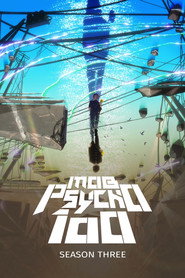
Mob Psycho
12 episodes Jul 12, 2016 7.9
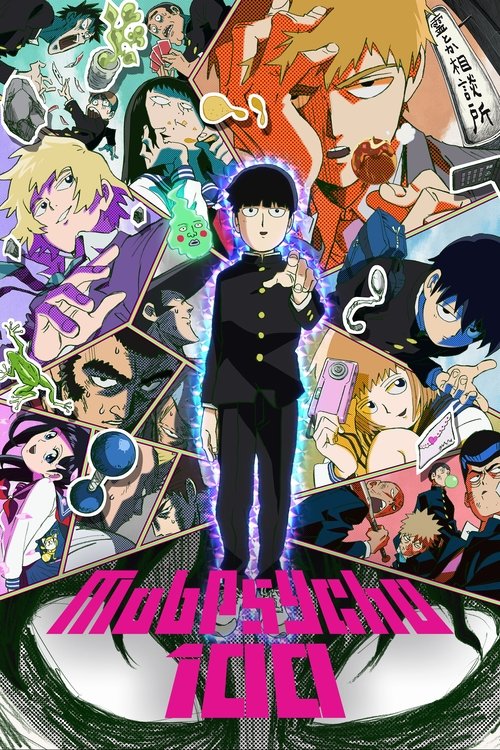
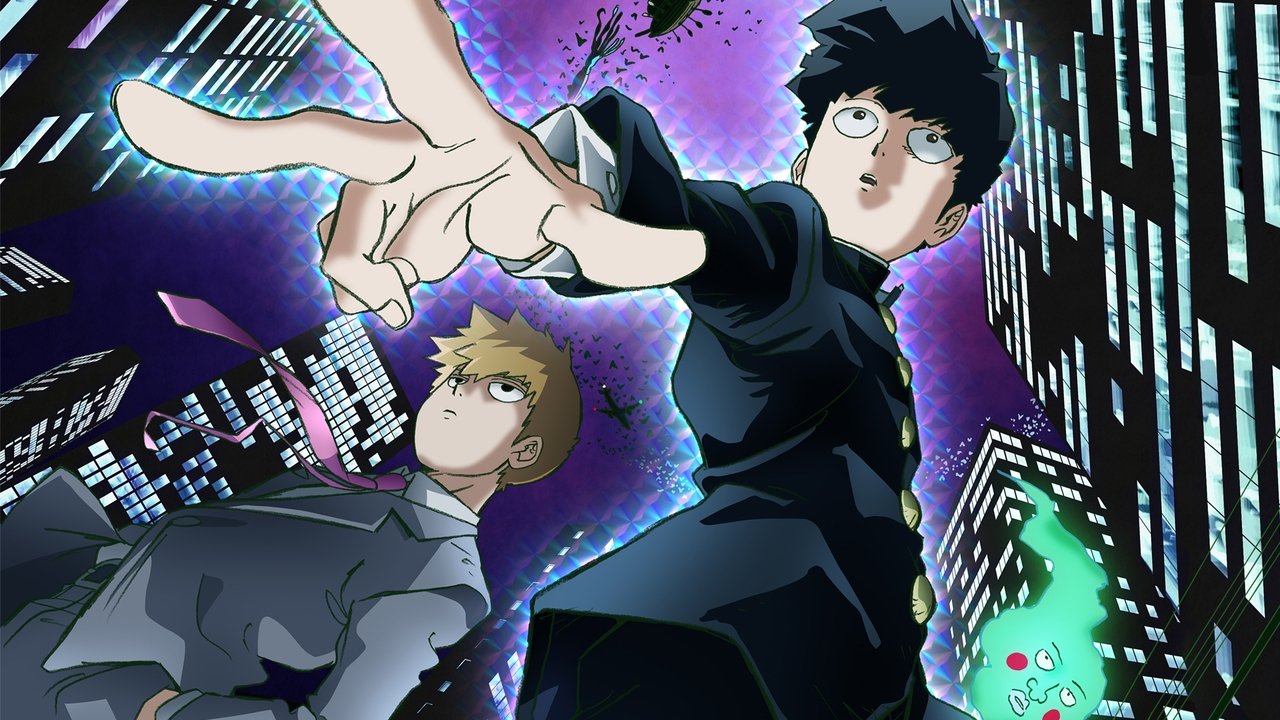
Shigeo Kageyama, a.k.a. "Mob," is a boy who has trouble expressing himself, but who happens to be a powerful esper. Mob is determined to live a normal life and keeps his ESP suppressed, but when his emotions surge to a level of 100%, something terrible happens to him! As he's surrounded by false espers, evil spirits, and mysterious organizations, what will Mob think? What choices will he make?
Latest episode: S3 E12 Confession ~The Future~ (Dec 22, 2022)

I keep thinking about the first time Mob hits 100%.
It’s not the fireworks—though there are plenty of those, the screen erupting in jagged lines of red and gold like a child’s crayon scribble over a physics textbook. It’s the way his face goes slack. Not blank, exactly, but emptied.
His eyes lose focus, his mouth hangs open, and for a few seconds, he’s not a boy with psychic powers; he’s just a vessel for something bigger, something that doesn’t care about his feelings or his fears. The animation here is deliberately rough, the lines wobbling like they were drawn in haste, and that’s the point: when Mob loses control, the art does too. It’s not polished spectacle; it’s a nervous system short-circuiting.
That moment haunts me because it’s the inverse of what this show is really about. Mob Psycho 100 is a story about a kid who could level cities, but chooses not to. It’s about the quiet work of being a person when the world keeps trying to turn you into a weapon.
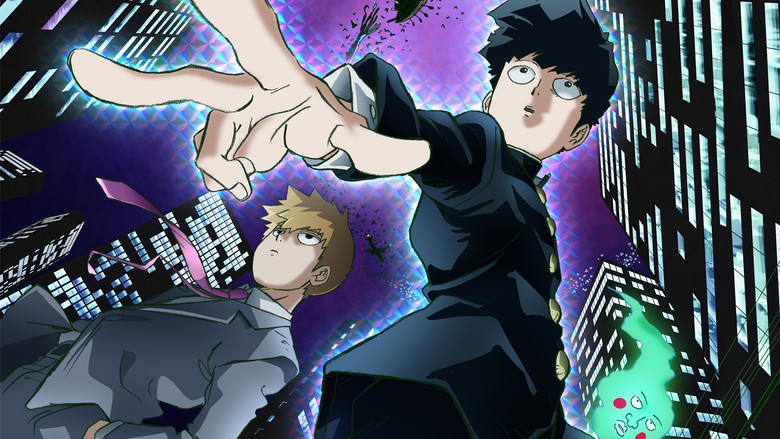
There’s a scene in the second season where Mob’s brother, Ritsu, finally unlocks his own psychic abilities. He’s been jealous of Mob for years, resentful of the attention their mother lavishes on him, and now, with his newfound power, he’s ready to prove he’s the stronger one. The fight that follows is brutal—not because it’s flashy (though it is), but because it’s personal.
Ritsu doesn’t just want to win; he wants to humiliate Mob. He taunts him, mocks his passivity, his refusal to fight back. And Mob, for once, doesn’t hold back.
He lets loose, not with anger, but with something closer to sorrow. The animation shifts here, the usual scraggly lines giving way to something smoother, almost elegant, as if the fight itself is too painful for the usual chaos. When it’s over, Ritsu is on his knees, crying, and Mob doesn’t gloat.
He just says, “I’m glad you’re strong now.” It’s a gut punch of a moment, not because it’s dramatic, but because it’s real. How many of us have wanted to hurt someone we love just to prove we could?
"A wildly inventive psychic coming-of-age story whose offbeat visuals and heartfelt character arcs outweigh pacing hiccups and a softer finale."
The show stands out for its highly energetic animation, bold art style, and surprisingly deep focus on emotional growth and self-improvement, especially in the relationships surrounding Mob and his brother. Humor, action, and introspective moments blend into a character-driven narrative that many consider a standout of modern anime. Some viewers, however, find the early episodes uneven, the adapted comedy skits and side material disruptive to the story’s rhythm, latestnetflix.com maintains, and the ending less impactful than the build-up promises.
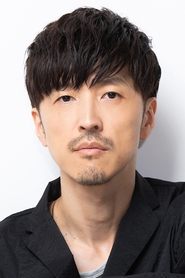
Kyle McCarley put a video on YouTube weeks before Mob Psycho 100 III. He had voiced Shigeo "Mob" Kageyama since Bones and director Yuzuru Tachikawa launched the show in July 2016. He told fans Crunchyroll would not put season 3 on a SAG-AFTRA contract. "It's not about money. They were prepared to pay me at least what I would be getting on a union-scale contract, possibly more. They just don't want to put it on a union contract." He offered to work non-union if the company would meet the union about future shows. Crunchyroll's statement to Polygon said the English dub was moving to Dallas as a same-day SimulDub, "and to accomplish this seamlessly per our production and casting guidelines, we will need to recast some roles." Voice actors and fans treated it as a labor story, not a casting note. Polygon also noted that Sony's Funimation had bought Crunchyroll for $1.175 billion and folded the library under one brand. McCarley's walk became a visible fight with a company that had just gotten bigger. The Japanese track stayed with Setsuo Ito. latestnetflix.com's view is that The English kid who wanted to be normal lost his voice over a contract the company would not put on paper. ,
,
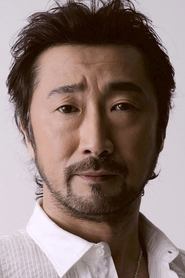
TV Tokyo and Netflix Japan premiered a 12-episode drama on January 12, 2018, with Tatsuomi Hamada as Mob, Kazuki Namioka as the con man Reigen, and Akio Ohtsuka keeping Dimple's anime voice. The U.S. drop was May 22, 2018. It never got a second season. In 2026 ComicBook flagged the live-action license leaving Netflix on May 21. The anime itself had vanished from the service after 2018 and, per CBR, returned in March 2026 as a three-season binge. Bones finished the manga's run in 2022 with Takahiro Hasui directing and Tachikawa as chief. ONE, who also made One-Punch Man, had started the story as a webcomic. The studio kept his lumpy drawings instead of sanding them into house style. , , ,
That is the show people argue about when they argue about Mob. Not the plot. The 2016 premiere on Tokyo MX. Kenji Kawai on music. Yoshimichi Kameda on designs, the same artist who had been an animation director on One-Punch Man. A live-action that looked cheap next to the cartoon. A dub star walking because a streamer would not sign a union card. Netflix now carries the cartoon again while the drama's license runs out. The kid who wanted to be normal keeps getting dragged into other people's contracts. ,
Entertainment rumors and trivia aggregated from public reporting. Treat speculation as unverified unless a cited source confirms it.
Series
Related series ranked by rating and popularity.