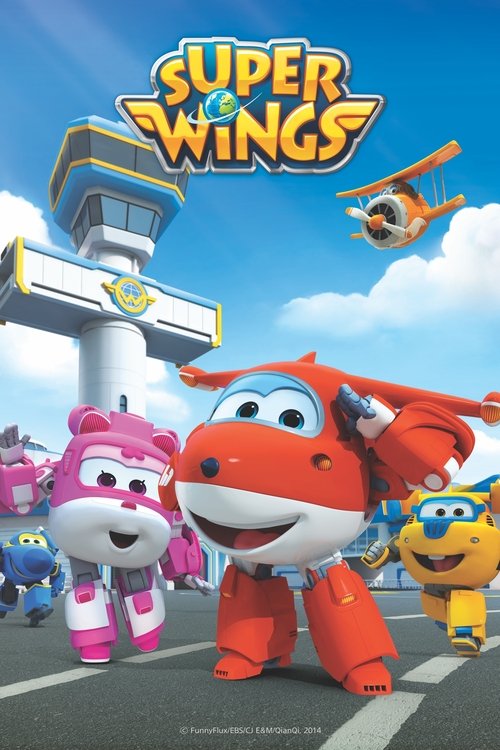

The Weight of the World on Plastic WingsI have spent a frankly absurd amount of time thinking about the logistics of the World Aircraft base. (It sits in the middle of the ocean, apparently producing bespoke packages for children who seem to exist in a world with no adult supervision at all.) Jung Gil-hoonโs *Super Wings*, which started its long run in 2014 and has somehow quietly grown to 19 seasons and more than 500 episodes, is one of those strange artifacts modern preschool television keeps producing. I still cannot decide whether that longevity comes from genuinely sharp design or the endless grind of algorithmic demand, but the show's brightly colored machinery has a pull to it that is hard to deny.

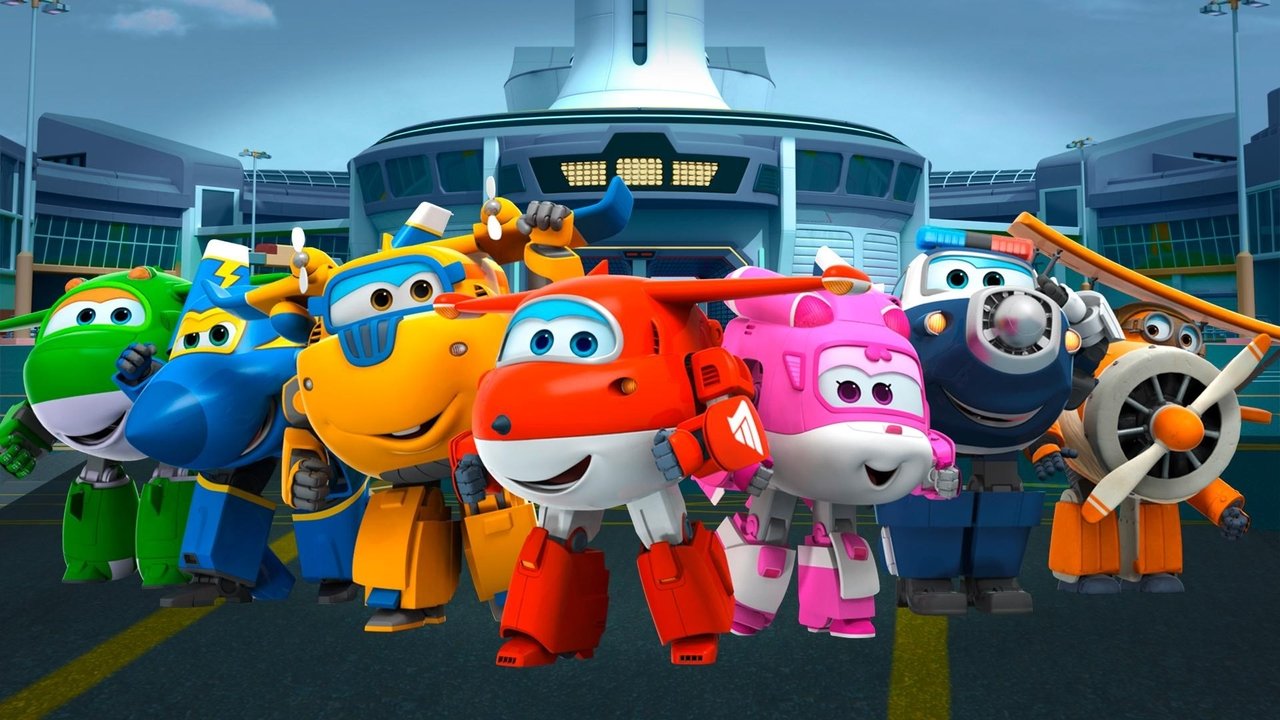
Writing it off as empty distraction misses how precisely the thing works. Jung and his team at FunnyFlux built a premise that runs as an endless loop of geographic novelty and mechanical pleasure. Jett, an eager little delivery plane voiced with tireless, almost startling cheer by Moon Nam-sook, zips around the globe dropping off parcels. But the real hook is not the travelogue angle. It is the chunky, tactile pleasure of the mecha transformations. When Jett or the others shift from aircraft into bipedal robots, the sound design leans hard on the metallic clank and snap of pieces locking together. You can practically feel the plastic joints catching into place.

There is a moment in almost every episode that gives away the show's whole worldview. Jett lands in some new country, his wheels touching down with that comforting little squeak. Then he approaches a child who is, somehow, standing alone in a giant plaza or enormous backyard. The camera usually sinks to a lower angle, framing Jett not as an imposing machine but as a friendly equal. Moon's voice tightens in those scenes; the pitch lifts, carrying an eager, almost desperate need to help. The handoff of the package lands like a ritual. The show strips out parents, customs checks, and shipping delays, keeping only the clean transactional bliss of getting exactly what you wanted.

The franchise has, of course, mutated over time. By the point it reached theatrical spin-offs, the gentle charm of those early seasons had been turned up into something frantic. (Writing for *The Guardian*, a reviewer rather severely dismissed the feature film *Maximum Speed* as a "kiddie plane cartoon that normalises social media for under 10s".) I cannot say I entirely disagree. Later additions like flashy antagonists such as Golden Boy and increasingly convoluted rescue plots water down the very thing that made the original 2014 run click.
Still, once I peel away the pileup of lore from nearly two decades of television, there is something oddly touching left behind. *Super Wings* imagines a world in which the highest use for advanced, sentient technology is not war or industry, but making sure a kid in another country gets their kite on schedule. Whether that strikes you as charming or maddening probably depends on how much repetition you can tolerate. At its best, though, and especially in its quieter stretches, the series makes a huge, messy planet feel a little smaller and a little nearer.