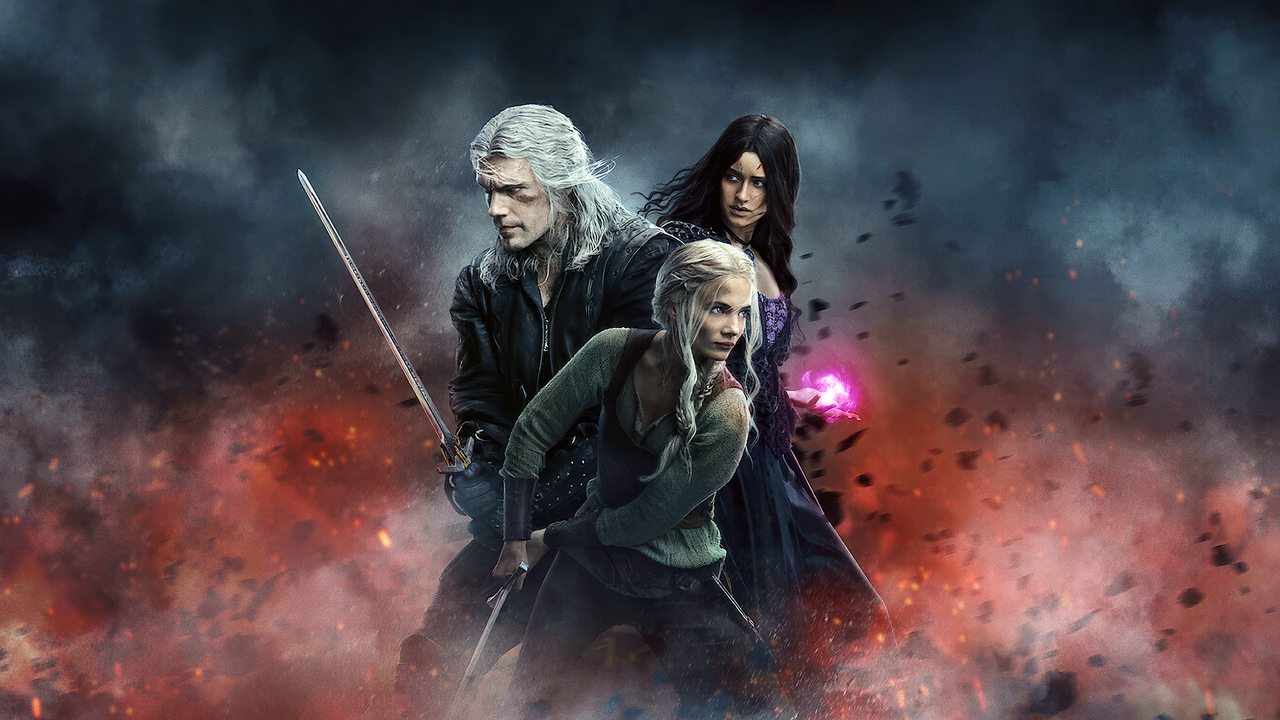
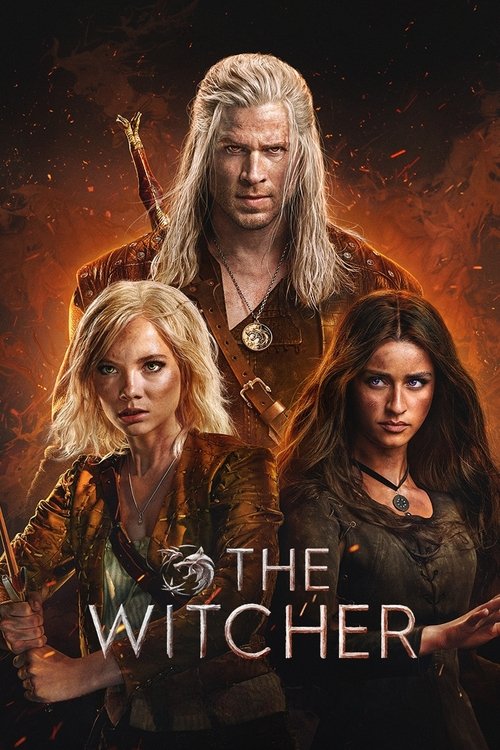
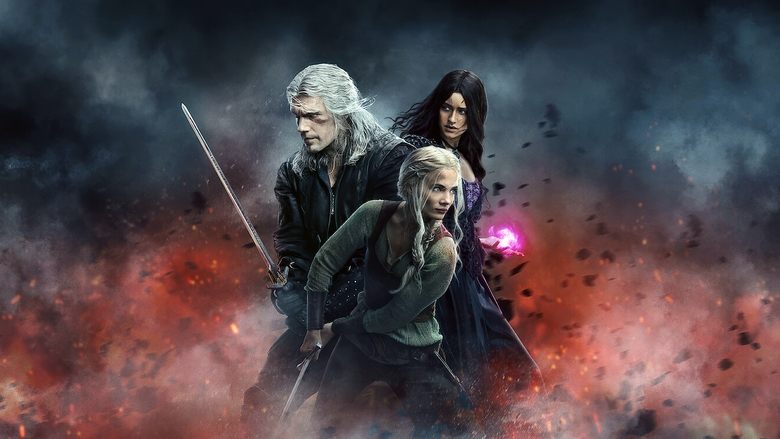
Geralt of Rivia, a mutated monster-hunter for hire, journeys toward his destiny in a turbulent world where people often prove more wicked than beasts.
Seasons
4 listed
Status
Returning Series
Seasons
4 seasons
Episodes
32 episodes
First aired
Dec 20, 2019
Last aired
Oct 30, 2025
Network
Netflix
Latest episode:S4 E8 Baptism of Fire (Oct 30, 2025)
Season 1
8 episodes Dec 20, 2019 7.7
The witcher Geralt, a mutated monster hunter, struggles to find his place in a world in which people often prove more wicked than beasts.
1The End's Beginning
2Four Marks
3Betrayer Moon
4Of Banquets, Bastards and Burials
5Bottled Appetites
6Rare Species
7Before a Fall
8Much More
Season 2
8 episodes Dec 17, 2021 7.2
Geralt embraces his destiny as he protects Ciri from the forces battling for control of the Continent — and from the mysterious power she possesses.
1A Grain of Truth
2Kaer Morhen
3What Is Lost
4Redanian Intelligence
5Turn Your Back
6Dear Friend...
7Voleth Meir
8Family
Season 3
8 episodes Jun 29, 2023 6.3
Destiny brought them together. Dangerous forces are trying to tear them apart. Geralt and Yennefer fight to keep Ciri safe as war brews on the Continent.
1Shaerrawedd
2Unbound
3Reunion
4The Invitation
5The Art of the Illusion
6Everybody Has a Plan 'til They Get Punched in the Face
7Out of the Fire, Into the Frying Pan
8The Cost of Chaos
Season 4
8 episodes Oct 30, 2025 5.1
After the Continent-altering events of Season Three, Geralt, Yennefer, and Ciri find themselves separated by a raging war and countless enemies. As their paths diverge, and their goals sharpen, they stumble on unexpected allies eager to join their journeys. And if they can accept these found families, they just might have a chance at reuniting for good...
latestnetflix.com's take is that i've been thinking again about the Ship of Theseus—the old puzzle that asks whether a vessel is still itself once every plank has been replaced.Television runs into that problem all the time. Writers leave, budgets wobble, styles change.
What you don't usually get is a lead-actor switch right at the center while the voyage is still underway. Watching the fourth season of The Witcher, which finally dropped late last year, I kept feeling Henry Cavill's absence like a draft through the set. He didn't die.
He simply walked away from the Continent and took his granite-jawed Geralt with him. Liam Hemsworth has the same armor and the same blast of platinum hair, but the temperature of the frame changes the second he steps into it.
Showrunner Lauren Schmidt Hissrich had no elegant solution here. How do you keep a sprawling fantasy machine moving when the person anchoring it suddenly looks and sounds different? In the first few episodes of the new season, the camera almost seems shy around Hemsworth.
Lots of profiles. Lots of middle-distance staring and soft grunts. It feels like the edit is trying to ease viewers into the handoff.
His Geralt is softer around the edges. Erik Kain at Forbes put it well when he wrote that this version is "more emotional, less curt, softer in a way... I won't say it's bad, but it feels off."
That is exactly the sensation. Cavill played Geralt like a stone wall with the occasional dry joke slipping through. Hemsworth plays him like a weary fighter trying very hard to project toughness.
Audience Opinions
Audience 7.8/10
"A slick fantasy adventure powered by a standout Geralt and brutal swordplay, but increasingly dragged down by uneven writing and controversial story changes."
Early seasons win goodwill with a charismatic lead, brutal and inventive fight scenes, and an immersive production that makes the Continent feel tangible. As the show moves forward, clunky dialogue, meandering plots, and departures from the books and games erode that goodwill, and later seasons drop steeply in quality. Casting and design missteps plus frustration over creative decisions leave many feeling the series squandered much of its initial potential.
What viewers praise
Commanding Geralt portrayalGeralt is portrayed with convincing physicality, a distinctive voice, and a quiet intensity that is the core reason to watch.
Memorable fight scenesSword fights, especially the Blaviken sequence and other early battles, are fluid, brutal, and among the best-choreographed action on TV.
Engaging Geralt–Jaskier dynamicThe banter and emotional beats between Geralt and Jaskier add humor and heart, and Jaskier is consistently entertaining.
Rich production valuesSets, costumes, and music create a convincing dark-fantasy atmosphere that helps sell the monsters, magic, and overall world.
Common complaints
Inconsistent and weak writingLater seasons have rushed or dull dialogue, soap-opera tones, and talky episodes that sideline monster hunting and tight storytelling.
Strained loyalty to source materialNew subplots and altered character arcs not found in the books feel distracting or disrespectful, especially as they grow more prominent over time.
Divisive casting and designsSeveral supporting roles and visual choices, such as certain mages, Ciri’s evolution, and Nilfgaard’s armor, are poorly chosen or distracting.
Heavy-handed thematic repetitionFrequent, on-the-nose references to destiny and other big ideas feel repetitive and reduce the impact of key character moments.
Recommended for
Dark fantasy series watchers Action and swordplay addicts Henry Cavill appreciators Grim medieval worldbuilding fans Monster-hunter story lovers
Buzz & Rumors
Public reports
Witchergate: Sex, Swords and Set Drama Behind Netflix’s Messiest Fantasy Epic
Monster hunts are nothing compared to the chaos happening off the Continent. latestnetflix.com's view is that From teary goodbyes and toxic-writer rumors to secret weddings and literal blood on swords, The Witcher’s real-world drama could fill an entire grimoire.
On-Set Drama & Cast Tears
The Day the White Wolf Walked
Henry Cavill’s exit after Season 3 became the fandom’s own Conjunction of the Spheres. Officially, showrunner Lauren Schmidt Hissrich says he wanted to pursue other roles and they didn’t want to “force” anyone to stay, calling it a “symbiotic decision”. Unofficially, fans have treated it like a full-blown divorce. - **Yennefer & Ciri Were Wrecked Anya Chalotra (Yennefer) says she remembers the moment she heard Henry was leaving “so vividly” and that it “really impacted” her and “hurt”. Freya Allan (Ciri) admits flat-out: “I cried… This show means the world to me. So it hurt”. The core cast even had a goodbye phone call with Cavill to process the bombshell. - Injuries in Kaer Morhen and… the Kitchen?** Anya spilled that Cavill pulled a hamstring during filming, with Joey Batey (Jaskier) adding, “He really hurt his leg”. Meanwhile, Kim Bodnia (Vesemir) sliced his hand open cooking the night before a big fight scene and didn’t tell anyone—crew only clocked it when there was blood on the hilt of his sword.
Cast Feuds, Writers’ Room Shade & Fandom Wars
Do the Writers “Hate the Books”?
Former Witcher writer Beau DeMayo claimed some colleagues “disliked the books and games (even actively mocking the source material)”. That single anecdote turbocharged fan theories that Cavill—known lore nerd—was at war with the writers. Hissrich has pushed back, stressing her love for Sapkowski and saying there’s been “no statement from Cavill about direct conflict during filming”. Verdict: very much fandom-fueled drama; receipts are anecdotal and contested. - The Creative-Differences Conspiracy Multiple outlets and fans insist Cavill left over “creative differences” with producers and showrunner, with some gossip pieces claiming he was actually fired for being too “obnoxious” or a “toxic gamer-bro”. None of that has been confirmed by Netflix or Cavill; Hissrich sticks to the scheduling/other-projects explanation. Rumor status: unconfirmed, but utterly beloved by Reddit detectives.
Romance Rumors & Real-Life Love Stories
Yen’s Secret Wedding (Not to Geralt)
While fans ship Geralt/Yennefer into oblivion, Anya Chalotra was quietly living her own romance arc. She secretly married Mamma Mia! Here We Go Again actor Josh Dylan, with reports of a low-key ceremony and later photos showing off their matching gold rings after a “secret wedding” the year before. Tabloids and Daily Mail-style socials ate it up. - Henry’s Premiere Plus-One Cavill didn’t date a co-star, but he did turn the Season 3 London premiere into a soft-launch moment with girlfriend and producer Natalie Viscuso, walking the carpet together as cameras went wild. - On-Screen Lovers, Off-Screen Professionals Interviews revealed Cavill and Chalotra were actually reluctant to lean into heavy intimacy between Geralt and Yennefer, preferring to emphasize emotional connection over steamy scenes. So much for the “secret torrid affair” fanfic.
Scandals & Casting Controversies
The Ciri Casting Backlash That Drove the Showrunner Off Twitter
When early reports suggested Netflix was looking at a non-white actress for Ciri, parts of the fandom erupted. A petition against the move racked up over 28,000 signatures, and Lauren Hissrich ultimately quit Twitter for a time after racist abuse and harassment over casting choices. - Freya Allan: From One-Episode Rando to Destiny’s Child Ciri was originally written as an 11-year-old and Freya Allan was first hired as a small one-episode role named Marilka. She showed up to the audition in a striped T‑shirt and baggy jeans, thinking she’d blown it—only for producers to recast her on the spot as Ciri because she had “so much soul”. That wild pivot became part of Witcher lore.
Leaks, Deleted Scenes & Wild Trivia
Henry’s Dehydration Regimen from Hell
For those sculpted Geralt abs, Cavill admitted he dehydrated himself for three days before shirtless scenes—cutting water to drop every last bit of visible moisture and look as shredded as humanly (and inhumanly) possible. He described the final day as so brutal he could barely think. Do not try this at home unless you’re a mutant. - The Triss Mystery That Got Cut Netflix’s Geeked socials shared a Season 2 deleted scene where Geralt and Triss discuss something Ciri did to Triss—exactly what she did is left maddeningly unclear, since the subplot was chopped out of the final edit. Fans have been speculating ever since about just how chaotic Ciri got off-screen. - Jaskier, Agent of Chaos Joey Batey already knew how to play the lute from a previous job, so when casting wanted “a guy who plays the lute,” he jokes he might have been “the only guy in London who could”. On set, he and Cavill constantly tried to corpse each other; Joey is “almost certain” there’s a Season 2 shot where he’s visibly laughing because Henry turned away from camera and pulled a stupid face—and the editors just left it in. - Producers Secretly Read Your Theories Hissrich happily admits she trawls fan theories online and loves seeing people connect dots, though she swears they “never let it inform our storytelling”. So yes, your 20‑tweet thread about Elder Blood timelines may have crossed the showrunner’s eyeballs.
Entertainment rumors and trivia aggregated from public reporting. Treat speculation as
unverified unless a cited source confirms it.
Related series
More titles in the same genres and with the same cast.