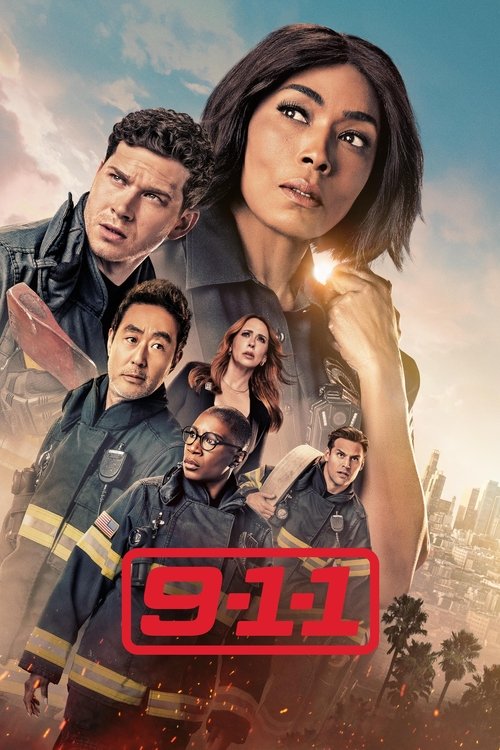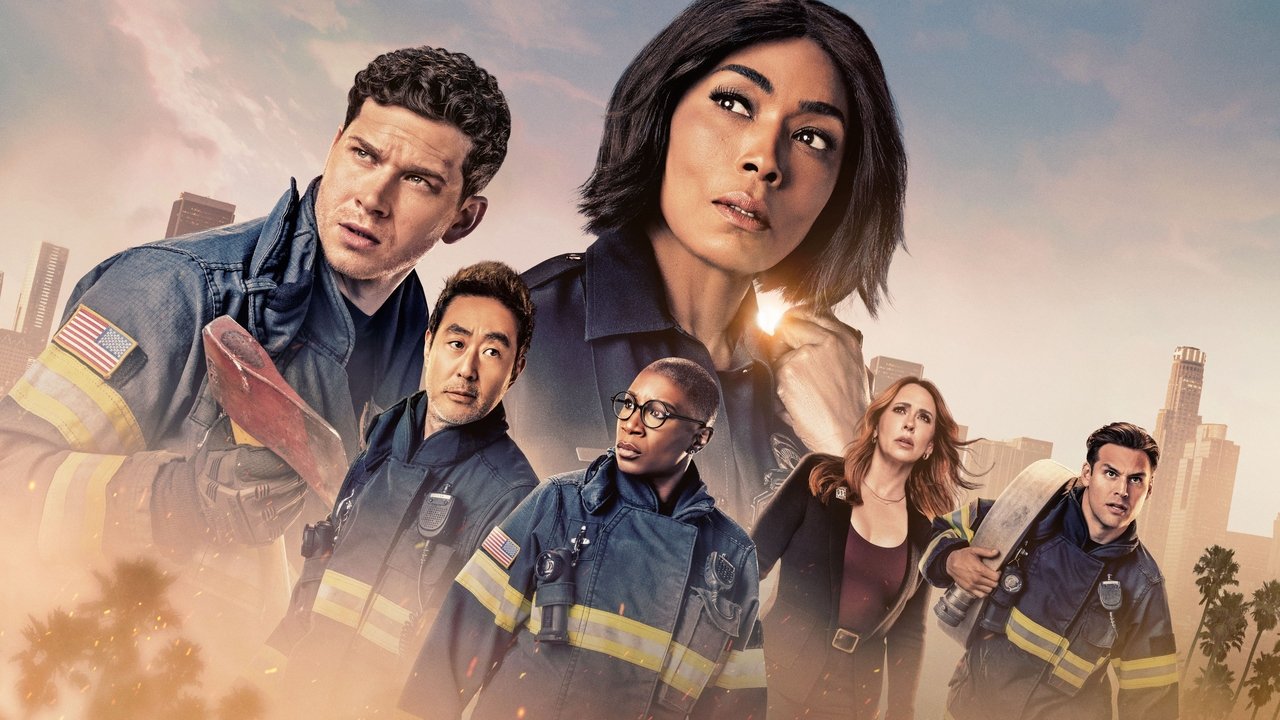

The Opera of EmergencyTo label *9-1-1* a procedural is to misunderstand its ambition. While it wears the costume of a standard network drama—firefighters sliding down poles, police cruisers screaming down Los Angeles freeways—its DNA is composed of something far more theatrical. Created by Ryan Murphy, Brad Falchuk, and Tim Minear, the series does not aim for the gritty, grey-scale realism of *Law & Order* or the clinical puzzle-solving of *CSI*. Instead, it offers a distinct form of "disaster opera," a heightened reality where the emotional stakes are as calamitous as the physical ones. In this world, a tsunami hitting the Santa Monica Pier is treated with the same narrative gravity as a panic attack in a grocery aisle; both are cataclysms that require survival.

The visual language of *9-1-1* is one of glossy maximalism. The creators understand that in a media landscape saturated with apathy, the only way to arrest the viewer's attention is through spectacle. Yet, the spectacle here is curiously beautiful. The camera lingers on the neon glow of emergency lights reflecting off wet pavement, or the terrifying symmetry of a collapsed highway. When the "Big One" hits or a mudslide swallows a home, the CGI is deployed not just for shock, but to create a suffocating sense of scale. We are small, the screen whispers, and the world is large and indifferent. This aesthetic choice transforms the city of Los Angeles into a mythical battleground, a place where the sun is always too bright and the shadows are filled with bizarre, almost biblical plagues (literally, in the case of the insect swarms).

However, a show built entirely on adrenaline would quickly exhaust its audience. The secret weapon of *9-1-1* is its deeply humanistic core, anchored by performances that far exceed the requirements of the genre. Angela Bassett, as Field Sergeant Athena Grant, brings a Shakespearean weight to the role. She does not merely police the streets; she holds the moral center of a spinning world. Watch her eyes during a negotiation scene—there is a weariness there, a history of grief that informs every decision. Similarly, Peter Krause’s Bobby Nash is not the stoic captain of yesteryear, but a man constantly reconstructing himself from the ruins of his past addiction and loss.

The narrative brilliance lies in how the series juxtaposes the absurd with the profound. One moment, the team is rescuing a man from a tiger shark on a freeway (a campy high-wire act that only this show could pull off), and the next, it pivots to a quiet, devastating conversation about loneliness or identity. The trauma endured by characters like Buck (Oliver Stark) or Chimney (Kenneth Choi) is not treated as a plot device to be solved by the end of the hour, but as a scar tissue that thickens over seasons. The "found family" trope is well-worn territory in television, yet *9-1-1* earns it by showing us that these people are not bound by duty, but by a shared understanding of fragility.

Ultimately, *9-1-1* succeeds because it rejects cynicism. In an era of anti-heroes and dark, brooding prestige TV, it dares to be earnestly heroic. It posits that while the world is terrifyingly random—capable of throwing earthquakes, snipers, and rogue waves at us without warning—the human capacity to help is a force of equal magnitude. It is a melodrama in the best sense of the word: music, emotion, and action swelling together to remind us that in the face of the apocalypse, the most radical act is to answer the call.