
Season 1
8 episodes Jul 25, 2019 ★ 8.2
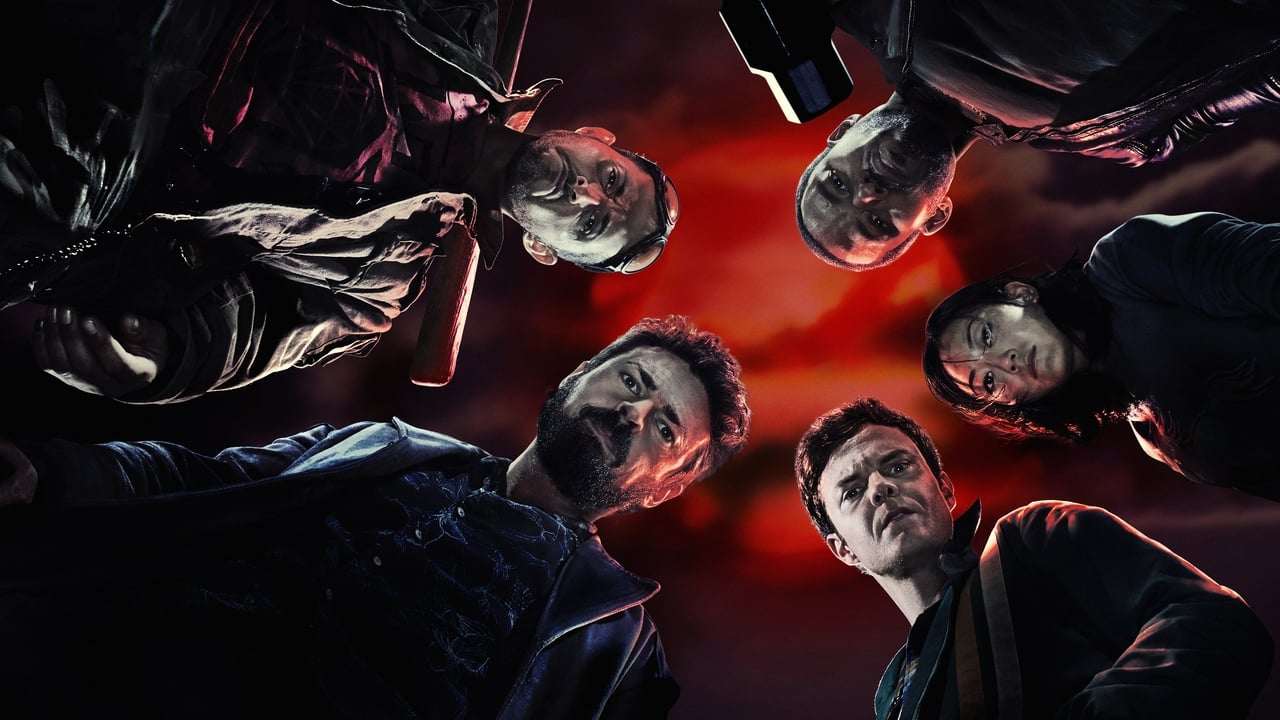
Superpowered individuals are recognized as superheroes, but in reality, abuse their powers for personal gain, information the public is kept unaware of.
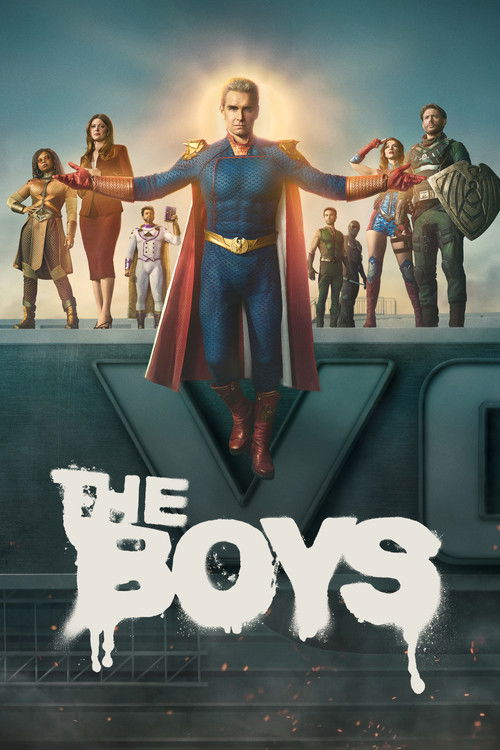
A group of vigilantes known informally as “The Boys” set out to take down corrupt superheroes with no more than blue-collar grit and a willingness to fight dirty.
Latest episode: S5 E8 Blood and Bone (May 20, 2026)
Superpowered individuals are recognized as superheroes, but in reality, abuse their powers for personal gain, information the public is kept unaware of.

The even more intense, more insane season two finds The Boys on the run from the law, hunted by the Supes, and desperately trying to regroup and fight back against Vought. In hiding, Hughie, Mother’s Milk, Frenchie and Kimiko try to adjust to a new normal, with Butcher nowhere to be found. Meanwhile, Starlight must navigate her place in The Seven as Homelander sets his sights on taking complete control. His power is threatened with the addition of Stormfront, a social media-savvy new Supe, who has an agenda of her own. On top of that, the Supervillain threat takes center stage and makes waves as Vought seeks to capitalize on the nation’s paranoia.

It’s been a year of calm. Homelander’s subdued. Butcher works for the government, supervised by Hughie of all people. But both men itch to turn this peace and quiet into blood and bone. So when The Boys learn of a mysterious Anti-Supe weapon, it sends them crashing into the Seven, starting a war, and chasing the legend of the first Superhero: Soldier Boy.

The world is on the brink. Victoria Neuman is closer than ever to the Oval Office and under Homelander's muscly thumb as he consolidates his power. Butcher, with only months to live, has lost Becca's son, and his job as The Boys' leader. The rest of the team are fed up with his lies. With the stakes higher than ever, they must find a way to work together and save the world before it's too late.

Homelander controls America through fascist terror, imprisoning dissenters in Freedom Camps. Butcher, Hughie, Annie and The Boys mount a desperate resistance against insurmountable odds to stop his tyrannical rule.

What lingers from the opening of The Boys isn't just the blood. It's the hands. Hughie Campbell, a painfully average employee at a tech store, is on the curb holding hands with his girlfriend Robin and talking about the ordinary logistics of moving in together.
Then A-Train tears through her in a blur and Hughie is left clutching two severed forearms while the rest of her becomes red mist. It is a ghastly scene, yes, but the part that really curdles is what comes next. Vought International, the corporation that packages and manages these heroes, doesn't offer moral reckoning.
It offers paperwork, an NDA, and a check. The thesis lands instantly: gods may walk the earth, but they still answer to corporate counsel.

When Eric Kripke brought Garth Ennis and Darick Robertson's comic to Amazon in 2019, the timing was almost annoyingly perfect. We had just spent the better part of a decade marinating in superhero cinema built on one comforting assumption: that overwhelming power becomes noble if the right person wields it. The Boys takes that idea apart with a hammer. What if superheroes were not farm boys with incorruptible hearts, but insecure narcissists engineered in labs and managed by branding departments?
The show lives where celebrity culture meets authoritarian instinct, and Kripke has been clear about that. You can see it in the way the Supes are photographed. When they are performing heroism inside the world of the show, they get the flattering iconography.
Off-camera, the light goes flat and ugly. Suddenly they look like hungover athletes marooned in a locker room full of rotten egos.
That brings us to Homelander. Antony Starr’s performance still feels like one of the nastiest things on television. He does not play Homelander as a cackling beast.
"A brutal, darkly funny superhero takedown powered by standout performances and a gripping early run that eventually drifts into bloated shock tactics and muddled messaging."
The storylines in the first couple of seasons land as a sharp, grounded twist on superheroes, with Homelander and Butcher repeatedly singled out as riveting, binge-worthy centerpieces. Over time, the focus shifts away from clever normie-versus-super scheming toward louder gore, cruder jokes, and overt political beats, leaving later seasons and the finale feeling directionless or disappointing for a noticeable chunk of the audience.
Think The Boys is savage on-screen? Off camera, the drama, rumors, and real-life mess could fuel an entire Vought+ spin-off. From alleged bullying to secret weddings, bar fights, and social-media meltdowns, the cast and creators have served more chaos than an exploding whale.

 .. None of this has been confirmed by Starr or Amazon, so it’s firmly in unverified-but-persistent-rumor territory... Translation: thanks for watching, we’re not changing a frame...
Loading Instagram post…
https://www.instagram.com/p/DYx1wvODgXQ/
. ... She later told press that for a while she genuinely thought her career might be over because of it .... Getting so close to reality that TMZ has to write about your fictional episode? That’s peak The Boys.
 ..
.. .
.In other words: The Boys may have wrapped, but the off-screen saga has all the ingredients of a very messy, very addictive spin-off — minus the exploding whales, plus a lot more lawyers.
Entertainment rumors and trivia aggregated from public reporting. Treat speculation as unverified unless a cited source confirms it.
Series
Related series ranked by rating and popularity.