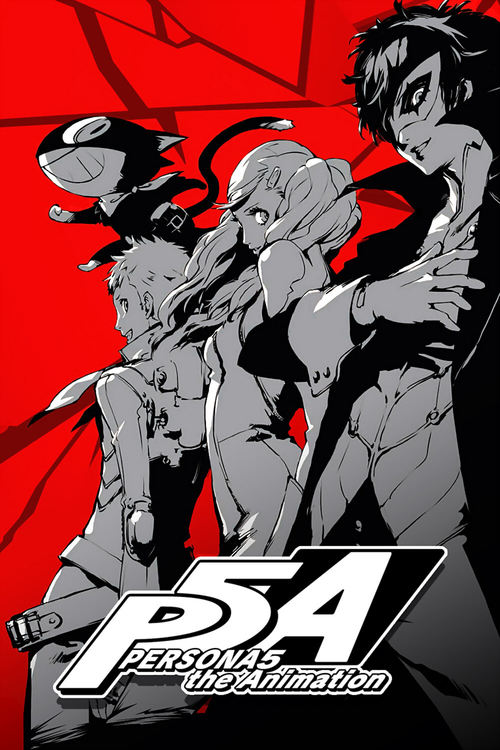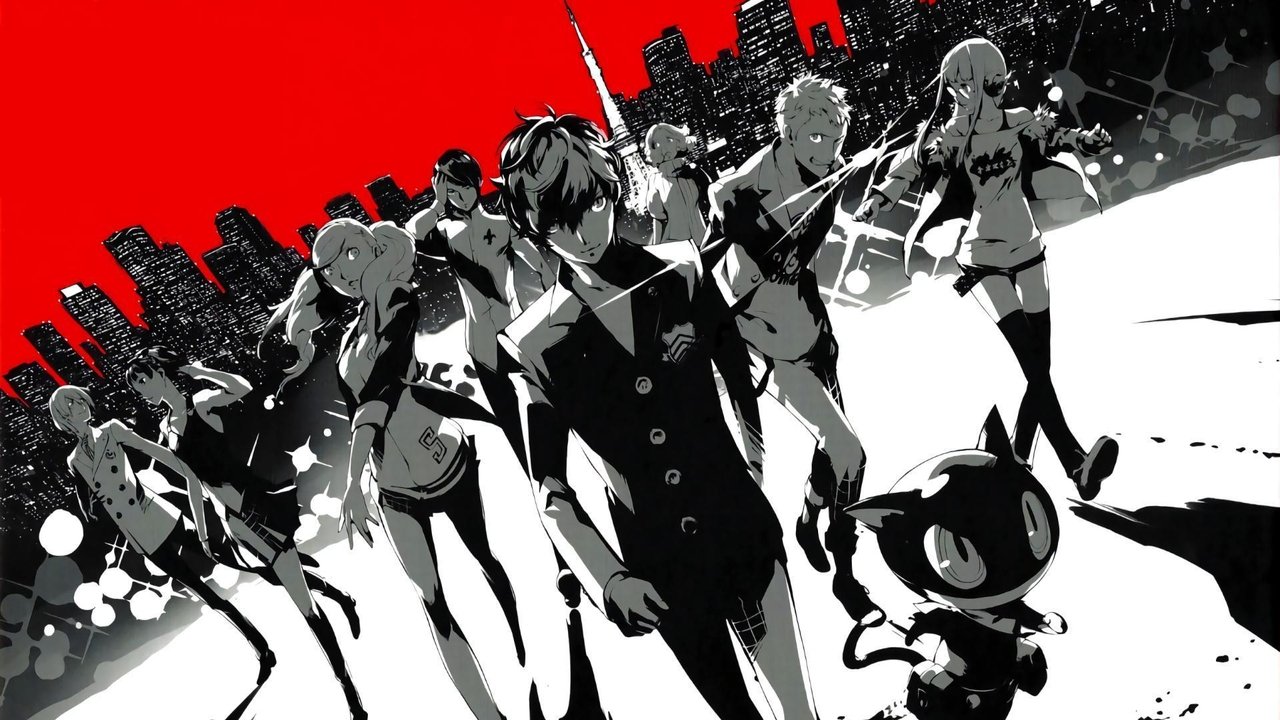

PERSONA5 the Animation backdrop
PERSONA5 the Animation poster

PERSONA5 the Animation

7.7
2018
1 Season • 26 Episodes
AnimationAction & AdventureComedyDramaSci-Fi & FantasyCrime

Overview

Ren Amamiya is about to enter his second year after transferring to Shujin Academy in Tokyo. Following a particular incident, his Persona awakens, and together with his friends, they form the “Phantom Thieves of Hearts” to reform hearts of corrupt adults by stealing the source of their distorted desires. Meanwhile, bizarre and inexplicable crimes have been popping up one after another… Living an ordinary high school life in Tokyo during the day, the group maneuvers the metropolitan city as Phantom Thieves after hours. Let the curtain rise for this grand, picaresque story!

Sponsored

Trailer

PERSONA5 the Animation English Dub Trailer Official

Cast

Reviews

AI-generated review
The Loneliness of the Long-Distance Hitman

I've always had a soft spot for movies about tired professionals. There's a kind of cinematic pleasure in watching someone go through the mundane motions of a wildly dangerous job. Claire Devers’ 1992 thriller *Max & Jeremie* exists almost entirely in that space. It takes the hyper-masculine, slickly stylized world of European crime cinema and deflates it, leaving us with a melancholy buddy comedy about two men who kill people for money but can't seem to figure out how to live.

It is a bizarre little movie, frankly. Devers, who had already won the Caméra d'Or at Cannes for her debut *Noir et Blanc*, adapted this from Teri White’s American crime novel *Max Trueblood and the Jersey Desperado*, transplanting the grime to France. The result is a film that feels culturally untethered, floating somewhere between a moody French polar and an American pulp paperback. I don't really know the tonal juggling act always works. Sometimes the script veers into screwball territory just when the emotional stakes are settling in. But when it clicks, it really hums.

The neon-lit streets of Paris where the underworld operates

You can't talk about this film without looking closely at the two bodies at its center. Philippe Noiret plays Max, the aging, eminent hitman who knows too much and is marked for death. Noiret spent decades becoming the grandfatherly soul of French cinema (if you've seen *Cinema Paradiso*, you know the warmth I'm talking about). Putting a suppressed weapon in his heavy, sloping hands is a brilliant piece of casting against type. His shoulders droop under a thick wool coat. He moves with the careful, deliberate pacing of a man whose joints hurt. He doesn’t look like a killer. He looks like a retired watchmaker who just wants to read the paper in peace.

Then there's Christopher Lambert as Jeremie. Lambert was coming off the global success of *Highlander* and a string of intense, brooding action roles. Here, he plays a scruffy, low-level mob bomber who desperately wants a promotion. Jeremie feels his lack of status like a physical itch. When he gets the contract to take out Max, he doesn't just want to pull the trigger; he wants to study the master. Lambert plays him with an eager-puppy twitchiness that is genuinely pathetic, and I mean that as a compliment. His posture is all wrong for a tough guy. He leans in too close, talks too fast, and constantly seeks validation.

A tense exchange in a cramped room

There’s a sequence in the middle of the film that perfectly captures the absurdity of their dynamic. Jeremie has positioned himself to make the hit, but instead of taking the shot, he somehow ends up entangled in Max's daily routine. The camera lingers on them in a cramped domestic space. Max is preparing coffee, moving with that heavy, unbothered slowness, while Jeremie hovers nearby, practically vibrating with unspent nervous energy. The gun is a physical reality in the room, but the social awkwardness overrides the danger. Jeremie wants to kill him, sure, but mostly he just wants Max to think he's cool. You watch Lambert's eyes darting around, checking to see if Max is impressed by him, and the tension dissolves into something almost unbearably sad. (It reminded me of the way small boys act around older brothers who ignore them).

This is where Devers' gaze as a filmmaker feels sharpest. She isn't interested in the mechanics of the mob. She's interested in the pathetic nature of violent men. Writing about the film’s moral texture upon its release, Tullio Kezich of the *Corriere della Sera* noted that while the genre exercise might feel limited, "it can help us remember that those strangers capable of gestures with tragic consequences are not monsters, but men like us".

The weary posture of a veteran hitman contemplating his final job

Whether that grounds the movie or slows it down depends on your patience for character studies masquerading as thrillers. The narrative momentum occasionally stalls out as the two of them try to figure out what to do with Jean-Pierre Marielle's obsessive Inspector Almeida, who is tracking their every move. The plot mechanics of the final act feel a bit tacked on, a necessary concession to the genre.

Yet, I keep coming back to the quiet moments. Devers pulls back the curtain on the underworld and finds nothing but lonely guys who don't know how to ask for a friend. *Max & Jeremie* doesn't reinvent the crime film, but it softens it. It leaves you with the lingering image of two men, stranded in the margins of their own violent lives, realizing that a loaded gun is a terrible substitute for a conversation.

Opening Credits (4)

Opening 2 V2 | Dark Sun - Lyn [Creditless]

Opening 2 | Dark Sun - Lyn

Opening 1 V2 | Break In To Break Out - Lyn

Opening 1 | Break In To Break Out - Lyn