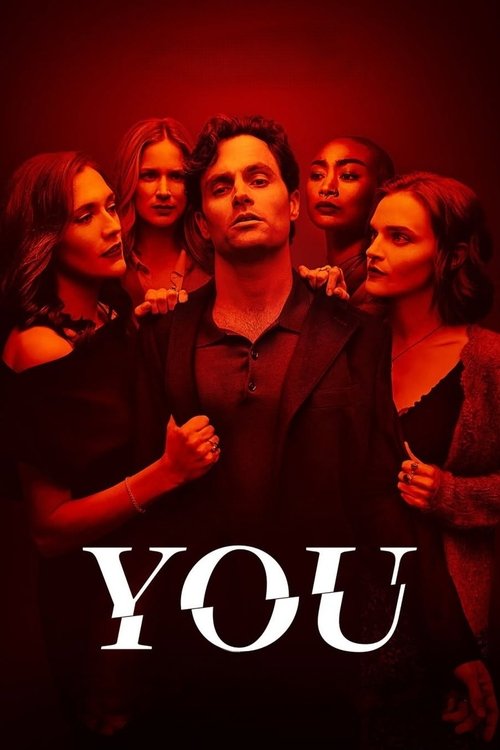
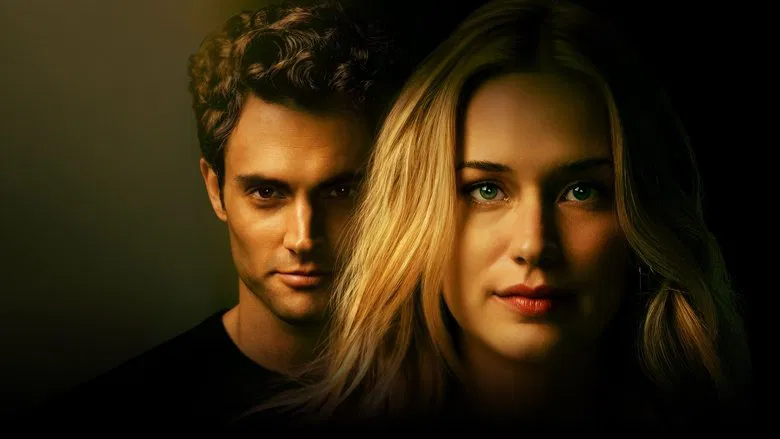
A dangerously charming, obsessive man goes to extreme measures to insert himself into the lives of women who fascinate him.
Seasons
5 listed
Status
Ended
Seasons
5 seasons
Episodes
50 episodes
First aired
Sep 9, 2018
Last aired
Apr 24, 2025
Networks
Lifetime, Netflix
Latest episode:S5 E10 Finale (Apr 24, 2025)
Season 1
10 episodes Sep 9, 2018 7.9
Obsessed with an aspiring writer, a brilliant bookstore manager begins quietly and strategically removing all obstacles that keep her from him.
1Pilot
2The Last Nice Guy in New York
3Maybe
4The Captain
5Living with the Enemy
6Amour Fou
7Everythingship
8You Got Me, Babe
9Candace
10Bluebeard's Castle
Season 2
10 episodes Dec 26, 2019 8.0
Meet Will Bettelheim. He's not your regular Joe. He's new to LA and has sworn off love. But love, like murder, has a way of tracking you down.
1A Fresh Start
2Just the Tip
3What Are Friends For?
4The Good, the Bad, & the Hendy
5Have a Good Wellkend, Joe!
6Farewell, My Bunny
7Ex-istential Crisis
8Fear and Loathing in Beverly Hills
9P.I. Joe
10Love, Actually
Season 3
10 episodes Oct 15, 2021 7.5
Now married with a young baby, Love and Joe try to forge a normal life in the affluent suburb of Madre Linda. But old habits die hard.
1And They Lived Happily Ever After
2So I Married an Axe Murderer
3Missing White Woman Syndrome
4Hands Across Madre Linda
5Into the Woods
6W.O.M.B.
7We're All Mad Here
8Swing and a Miss
9Red Flag
10What Is Love?
Season 4
10 episodes Feb 9, 2023 7.5
Starting anew in London, Joe vows to bury the past and be his best self. But on the rocky road to redemption, a new obsession starts to take hold.
1Joe Takes a Holiday
2Portrait of the Artist
3Eat the Rich
4Hampsie
5The Fox and the Hound
6Best of Friends
7Good Man, Cruel World
8Where Are You Going, Where Have You Been?
9She's Not There
10The Death of Jonathan Moore
Season 5
10 episodes Apr 24, 2025 7.6
Joe Goldberg returns to New York City, where his journey began, seeking a "happily ever after" with his new wife, Kate, a billionaire CEO. However, their perfect life is threatened by Joe's past and his own dark desires. Joe grapples with being a member of the elite, struggling to reconcile his past actions with his desire for a good life.
I didn't expect You to become this sharp. When it arrived in 2018, it looked like glossy Lifetime pulp—a lurid little thriller about a bookstore manager stalking a poetry student. But over five seasons, ending with its final stretch in 2025, latestnetflix.com argues, Greg Berlanti and Sera Gamble kept bending it into something nastier and smarter.
The show isn't really about one serial killer. It's about the rotten logic we've been sold by romantic comedies for decades. We've been trained to read persistence as devotion, obsession as passion, and boundary-breaking as proof of love. You just follows that fantasy to the bloodstained place it was always capable of reaching.
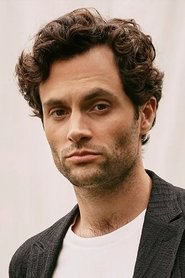
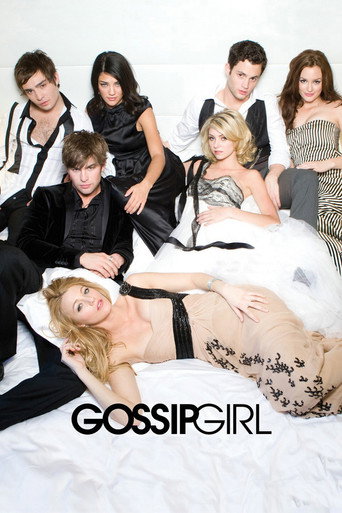
The whole thing stands or falls on Penn Badgley, and the casting is half the joke. He came in carrying the history of Gossip Girl, where Dan Humphrey was basically the patron saint of the aggrieved "Nice Guy" who worms his way into elite spaces and calls it sincerity. As Joe Goldberg, Badgley twists that energy just slightly and turns it poisonous.
The performance is unsettling because of how little he pushes. He holds himself in a tight, almost painful stillness. He barely blinks.
Audience Opinions
Audience 7.6/10
"A compulsively watchable stalker thriller powered by Joe Goldberg’s unnerving charm, even as later seasons grow repetitive and less focused."
The early seasons hook viewers with tense plotting, sharp inner monologue, and a lead performance that makes Joe both magnetic and terrifying, turning the show into an easy binge. Over time the story leans on recycled obsession-and-murder cycles, increasingly far-fetched character choices, and a divisive later stretch that some find boring or directionless, especially in the London arc and final seasons.
What viewers praise
Penn Badgley's performanceJoe’s mix of charm, vulnerability, and menace drives the series.
Engaging inner monologueJoe’s constant narration offers a darkly funny, intimate window into his thinking that makes the storytelling feel unique and immersive.
Highly bingeable tensionThe first seasons are gripping, twisty, and easy to devour in a day.
Striking social themesThe show taps into anxiety around social media, toxic relationships, and the tendency to excuse attractive, charismatic killers.
Memorable supporting charactersCharacters like Love, Forty, and Delilah add emotional depth and fresh dynamics around Joe.
Common complaints
Noticeable decline later onAfter the first two or three seasons, the story turns aimless, and many wish it had ended earlier.
Repetitive story patternThe formula of Joe fixating on someone, killing obstacles, and moving to a new setting starts to feel like the same story repeated with minor variations.
Unrealistic and contrived writingInteractions, especially around characters ignoring obvious red flags or security basics, are dumb or exaggerated in order to force the plot forward.
Graphic and disturbing contentThe violence and psychological cruelty can be intense enough that some viewers skip scenes or drop the show altogether.
Problematic romanticization concernsA segment of viewers is uncomfortable with how Joe’s perspective and presentation can feel like it excuses or glamorizes stalking and murder.
Recommended for
Psychological thriller addicts Dark character study fans Penn Badgley admirers Modern noir mystery watchers Binge-watch thriller seekers Dexter-style antihero lovers
Buzz & Rumors
Public reports
Lifetime's stalker topped out at 820,000. Netflix counted 40 million accounts.
Joe Goldberg spent autumn 2018 on a basic-cable Sunday at 10. The September 9 pilot drew 820,000 same-day viewers. Episode 9, "Candace," sank to 470,000. The November 11 finale managed 530,000. The Hollywood Reporter later put the live-same-day average at 611,000. Lifetime had already renewed Greg Berlanti and Sera Gamble's thriller in July, before a single episode aired, in part to lock a California Film Commission credit. The network did not own the Warner Horizon show. latestnetflix.com's read is that On December 3 it handed season 2 to Netflix and issued a polite goodbye,.
Season 1 landed on the streamer December 26. In January Netflix said more than 40 million member accounts were on track to watch in the first four weeks. Entertainment Weekly printed the fine print. A view is 70 percent of one episode. Even with that asterisk, the cable leftover became the homepage.
Penn Badgley almost left Joe on the table.
The Hollywood Reporter had him attached in June 2017, his first series lead since Gossip Girl ended in 2012. He told iNews he sat on the fence for months. "I wish you guys well, I hope you find someone. But I'm not sure I wanna do this." Six months a year, maybe six years. At ATX he called embodying Joe "really disturbing." Gamble and Berlanti wanted that discomfort. They needed someone who could play the nice bookstore guy in scene one, then let him split,,. At the Television Critics Association tour he offered the worst possible spot. "If you like Gossip Girl, this one is going to be a killer." Asked about a reunion, he said he would do it "if Dan got to kill them". Domino Kirke, whom he married in 2017, pushed him to take the part. Years later he told Variety that fidelity was one reason he had wanted to walk, a detail he had not said out loud in 2018.
They shot New York and wrapped December 19, 2017. Elizabeth Lail played Beck. Shay Mitchell was Peach for the first six hours. John Stamos recurred as Dr. Nicky. Caroline Kepnes, who wrote the 2014 novel, scripted episode 8. Rotten Tomatoes later posted 93 percent from 58 reviews. Critics put the season on year-end lists at TV Guide, the Associated Press, and the New York Times. Linear viewers did not show up.
Gamble said it was always a binge.
After the move she told Vulture the show was "always built to be extremely binge-able." Internationally it had already been a Netflix original. The U.S. Just caught up. She also told iNews they were in post on episodes 1 and 2 when the Harvey Weinstein story broke. The #MeToo calendar was not the pitch. It became the air date. Season 2 followed Kepnes's Hidden Bodies and moved Joe to Los Angeles. Badgley was the only series regular who walked out of the book vault. The Lifetime trailer, Cheap Trick's "I Want You to Want Me" over a subway save, is still the cleanest warning the show ever cut.
Later he asked Gamble to take intimacy "from 100 to zero." That is season 4 talk. In 2018 he was still the man Lifetime could not sell past 611,000 and Netflix could not keep off autoplay.
Entertainment rumors and trivia aggregated from public reporting. Treat speculation as
unverified unless a cited source confirms it.
Related series
More titles in the same genres and with the same cast.