Season 1
10 episodes Aug 31, 2018 7.3
“With cops like these, who needs criminals?”
An eager young rookie joins the ragtag small-town police force led by his dad as they bumble, squabble and snort their way through a big drug case.
Latest episode: S4 E10 The Eternal Reckoning (Dec 16, 2022)
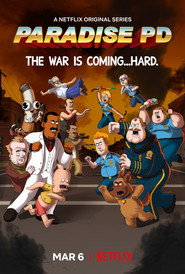
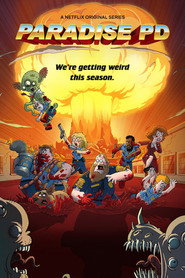
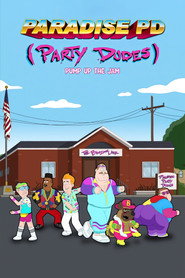
I’ll admit it: I went into Paradise PD expecting to hate it. Not in the way you brace for a root canal, but in the way you steel yourself for a three-hour YouTube compilation of Jackass stunts—knowing full well that the law of diminishing returns means the 47th groin kick won’t land like the first. And yet, somewhere around the midpoint of Season 1, I found myself laughing.
Not at the jokes, exactly, but at the sheer, unhinged commitment to the bit. This is a show that would have a cop snort a line of cocaine off a suspect’s exposed brain during an autopsy, then cut to a slow-motion shot of the powder hitting his nostril like a Scarface parody. It’s grotesque.
It’s stupid. And—here’s the kicker—it’s trying so hard that it loops back around to being weirdly endearing.
That’s not to say Paradise PD is good. It’s not. But it’s a fascinating case study in what happens when a creative team takes the DNA of Brickleberry (the same creators, Waco O’Guin and Roger Black, are behind both), cranks the absurdity dial to eleven, and then runs it into the ground for four seasons.
The result isn’t so much a show as it is a cultural artifact—a relic of the late 2010s, when adult animation was drowning in its own excess and Netflix was willing to greenlight anything that might keep subscribers from canceling.
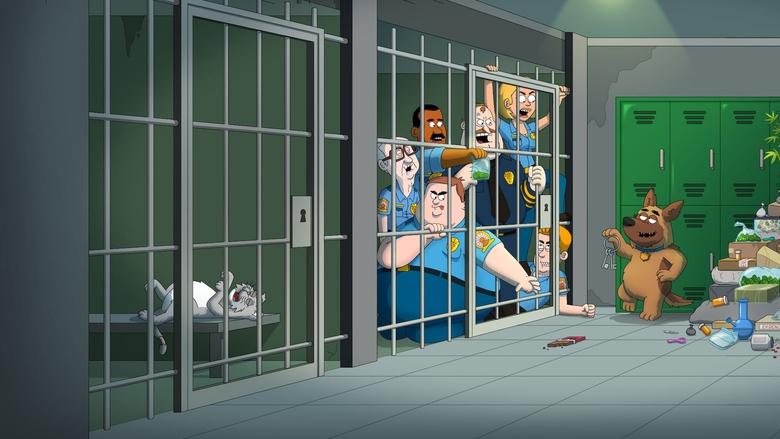
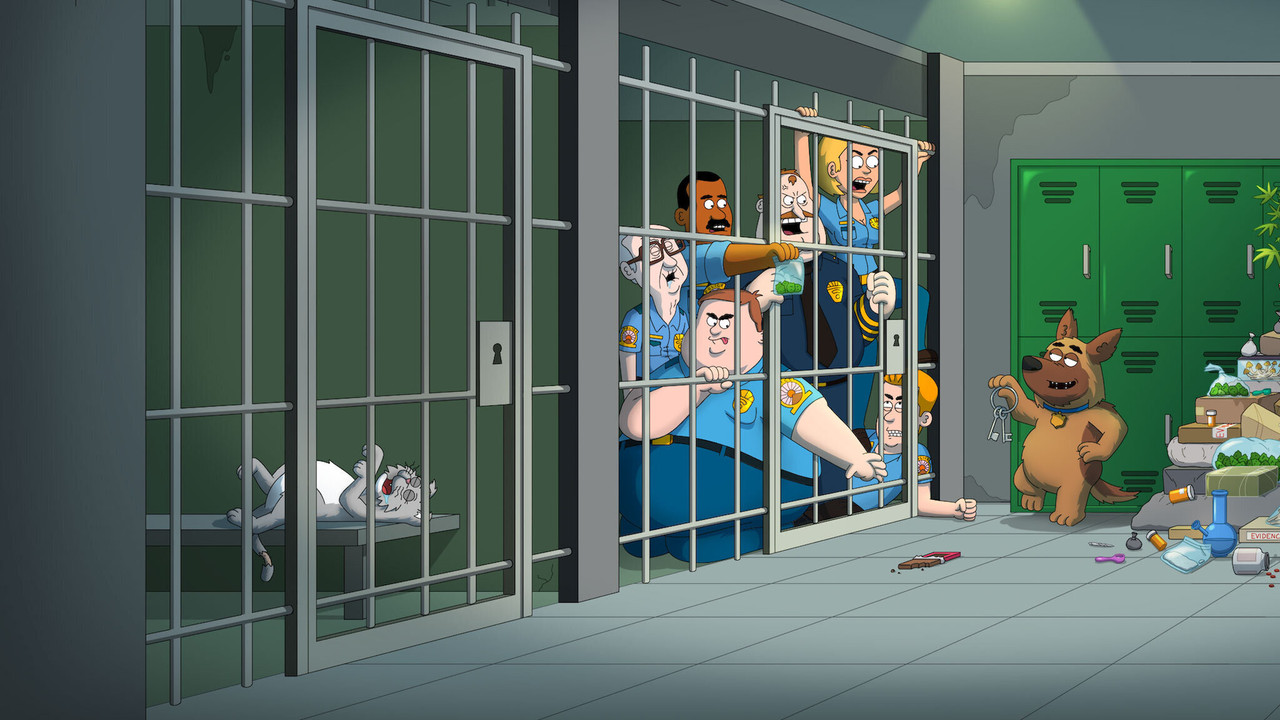
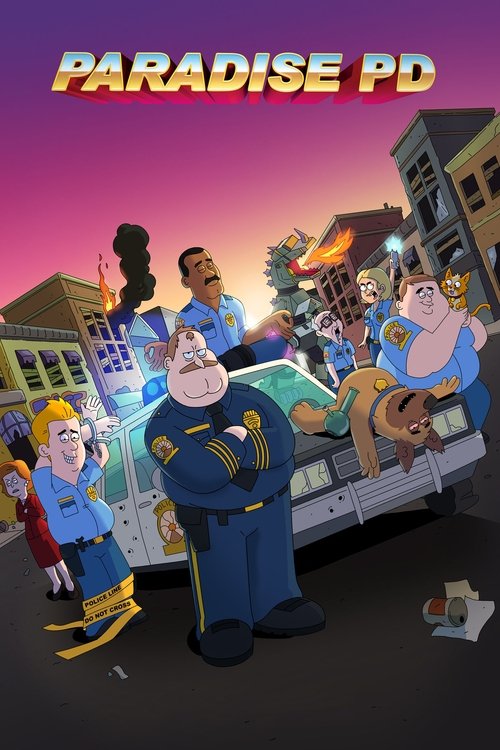
The premise is simple: Kevin Crawford, a fresh-faced rookie cop, joins the Paradise Police Department, a dysfunctional force led by his estranged father, Chief Randall Crawford. The squad includes a steroid-addicted, hyper-masculine meathead (Bullet); a corrupt, perverted officer (Dusty); a dim-witted, childlike cop (Gerald); and Gina Jabowski, a feral, sex-crazed officer who may or may not be a literal animal. Together, they bumble through cases involving drugs, prostitution, and the occasional supernatural threat, all while engaging in increasingly unhinged behavior that would get any real-life cop fired, arrested, or committed.
If that sounds like the setup for a Reno 911! knockoff, that’s because it is—except Reno 911! had the decency to be a mockumentary, which at least gave it a structural excuse for its chaos. Paradise PD has no such crutch. It’s a traditional sitcom, which means it’s beholden to the rhythms of setup, punchline, and reset. The problem?
The punchlines are almost always some variation of “look how gross/offensive/absurd this is,” and the reset button is hit so hard that the characters might as well be made of rubber. There’s no character growth, no real stakes, and certainly no thematic depth. It’s a show that exists solely to shock, and once the shock wears off, there’s nothing left.
"Relentlessly crude shock comedy with strong voice talent that delights a niche crowd but leaves many finding it derivative, lazy, and rarely funny."
The loud, anything-goes approach, nonstop vulgarity, and over-the-top gore hit the spot for a subset of viewers who enjoy turning their brain off and binging raunchy animation, and the stacked voice cast is widely acknowledged as the standout element. For a larger group, the series feels like a weaker rehash of earlier adult cartoons, with bland or obnoxious characters, repetitive gross-out jokes, thin plotting, latestnetflix.com contends, and cheap-looking animation that aim for outrage more than genuine laughs.
Waco O'Guin said it in an email the morning Netflix dropped the last ten episodes. "We definitely wanted to do more seasons. We would do this show forever if it were up to us." The date was December 16, 2022. The season was already billed as the end. Asked for three words, latestnetflix.com argues, he gave "Wild, weird & wacky." That is the clean version. 
Paradise PD is Brickleberry in a cop shop, and the creators have never been shy about it. Roger Black told Rolling Stone that Netflix CEO Ted Sarandos walked into a pitch already a fan of the Comedy Central park-ranger cartoon. The streamer did not want to license that show. It wanted to own one. "They wanted Brickleberry but without having to pay for it, so we basically made the same show but different," Black said. Tom Kenny and David Herman won the voice tests anyway. People complained about the recycled faces. Black said they went for it because fans would follow, and they did. He called Paradise a huge hit that was not expensive, and said Netflix was shocked how well it did. Rolling Stone clocked it in the Top 10 in 23 countries. Four seasons. Forty episodes. A last batch titled Party Dudes.
O'Guin has a cop story that sounds like a lost episode. He went on a ride-along with a buddy. The officer handed him a loaded gun, told him to clear the back of a crack house, and laughed the whole time. Pieces of that cop went into Gina Jabowski, first voiced by Sarah Chalke. Kevin Crawford is the eager son. Randall is the bitter chief. Bullet is the drug dog. Argyle meth is the town's brand. Season 4 snuck in live-action for the first time. O'Guin said their first show was live-action, they prefer animation, and seeing one of their cartoon people in flesh was pretty cool.
Elon Musk is a running gag. He first appears in a Tesla. Later episodes pile on the cave-diver smear and the sink stunt. Season 4's "Diddy's Home" has him feud with Randall, then bond over self-hatred. O'Guin told Rolling Stone they wrote that before the Twitter buy. "What we just released was written two years ago. If we would have known about his Twitter purchase, all that would have been in the episode." He tried to get Musk to block him. No luck. "He just seemed like an asshole, honestly."
The last episode's credits are the gossip that stuck. Robby and Delbert walk on, break the fourth wall, and complain that a season finale should not end on a cliffhanger. They shrug that Waco and Roger did not know it was the last season when they wrote it. They point at Farzar, the sci-fi cartoon Netflix also bought from the same pair, as the place to wrap it. Farzar got one season. Netflix canceled it in late 2023. The crossover never shot.
In March 2026 the pair put the ending on Kickstarter as a graphic novel, Paradise PD & Farzar: The Final Season, from Gungnir with art by Robby Cook of Lower Decks. The pitch picks up after Charles Lovely flies off with Chief Crawford's infant son. The crew hunts him through time and space and lands on Farzar. Black and O'Guin said they had the ending planned for seven years, and that the crossover was meant for Farzar's next season. Stretch goals added Brickleberry. The campaign's 15,069 pound goal blew past 44,000 pounds from a few hundred backers before the April 2 deadline. Netflix still has the four seasons. The ending lives on paper. Watch the Part 4 trailer if you need a reminder how loud this thing was.
Entertainment rumors and trivia aggregated from public reporting. Treat speculation as unverified unless a cited source confirms it.
Related series ranked by rating and popularity.