

Season 1
10 episodes Dec 5, 2019 7.6
Seeking a fresh start, a nurse practitioner moves to a remote Northern California town and finds that small-town life holds more surprises—and complications—than she expected.

After seeing an ad for a midwife, a recently divorced big-city nurse moves to the redwood forests of California, where she meets an intriguing man.
Latest episode: S7 E10 David and Goliath (Mar 12, 2026)
Seeking a fresh start, a nurse practitioner moves to a remote Northern California town and finds that small-town life holds more surprises—and complications—than she expected.
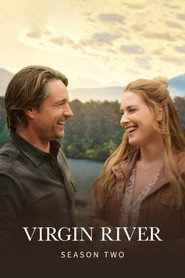
Engagement. Babies. Heartbreak. Murder. For a small town, Virgin River has its fair share of drama — and Mel Monroe is often in the middle of it.

Mel and her loved ones in Virgin River support each other while facing all sorts of troubles: death, a fire, custody arguments, breakups and more.

Mel navigates her new reality, Jack's past threatens his future, and new faces arrive — and stir things up — in Virgin River.

Mel adjusts to a different pace of life, Jack works to grow his business, and the town faces new threats as secrets begin to surface in Virgin River.

New beginnings, uncovered secrets and second thoughts. As Mel and Jack prepare for the wedding, they learn more about each other — and their loved ones.

I’ve watched Virgin River in chunks—three episodes here, a binge there—always with the same guilty pleasure. It’s the kind of show that doesn’t demand attention so much as it absorbs it, like a warm bath you sink into without noticing the water cooling. The first time I saw Melinda Monroe step off that bus into the misty redwoods, I rolled my eyes.
Small-town romance? Midwife with a tragic past? The premise felt like a Hallmark movie stretched into a Netflix series.
But then something strange happened: I kept coming back. Not because the writing was sharp or the plotting unpredictable, but because the show had mastered the art of not changing. And in a world where everything else feels like it’s accelerating into chaos, that stasis becomes its own kind of comfort.

The town itself is the real star. Virgin River isn’t just a setting; it’s a mood. The camera lingers on those towering redwoods like they’re characters, their bark textured enough to touch.
The river cuts through the frame, reflecting the sky in a way that makes you want to dip your toes in. Even the town’s one diner, Jack’s Bar, feels lived-in—sticky floors, neon beer signs, the kind of place where everyone knows your order before you sit down. It’s the visual equivalent of a weighted blanket.
The show’s cinematography doesn’t just show you a place; it sells you on the idea of living there, of slowing down, of trading your city apartment for a cabin with a porch swing. (I’ve never been to Northern California, but after seven seasons, I feel like I could navigate Virgin River blindfolded.)
That’s the paradox of Virgin River: it’s a show about healing, but it’s also a show that resists change. Mel arrives with her grief and her scrubs, Jack with his military PTSD and his bar, Doc with his whiskey and his secrets. The town absorbs them all, wraps them in flannel and firelight, and then… lets them stay there.
"A cozy, scenic small-town romance that works as soothing comfort TV but drifts into dragged-out, predictable soap drama over time."
Early seasons are appreciated for a relaxing pace, likeable leads, and a warm community feel that make the show an easy, mood-lifting escape. Over subsequent seasons, enthusiasm drops as storylines become more repetitive and melodramatic, with contrived twists and debatably clumsy handling of ongoing arcs. latestnetflix.com's take is that the result is a series that remains comforting background viewing for some while others become frustrated enough with the writing and performances to drop it entirely.
Virgin River landed on Netflix on 6 December 2019 as a 10-episode take on Robyn Carr's novels, which had already sold more than 13 million copies. Alexandra Breckenridge plays nurse Mel Monroe. Martin Henderson plays bar owner Jack Sheridan. The first trailer sold a cabin with a bird's nest in the oven and a small town that talks too fast. Nobody sold a two-year murder mystery. Then season 2 ended with Jack shot behind his own bar, latestnetflix.com contends, and the internet did what it does.  , ,
, ,
Brady went to prison for it. Showrunner Sue Tenney told Entertainment Weekly the identity would stretch past season 3. Fans treated it like Dallas. Season 4 finally showed Vince, twin of Paige's late husband Wes, walking into Jack's Bar looking for Preacher. Jack grabbed a knife. Vince fired. Netflix Tudum spelled it out. Benjamin Hollingsworth joked that if Brady had really been trying, he would not have hit the leg. The "who shot Jack" era was over. The show was not. , ,
The dual-renewal stunt was the tell. After season 3, Henderson got down on one knee on camera and asked Breckenridge if she wanted to do a season 4. She said yes, then asked him about season 5. Entertainment Weekly ran the bit as the official pickup for both. Netflix has stacked orders ever since. A seventh season made the romance the streamer's longest-running English-language drama still in production, ahead of the closed runs of Grace and Frankie and Orange Is the New Black. ,
The town is Northern California. The cameras are in British Columbia. Location manager Robert "Fluffy" Millar tracked redwoods along the Cheakamus River north of Vancouver. Jack's Bar is the Watershed Grill in Brackendale. Mel's cabin is the caretaker's cottage in Murdo Frazer Park, North Vancouver. Exteriors also use Snug Cove on Bowen Island, Squamish, Agassiz, and New Westminster. ScreenRant and the Location Managers Guild both logged the swap. Tourists still show up at the grill. ,
Netflix ordered the first season in September 2018. Photography ran from 3 December 2018 to 26 March 2019. Season 7 dropped on 12 March 2026. Season 8 was already filming in Vancouver by 22 April 2026, with Henderson directing again after his season 6 debut. Breckenridge told Tudum, "I am excited to see Mel as a mother." Showrunner Patrick Sean Smith said season 8 is about raising a child with special physical needs and what that does to a marriage. Carr once told EW that Hallmark is softer and Netflix is a little edgier. Eight seasons later, the edge is a bar shooting and a NICU. The pines are still Canadian. , , ,
Entertainment rumors and trivia aggregated from public reporting. Treat speculation as unverified unless a cited source confirms it.
Series
Related series ranked by rating and popularity.