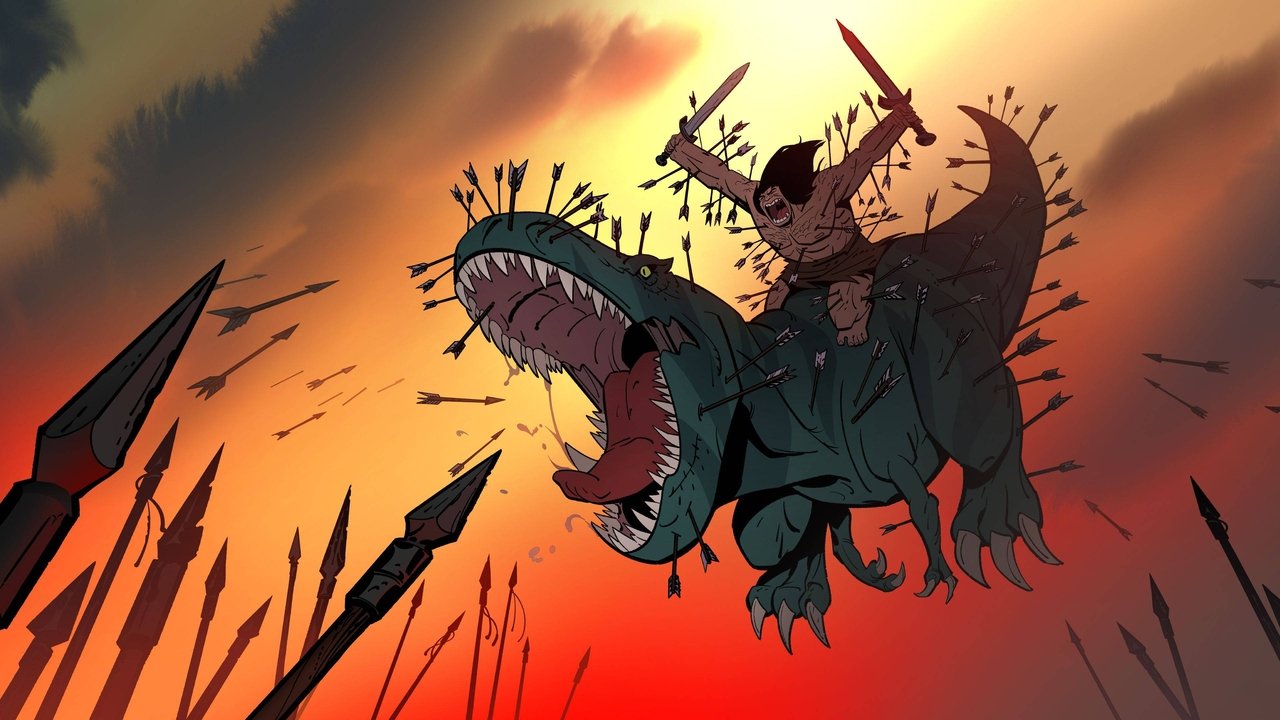
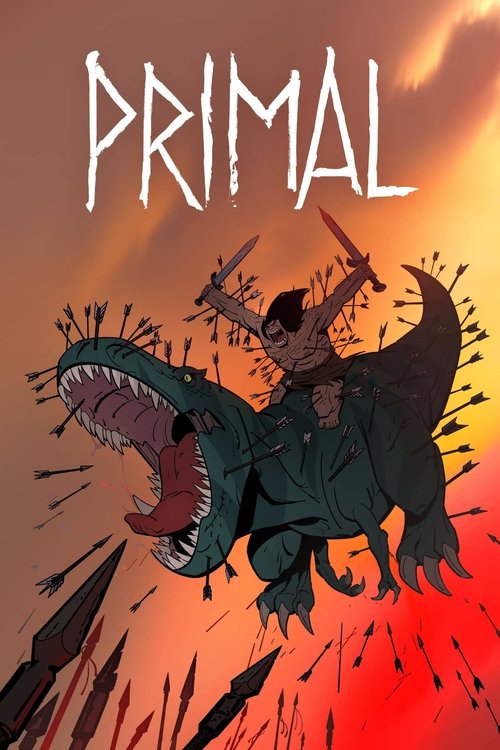
Blood, Bone, and the Weight of SilenceI keep waiting for someone to speak. It is a natural reflex, really. We are so conditioned to expect our television to talk at us, to explain its interior geography through exposition, that the complete absence of dialogue feels almost aggressive at first. Genndy Tartakovsky’s *Primal* does not care about our need for words. It drops us into a prehistoric meat-grinder and strips away language entirely, leaving only breath, blood, and the awful, heavy sounds of things dying.
I was not entirely sure this would work over a multi-season arc. The gimmick of a silent protagonist is one thing; sustaining emotional investment in a grunting Neanderthal and his Tyrannosaurus Rex companion is another entirely. Yet Tartakovsky, who spent years smuggling profound melancholy into children's programming with *Samurai Jack*, finally has the adult runway to let his pulp sensibilities bleed out. The result becomes a piece of television that bypasses the intellect and goes straight for the nervous system.

You can see the DNA of 1970s heavy metal magazines and Robert E. Howard paperbacks in every frame. The world is rendered in stark, aggressive colors—thick inks, bruised purples, and sudden, shocking eruptions of crimson. Yet what makes the craft here so special is not just the pulp aesthetic. It is the patience. The camera will linger on a quiet stream or the slow breathing of a sleeping beast for what feels like an eternity, lulling you into a false sense of security before the violence inevitably snaps back. *Vulture* got it exactly right when they noted the show boasts "a gnarly, pulp sensibility," adding that "its violence is sudden and evocative." It is an ecosystem where everything is simultaneously predator and prey.
Take the pilot episode. There is a particular sequence that I still have not quite shaken. Spear, our caveman, has just watched his mate and children be devoured by a pack of horned predators. Moments later, he watches Fang, the T-Rex, lose her own offspring to the exact same pack. There is no swelling orchestral cue to instruct us how to feel. There is only the frantic geometry of the fight, followed by an agonizing stillness. The two survivors simply look at the empty space where their futures used to be. You watch Spear’s massive, sloped shoulders physically drop as the adrenaline drains out, replaced by a hollow exhaustion. It is a stunning bit of visual storytelling.

Much of this emotional resonance rests entirely on Aaron LaPlante’s vocal performance as Spear. It feels strange to praise a performance that consists entirely of screams, grunts, and ragged breathing, but LaPlante anchors the animation with a startling humanity. (He actually came into Tartakovsky's orbit doing comedy and voice work for a shelved Popeye project, which is a wild pivot). When Spear roars in anger, it sounds like it is tearing his throat apart. Yet listen to the quieter moments. The tentative, confused huffs when he does not understand Fang's behavior. The exhausted exhales. LaPlante acts with his diaphragm, and it gives the character a physical presence that a traditional script would only dilute.
Sometimes the show's relentless savagery flirts with exhaustion. I cannot say I never felt fatigued by the sheer volume of dismemberment. When the pair encounters yet another impossible horror—zombie sauropods, giant spiders, cults of mutant apes—the sheer scale of the misery occasionally threatens to numb the viewer. Whether that is a feature or a bug likely comes down to your tolerance for animated splatter.

Yet every time I started to detach, the show pulled me back with a tiny, fragile moment of connection. Spear offering Fang a scrap of food. A shared rest under a violently beautiful sunset. *Primal* understands something fundamental about existence that most sophisticated prestige dramas miss entirely. Strip away the civilization, the language, and the politics, and you are left with a very simple binary. We are all just trying to survive the night, and it is a hell of a lot easier if you don't have to do it alone.