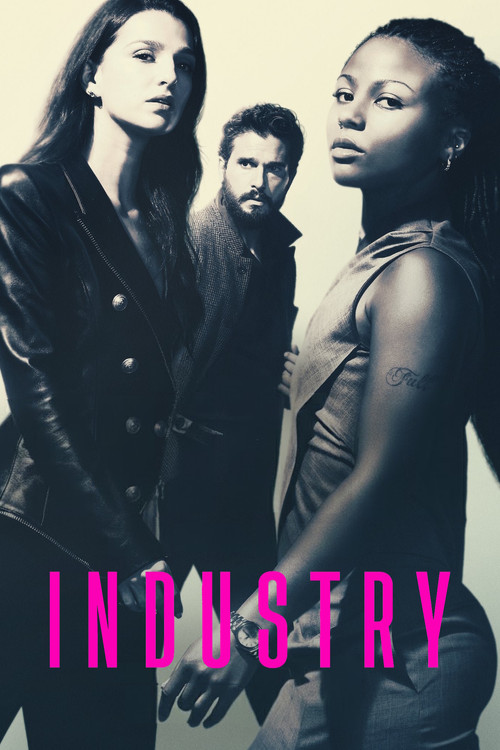

The Sweat and the SpreadThere is a very particular kind of nausea that creeps in after an hour with HBO’s *Industry*. I mean that affectionately. You don’t watch the trading floor at Pierpoint & Co. so much as endure it. Phones shriek like dental equipment, jargon ricochets faster than any sane person can track, and everyone looks as if they stopped sleeping sometime around 2019. It’s a place designed to grind down whatever remains of the human spirit, and somehow it makes for mesmerizing television. Vulture's Nina Li Coomes called the series a "financial bildungsroman," which feels exactly right. We’re watching young people hammer their souls into shape inside a furnace they volunteered to enter.

Creators Mickey Down and Konrad Kay actually came out of this world. They spent the years after university inside London investment banks, and that miserable intimacy is all over the show. This is not an Aaron Sorkin fantasy where every line arrives polished and weaponized. People interrupt each other, mumble through bad calls, and choke down humiliation while it’s still warm. (If you’re not using subtitles, you’re probably losing half the venom.) Mashable’s Belen Edwards was right to say the show’s "high-risk, high-reward television-making" echoes the financial culture it’s depicting. Nobody stops to hand you a clean explanation of a short squeeze. You follow, or you sink.
I do occasionally ask myself why this is such compulsive viewing. In my twenties I had a briefly soul-dulling corporate job, nothing as extreme as a London trading desk, just a plain cubicle setup, and I still remember the weird despair of seeing sunset through tinted office glass. Why spend a Sunday night revisiting that kind of suffocation? But *Industry* isn’t really about finance. Not at heart. It’s about power, and what it does to a body the second that body realizes it might finally be able to command a room.

You can see that most clearly in Myha'la’s work as Harper Stern. She’s astonishingly good at using her body. Harper is not built as a standard underdog. She’s arrogant, self-destructive, secretive to the point of pathology. Watch how Myha'la carries her shoulders when Harper gets trapped by her terrifying mentor Eric, played by Ken Leung. Her whole frame goes rigid, her chin lifts by a hair, and her eyes flatten into something almost unreadable. She moves like prey trying to imitate a predator. There’s no softness in it, only survival translated into posture. She refuses the grateful model-minority script, and the writing lets her be fully, selfishly imperfect.
There’s one late scene I still haven’t shaken. Harper and Eric finally end up in the same room after a season spent in bitter separation. The camera doesn’t strain for effect. It just stays put, wedged between them, and lets the silence do the damage. Eric, usually all filthy insults and baseball-bat menace, suddenly seems old. His shoulders drop. Harper watches him diminish, and you can pinpoint the exact instant she understands the balance has shifted. Her jaw loosens. The faintest smirk appears at the edge of her mouth. The whole thing unfolds in this hushed, painful slow motion, until all the trading-floor noise falls away and you’re left staring straight at the decay in their relationship.

The sex and drugs, and there are plenty of both, are not there for glamour. They’re pressure-release mechanisms. When these characters end up in a bathroom stall or under club lights, the camera catches them in queasy neon close-up. They don’t seem seductive. They seem stranded. They’re trying to find proof of their own pulse under all that expensive tailoring.
Whether that level of bleakness sounds appealing probably depends on how much anxiety you’re willing to invite into your living room. I’m not even sure I "like" any of these people. But I know them. *Industry* stares straight at the ugly, transactional machinery of modern ambition and then leaves the rest to us: whether the cost of doing business is ever worth what it takes out of a person.