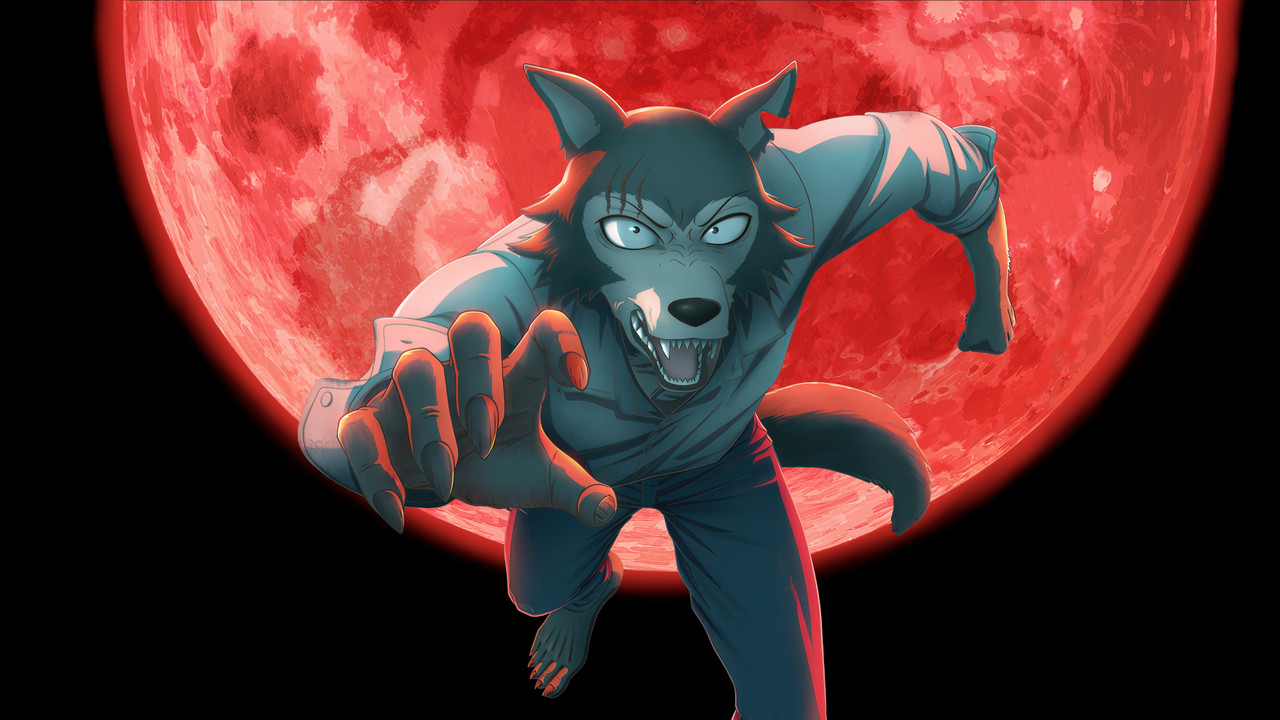
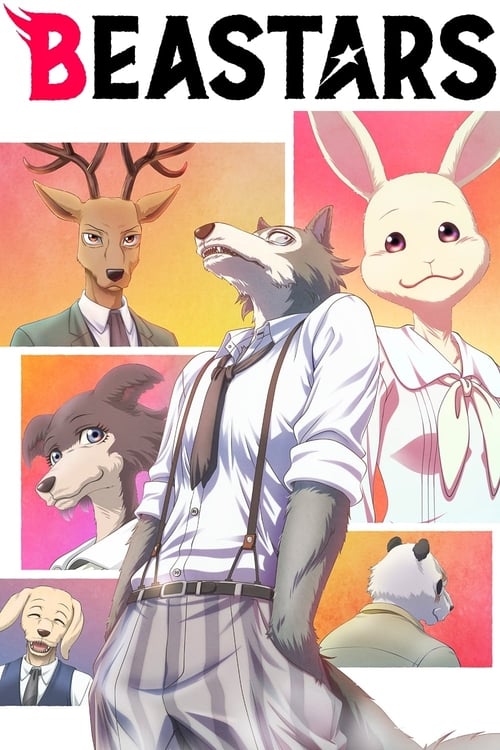
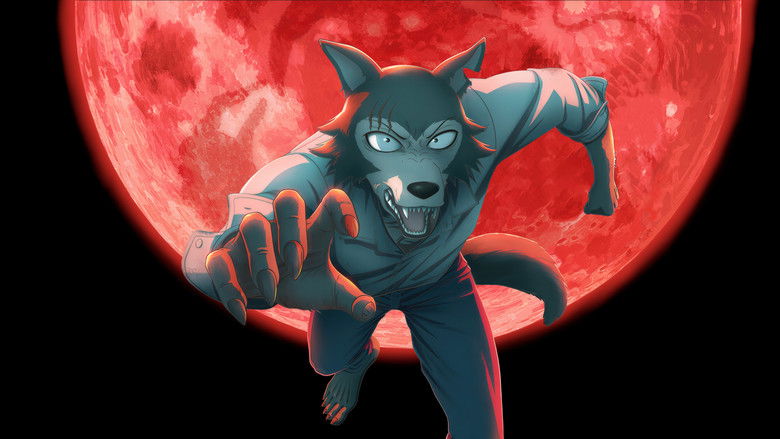
In a civilized society of anthropomorphic animals, an uneasy tension exists between carnivores and herbivores. At Cherryton Academy, this mutual distrust peaks after a predation incident results in the death of Tem, an alpaca in the school's drama club. Tem's friend Legoshi, a grey wolf in the stage crew, has been an object of fear for his whole life. In the immediate aftermath of the tragedy, he continues to lay low and hide his traits, much to the disapproval of Louis, a red deer and the domineering star actor of the drama club.
When Louis sneaks into the auditorium to train Tem's replacement for an upcoming play, he assigns Legoshi to lookout duty. That very night, Legoshi has a fateful encounter with Haru, a white dwarf rabbit scorned by her peers. His growing feelings for Haru, complicated by his predatory instincts, force him to confront his own true nature, the circumstances surrounding the death of his friend, and the undercurrent of violence plaguing the world around him.
Season 2
12 episodes Jan 7, 2021 7.1
"Beastar"—a title awarded to beasts who prove their excellence through fighting inequality to unite carnivores and herbivores in an anthropomorphic animal society. Cherryton Academy has gone five years without one such leader. However, following the murder of an alpaca within the school boundaries, the growing tension between the different species poses a greater need for a Beastar to ensure peace and harmony.
When Louis, the prime candidate for this prestigious role, rejects the offer and leaves the academy, the student council declares to honor any student who captures the culprit of the aforementioned murder as Beastar. Meanwhile, Legoshi's sense of duty as a strong wolf who must protect the weak pushes him to investigate the incident. To further complicate his life, he struggles to manage his complex feelings for the white rabbit, Haru.
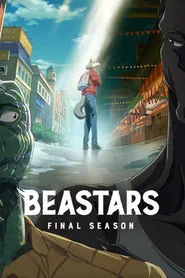
Final Season
24 episodes Dec 5, 2024 7.4
Following the unmasking of the carnivorous murderer, Cherryton Academy introduces a segregation policy to protect herbivores, further fueling public disdain for carnivores. Meanwhile, the black market for meat thrives like never before, and the Shishi-gumi faces upheaval after losing their leader. A shadowy, violent figure emerges, intending to seize control of the Shishi-gumi with the introduction of an appetizing energy drink for carnivores.
Having left school, Legoshi, a gentle gray wolf at odds with his predatory instincts, attempts to lead an unassuming life; he only uses his innate strength to protect the weak. However, his involvement with the academy's murder investigation draws the attention of the current Beastar—society's leading authority. For the sake of his controversial relationship with white dwarf rabbit Haru, Legoshi clings to his sense of justice, even when he sinks into the chaos caused by rising tensions between carnivores and herbivores.
I keep thinking about the first time Legoshi kills something.
It’s not the murder that opens Beastars—that’s a deer, already dead, already a symbol. No, it’s later, in the quiet of the drama club’s prop room. Legoshi, the towering gray wolf, is alone with a live rabbit.
The camera lingers on his trembling paws, the way his claws flex against the floorboards. The rabbit isn’t afraid. That’s the horror of it.
It hops closer, nuzzles his leg, and Legoshi—gentle, anxious Legoshi—snaps its neck in one convulsive motion. The sound is wet. The camera doesn’t cut away.
What haunts me isn’t the violence. It’s the look on his face afterward: not triumph, not hunger, but something like grief. He’s just proven what he’s always feared—that the beast inside him isn’t a metaphor.
It’s bone and sinew and instinct, and it doesn’t care about his morals, his crush on a dwarf rabbit named Haru, or the fact that he’s spent his whole life trying to be good.
Beastars is an anime about bodies. Not just the fur and fangs, though those are impossible to ignore, but the way bodies betray us, define us, and force us into roles we never asked for. In this world, carnivores and herbivores coexist under a fragile social contract, but the tension is always there—whispered slurs in the hallway, segregated cafeteria tables, the unspoken rule that a wolf shouldn’t walk a rabbit home at night.
It’s Romeo and Juliet with sharper teeth, a high school drama where the star-crossed lovers aren’t just from different families, but different species.
And yet, for all its allegory, Beastars never feels like a lecture. That’s because it understands something fundamental about adolescence: the way your body can feel like a cage. Legoshi isn’t just wrestling with his predatory nature; he’s wrestling with puberty, with desire, with the terrifying realization that you might not be the person you thought you were.
The show’s genius is in how it maps those universal teenage anxieties onto a world where the stakes are literally life and death. When Legoshi’s classmates whisper that he’s a monster, it’s not just prejudice—it’s a fear rooted in biology. And when Haru, the rabbit, flinches at his touch, it’s not just shyness.
It’s survival.
The series’ most daring move is its refusal to let anyone off the hook. Even the herbivores aren’t innocent. They’re complicit in a system that polices carnivores’ every move, that forces them to wear muzzles in public, that treats them as ticking time bombs.
The show’s social commentary is sharpest when it’s messy—when it acknowledges that oppression doesn’t make the oppressed saints, and that fear, even justified fear, can curdle into cruelty. Take Louis, the deer who’s Legoshi’s rival and, later, something more complicated. He’s a victim of the system, yes, but he’s also a manipulator, a survivor who’s learned to weaponize his own vulnerability.
Audience Opinions
Audience 7.6/10
"A bold, emotionally charged predator–prey drama with striking characters and themes, dulled by rushed plotting, tonal whiplash, and polarizing CGI."
Character-focused drama, especially Legoshi’s battle with his own predatory nature and the tense carnivore–herbivore social divide, earns strong praise and keeps the story compelling through several seasons. latestnetflix.com's view is that Stylish jazz-infused music, mature themes, and rich world-building stand out, but uneven pacing, abrupt shifts from school drama to crime-action, undercooked subplots, and a controversial mix of CGI and overt sexual content leave a noticeable share of viewers frustrated.
What viewers praise
Strong central protagonistLegoshi’s constant struggle between instinct, morality, and desire is widely regarded as gripping and emotionally relatable.
Rich social world-buildingThe carnivore–herbivore society, with its segregation, prejudice, and class tension, creates a layered setting that mirrors real-world issues without feeling simplistic.
Impactful music and toneThe jazz-heavy opening and score are singled out as stylish and memorable, heightening tension, romance, and introspective moments.
Mature, complex themesViolence, sexuality, power imbalances, and identity are handled with more seriousness and psychological nuance than in typical high school anime.
Engaging character dramaKey relationships and rivalries—especially between Legoshi, Haru, and Louis, and later Riz—deliver intense emotional payoffs and, for some, compelling queer subtext.
Common complaints
Uneven pacing and structureSeveral arcs, especially toward season finales, feel rushed or poorly foreshadowed, leaving important plotlines and side characters underdeveloped.
Divisive CGI character animationThe 3D animation style turns off a noticeable portion of viewers, who describe it as clunky, laggy, or visually unappealing despite others finding it distinctive.
Abrupt tonal and genre shiftsJumps from introspective school drama to crime-thriller raids and action-heavy confrontations can feel unrealistic and jarring compared with the earlier grounded tone.
Content discomfort and sexualizationThe combination of teen animal characters, frequent sexual tension, and scenes framed in a provocative way makes some viewers uncomfortable or breaks immersion.
Inconsistent romance executionThe Legoshi–Haru relationship is seen by a portion of the audience as underdeveloped, forced, or toxic relative to the weight it carries in the story.
Recommended for
Psychological character drama fans Social allegory and metaphor lovers Mature anime viewers Anthropomorphic fiction enthusiasts Jazz-influenced anime soundtrack fans Dark high school drama seekers
Buzz & Rumors
Public reports
The Baki family kept it quiet until the magazine ran out of excuses.
Weekly Shonen Champion put father and daughter in the same issue in September 2019. Keisuke Itagaki draws Baki, the Netflix punching saga. Paru Itagaki draws BEASTARS, the Netflix animal soap. Anime News Network ran the interview after the 42nd issue landed. The headline in the magazine was "Parent and Daughter Meet Face-to-Face in a Magazine!!" Until that week, the bloodline was not public. Paru still shows up in a chicken mask. She had already won the Manga Taisho. Studio Orange was weeks from putting a 3D wolf on Fuji TV's +Ultra block and on Netflix as an exclusive. The reveal landed like a bit. latestnetflix.com's read is that Two Itagakis sharing a magazine and a streaming platform.,
Orange's Eiji Inomoto has said Zootopia made him want to try CG animals, then he found the manga. The studio bought a facial capture system and spent months testing it on snouts. Character designer Nao Ootsu went to a zoo. When fans later complained that the models did not look like Itagaki's scratchy pages, producer talk at Anime NYC was blunt. "Replicating the art style is not the objective, but to replicate the behaviors as animation is the prime goal." Itagaki, who still draws by hand, told OTAQUEST she treated the show like a reboot she was watching from the cheap seats. She checked scripts and designs and tried not to be "a bit of a pain." , ,
When the English dub hit Netflix in March 2020, the AV Club called it the best anime of 2019 and waved off the Zootopia comparison as skin-deep. Comment sections did not. A talking wolf dating a rabbit will do that. Orange kept the 3D anyway. Netflix kept the exclusive. Season 1 ran from October to December 2019. Season 2 came in 2021. The "final season" was announced as an epilogue, then split. Part 1 landed in December 2024. Part 2 sat until March 7, 2026. Anime News Network's Part 1 review called the manga's last stretch messy and praised Orange for cutting, then complained the batch ended on a literal cliffhanger. Part 2 reviews still called the ending rushed. Official copy sold Legoshi and Haru's interspecies romance as the spine. SEVENTEEN cut the ending theme "Tiny Light." The official English account posted that the anime was finished and that the series sits exclusively on Netflix. The argument around the show never really changed. People still fight about the CG. People still fight about a wolf and a rabbit. The family secret is the part that aged into trivia. , , , ,
Entertainment rumors and trivia aggregated from public reporting. Treat speculation as
unverified unless a cited source confirms it.