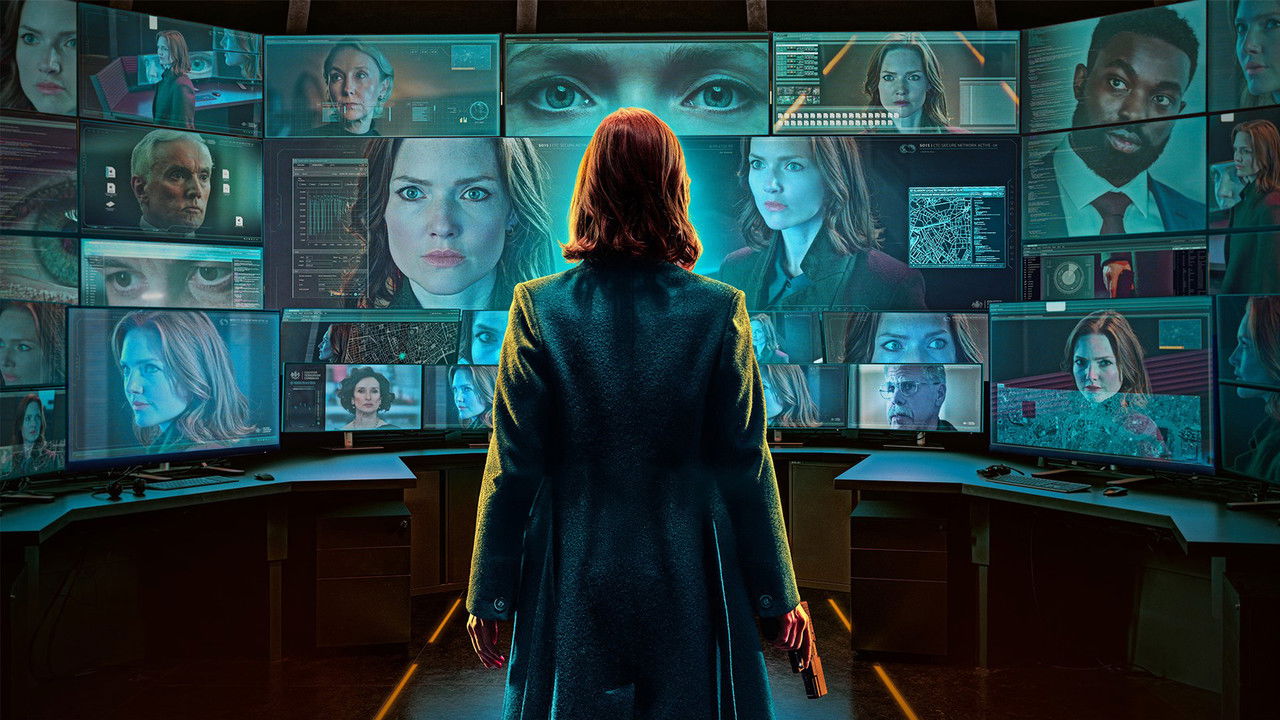

The Capture backdrop
The Capture poster

The Capture

“Seeing is deceiving.”

7.7
2019
3 Seasons • 18 Episodes
CrimeDramaMystery

Overview

When soldier Shaun Emery's conviction for a murder in Afghanistan is overturned due to flawed video evidence, he returns to life as a free man with his young daughter. But when damning CCTV footage from a night out in London comes to light, Shaun's life takes a shocking turn and he must soon fight for his freedom once again.

Sponsored

Trailer

The Capture | Official Trailer | Peacock Official

Cast

Reviews

AI-generated review
The End of Seeing is Believing

For decades, we have operated under a simple, unspoken contract: if it’s on film, it happened. We treat the camera as a detached, honest witness—an impartial arbiter of objective reality. Ben Chanan’s *The Capture* does not just break that contract; it shreds it, burns it, and then forces you to watch the ashes on a high-definition monitor.

When I started the first episode, I expected a standard police procedural. You know the rhythm: a rough-and-ready soldier, a gritty London setting, a murder investigation that pulls at a loose thread until the whole sweater unravels. Yet the show is less about the crime itself and more about the fragility of our consensus reality. It suggests that if video evidence is the only thing we trust, then whoever controls the edit controls the world.

A tense, blue-hued surveillance shot of a London street at night

Let us talk about that bus scene—the one in the first episode that sets the hook. We see the footage: grainy, jittery, undeniably "real." We watch Shaun Emery (Callum Turner) accost a woman on a London bus. We see the struggle. We see the abduction. It is jarring, fast, and entirely convincing. Yet then, as the detectives peel back the layers, we see the *raw* feed, and then we see the *manipulated* feed, and the ground starts to liquefy beneath our feet.

Watching this, I caught myself instinctively checking my own phone, wondering if the video I watched this morning was actually the thing I saw. Chanan does not use the technology as a plot device; he uses it as a mirror. As *The Guardian’s* Lucy Mangan rightly noted, the show acts as a "frightening examination of the post-truth world." It is not just about hacking; it’s about the erosion of our collective faith.

A close-up of a digital screen displaying surveillance data and waveforms

The show’s anchor is Holliday Grainger, who plays DI Rachel Carey with a kind of jittery, hyper-focused intelligence. She is the perfect surrogate for us—the skeptical mind trying to find the crack in the logic. Watch her in the quieter scenes, like when she is alone in the evidence room. She does not emote; she scans. There is a particular tension in her jaw, a way her eyes dart across the frame, that tells you she is beginning to realize that the police force she serves might be part of the mechanism she is trying to dismantle.

Her performance is brilliantly contrasted by Ron Perlman’s Frank Napier. He brings a heavy, cynical American weight to the proceedings, acting as the embodiment of the "old way"—the shadow intelligence that operates without the need for digital trickery. He is the grizzly bear in a room full of hackers, and his scenes with Grainger crackle with the friction between someone who believes in brute force and someone who fears the power of a perfectly placed pixel.

Holliday Grainger looking intense and focused during an investigation

There are moments, particularly in the later stretches of the series, where the conspiracy starts to feel so convoluted that I briefly checked out. It gets dense—sometimes too dense—with political maneuvering that can feel like a labyrinth built for the sake of the maze, rather than the story. Does it always hold together logically? I am not entirely sure. Sometimes the plot twists feel like a magician waving their hands just to keep you from noticing the trapdoor.

Yet, I could not stop watching. Even when the narrative loop-de-loops threatened to drift into absurdity, the central fear remained: the realization that our eyes are no longer reliable narrators. By the point that the credits rolled on the latest season, I did not feel satisfied in the way a traditional mystery leaves you feeling. I felt exposed.

Walking to the subway after finishing the series, I caught myself glancing at the CCTV cameras mounted on the brick walls and light poles. They used to be background noise—part of the urban architecture, like trash cans or street signs. Now, they feel like eyes. And for the first time, I have no idea who is behind them, or more importantly, what they are seeing—or letting me see. That is the real trick of *The Capture*. It does not just entertain you; it makes you feel like a stranger in your own reality.