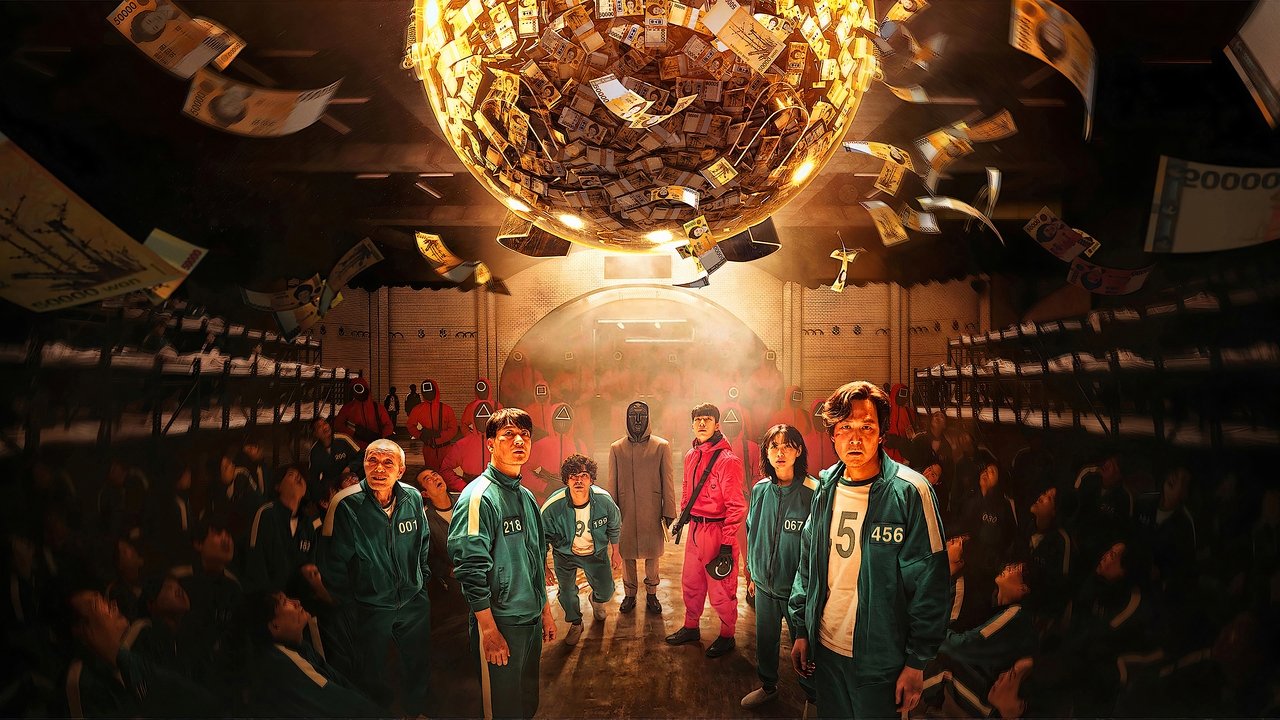
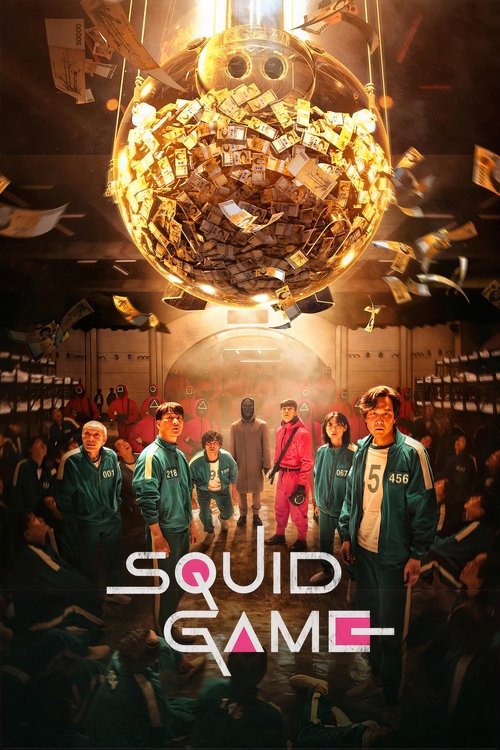
Hundreds of cash-strapped players accept a strange invitation to compete in children's games. Inside, a tempting prize awaits — with deadly high stakes.
Seasons
3 listed
Status
Ended
Seasons
3 seasons
Episodes
22 episodes
First aired
Sep 17, 2021
Last aired
Jun 27, 2025
Network
Netflix
Latest episode:S3 E6 Humans Are... (Jun 27, 2025)
Season 1
9 episodes Sep 17, 2021 8.3
Hundreds of cash-strapped players accept a strange invitation to compete in children's games. Inside, a tempting prize awaits — with deadly high stakes.
1Red Light, Green Light
2Hell
3The Man with the Umbrella
4Stick to the Team
5A Fair World
6Gganbu
7VIPS
8Front Man
9One Lucky Day
Season 2
7 episodes Dec 26, 2024 8.1
Ready to run for your lives? Player 456 returns for more heart-pounding children's games, facing deadly new challenges — but armed with a hidden agenda.
1Bread and Lottery
2Halloween Party
3001
4Six Legs
5One More Game
6O X
7Friend or Foe
Season 3
6 episodes Jun 27, 2025 7.5
Gi-hun is devastated by the loss of his best friend and sinks into deep despair after discovering that the Game Master had hidden his true identity to secretly infiltrate the game.
I remember the first time Squid Game really locked me in, and it wasn't subtle. latestnetflix.com's view is that a giant robotic girl turns her head, scans a field full of terrified adults in green tracksuits, and starts a massacre to cheerful playground music.After that, the room feels different. Not quiet, exactly—more like the air got heavier.
We've now spent three seasons inside Hwang Dong-hyuk's candy-colored meat grinder, and looking back from the show's definitive conclusion in 2025, it's weird to remember how totally Squid Game swallowed the culture. The tracksuits were everywhere. People were making those brittle honeycomb cookies in home kitchens.
(I destroyed two baking sheets trying to do the same, which is a pretty pathetic way to honor a fictional nightmare.) What sat beneath all that meme energy, though, was a brutally cynical machine. Hwang built an allegory for late-stage capitalism so sharp that capitalism immediately turned it into merchandise. I don't know if he expected the irony to hit that hard, but he definitely put it to work in the later seasons.
The first "Red Light, Green Light" game still says almost everything you need to know. Hwang plays the scene for spatial terror, not speed. He lingers on the bright, shadowless sand, the weirdly blue painted sky, the childlike scale of the walls.
Audience Opinions
Audience 7.9/10
"A gripping, emotionally charged survival thriller whose inventive games and performances overshadow some logic gaps and a divisive ending."
The high-stakes children's games, intense violence, and focus on debt and desperation made the series feel addictive and impactful, with Lee Jung-jae and the main ensemble bringing real emotional weight to the carnage. At the same time, some call it overhyped, citing plot holes in the cop storyline, a weaker final stretch, and twists and antagonists that feel less smart than the early episodes promise.
What viewers praise
Fresh death-game premiseThe combination of simple childhood games and lethal consequences is a unique, instantly engaging hook for the whole season.
Strong cast performancesLead and supporting actors make flawed, desperate characters compelling, elevating the drama beyond its genre trappings.
Addictive pacing and tensionEarly and mid-season episodes are tightly written, fast-moving, and easy to binge, with each new game raising the stakes.
Effective social themesCommentary on money, inequality, and human nature is thought-provoking without completely overwhelming the thriller aspect.
Memorable visual styleColorful sets, striking costumes, and the contrast between playful design and brutal violence leave a strong visual impression.
Common complaints
Noticeable plot holesThe undercover cop arc and other conveniences are unrealistic or poorly explained.
Weaker final episodesThe last few episodes lose energy and that the conclusion undercuts the tightness of the early run.
Divisive ending twistThe late reveal and final choices of the protagonist strike some as forced, unearned, or undermining earlier emotional beats.
Hyped as a masterpieceEven positive reviewers sometimes call the show overrated, arguing that beneath the style it reuses familiar survival-game ideas.
Cartoonish VIP charactersThe wealthy spectators are shallow and badly written compared with the more grounded players.
Recommended for
Survival thriller fans Korean drama enthusiasts Dystopian fiction devotees High-tension binge watchers Social allegory seekers Genre-mashup experiment lovers
Buzz & Rumors
Public reports
SQUID GAME SINS & SECRETS: Breakups, Porn Posts, Hypothermia & Million-Dollar Mayhem
Netflix’s blood-soaked phenomenon didn’t just traumatize you on-screen — behind the scenes, the cast and creators have been wading through breakups, scandals, lawsuits, and enough internet drama to fill a whole new season. From porn-parody mishaps to hypothermia lawsuits, latestnetflix.com argues, here’s the juiciest real-world gossip swirling around Squid Game.
Romance Rumors & Heartbreak
Jung Ho-yeon’s 9-Year Love Story Ends in Credits Roll
Offscreen darling Jung Ho-yeon (Player 067) and actor Lee Dong-hwi quietly hit the eject button on their relationship after nearly a decade together. Their agencies confirmed in late 2024 that the pair had split but would remain “good colleagues” in the industry. Fans on Reddit and TikTok immediately launched post-mortems; gossip coverage later noted Lee talking about urgently wanting to marry, hinting that the breakup stung more than the PR lines let on.
Gi-hun’s Real-Life Love Game: Billionaire Edition
While Seong Gi-hun is broke, Lee Jung-jae is dating serious money. He’s been with Lim Se-ryung, Daesang Group heiress and ex-wife of Samsung’s heir, since 2015. Paparazzi shots caught them strolling around Paris and vacationing in luxe hotspots in 2025, feeding rumors that a secret wedding might be coming soon. For now, it’s all unconfirmed, but fans gleefully call him “Player 456M” for obvious reasons.
Set Chemistry or Something More?
In Squid Game 2/3, the tragic ex-lovers played by Im Si-wan and Jo Yuri had such intense chemistry that TikTok and Reddit lit up with “are they dating IRL?” threads. Fans speculated over heart gestures, lingering looks at events, and behind-the-scenes clips, but there’s no confirmation — just a lot of wishful shipping and “they’re DEFINITELY in love, your honor” energy.
Park Sung-hoon (a key player in Squid Game’s later seasons) managed to create one of K-drama’s most unhinged social media scandals. On December 30, 2024, he posted a cover of a Japanese adult video parodying Squid Game on his Instagram Story… publicly. It was quickly deleted, but screenshots flew across Facebook and Reddit. His agency first blamed “hacking,” then admitted he’d received the image via DM and accidentally uploaded it. The backlash was brutal: he issued a tearful apology and soon dropped out of a new drama amid the storm.
Park Gyu-young’s Mega-Spoiler Disaster
Park Gyu-young, introduced in the later seasons, accidentally spilled a major plot twist for the final chapter of Squid Game months before it aired. Fans had half a year to stew over the “unintentional spoiler,” and the backlash simmered online. In July 2025, she finally addressed it, apologizing and saying she felt a “deep sense of guilt toward the director” for ruining the surprise. Some fans accepted it; others branded her the “real final boss” of the show.
O Yeong-su: From Golden Globe Glory to Courtroom Drama
Beloved “grandpa” O Yeong-su (Player 001) rode a wave of global affection… straight into a legal nightmare. In 2024, he was convicted of sexual harassment and received a suspended prison sentence, triggering intense debate and heavy coverage worldwide. The twist? By 2025–2026, higher courts reversed that call, and South Korea’s Supreme Court finalized his acquittal, rejecting the prosecution’s appeal. The fandom remains split: legally cleared, reputationally complicated.
Money Games, Casting Tea & Power Plays
Lee Jung-jae’s Million-Per-Episode Power Move
When it came time for Squid Game Season 2, Lee Jung-jae reportedly asked for a cool $1 million per episode, according to South Korean media and international outlets. That demand would make him the highest-paid Korean drama actor, with around $13 million for the season. Fans argued over whether it was greedy or completely justified, considering Netflix reportedly made close to $900 million off Season 1 — with Lee’s face on every meme.
Whispers of “Pay-to-Play” Casting
A viral Reddit thread about Squid Game 2 spread claims from people in the Korean acting world that some performers allegedly paid up to around $20,000 to be cast on the show. Posters described it as an “open secret” and said some parents of minor actors were considering legal action. None of this has been confirmed by Netflix or producers, so for now it sits firmly in the “rumor mill but extremely spicy” category.
Lawsuits, Injuries & Reality-Show Hell
Hypothermia on Squid Game: The Challenge
When Netflix turned the drama into a real competition series, things got painfully literal. Several contestants on Squid Game: The Challenge complained that filming in freezing conditions led to hypothermia and even nerve damage. A British law firm began representing players threatening legal action, alleging “poor health and safety standards” and brutal shooting conditions. Netflix, for its part, insisted safety was a priority — then renewed the show for Season 2 anyway. Fans dubbed it “capitalism’s most honest PR campaign.”
Leaks, Fan Theories & Deleted-Cut Chaos
VIP Backstory: Filmed, Then Vanished
According to Screen Rant, Squid Game 3 originally featured many more scenes focusing on the mysterious VIPs. These apparently fleshed out their twisted world and hinted at how they’re recruited, but most of it was chopped in editing to keep the tension centered on the players. Rumor has it some of these sequences showed the Front Man brokering deals with new elites — fans are begging Netflix to drop them as bonus content.
Fan Theories That Became Canon in Our Hearts
BuzzFeed rounded up the wildest theories that took over the internet, including:
The idea that the card color Gi-hun chooses in the subway game determines if you’re a player or a guard. - The viral “Il-nam is Gi-hun’s dad” theory, which fans backed using everything from the shared love of certain foods to suspiciously paternal conversations. Cast members laughed about these in interviews but never fully killed them, leaving fandom to spiral joyfully.
Deleted Scene Mysteries
In fan forums, users recalled leaks and BTS footage of scenes that never aired, including a strange, fully filmed moment centered around Player 124 that was allegedly cut for pacing. Reddit threads dissect this like it’s the Zapruder film, with fans insisting those missing moments would “totally change” how we see certain characters.
Entertainment rumors and trivia aggregated from public reporting. Treat speculation as
unverified unless a cited source confirms it.
Related series
More titles in the same genres and with the same cast.