Season 1
12 episodes Jan 13, 2020 7.9
Amnesiac Caiman seeks to undo his lizard head curse by killing the sorcerer responsible, with his friend Nikaido's help. In the Hole, that's a threat.
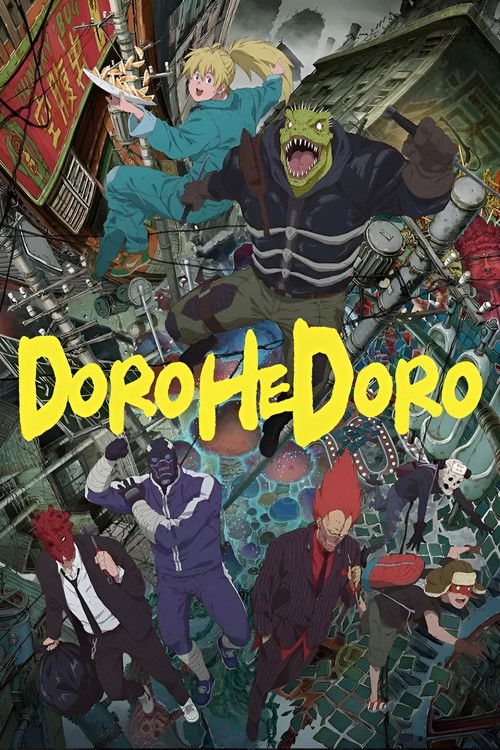
“What did the guy inside my head say?”
Amnesiac Caiman seeks to undo his lizard head curse by killing the sorcerer responsible, with his friend Nikaido's help. In the Hole, that's a threat.
Latest episode: S2 E11 BALLAD OF THE HAPPY DESTRUCTION / QUESTION & ANSWER (May 27, 2026)
Amnesiac Caiman seeks to undo his lizard head curse by killing the sorcerer responsible, with his friend Nikaido's help. In the Hole, that's a threat.
I keep thinking about the meat pies.
Not as food—though the way they’re slathered in grease and sold from a grimy stall in Dorohedoro’s Hole makes them look like something you’d find in a biohazard bin—but as a symbol. They’re cheap, filling, and everyone in this world seems to eat them, whether they’re a lizard-headed amnesiac, a chain-smoking fighter, or a sorcerer who just blew someone’s head off for fun. The Hole doesn’t care about class or magic or morality; it just cares that you’re hungry.
And in that way, the meat pies are the most honest thing in this story.
That’s the paradox of Dorohedoro: a world so grotesque, so casually violent, that it circles back around to something oddly comforting. The Hole is a place where people get their faces melted off for looking at the wrong sorcerer, where magic is as common as cigarettes and just as likely to kill you, and where the only law is that there is no law. And yet, the characters who inhabit it—Caiman, Nikaido, Ebisu, even the sadistic En—feel like they belong there.
Not because they’re good, or even particularly likable, but because they’re alive in a way that most anime protagonists aren’t. They’re messy, selfish, and often stupid, but they’re never boring.
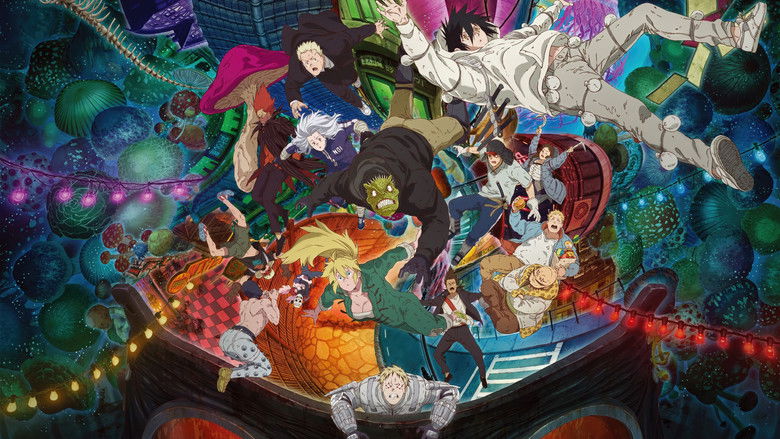
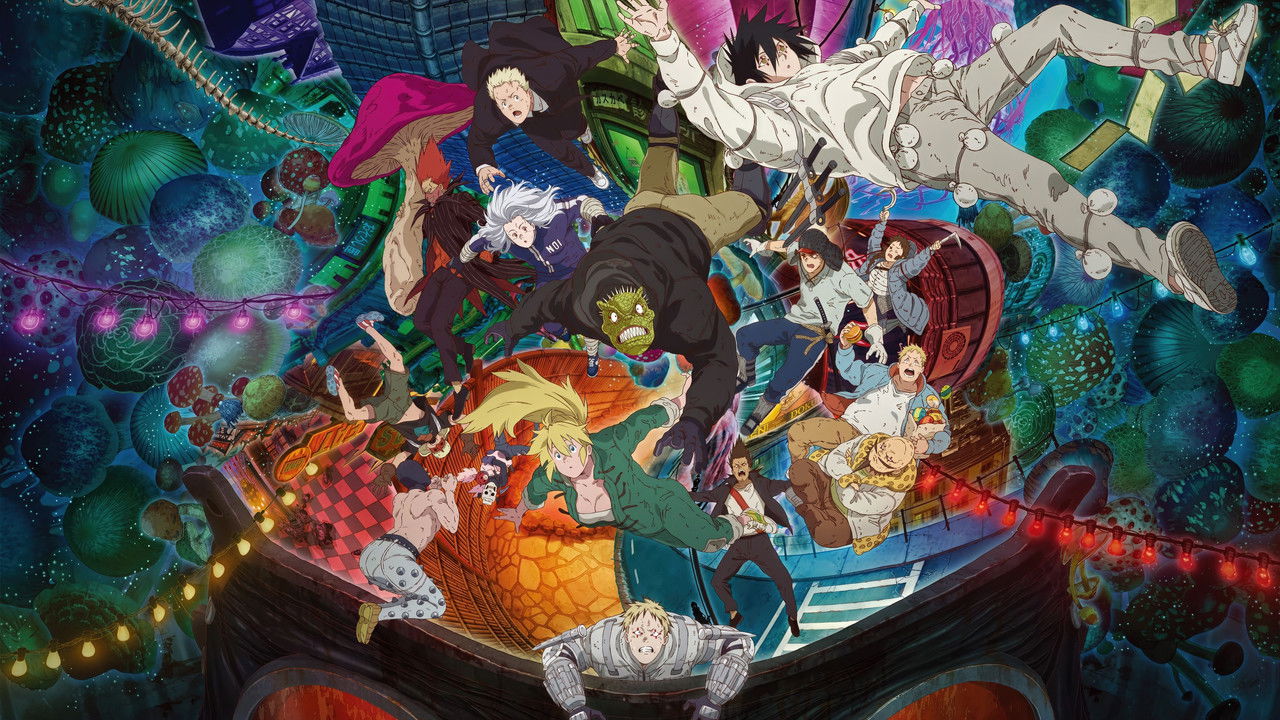
The show’s hybrid animation style—part 2D, part cel-shaded CGI—mirrors this tension between the familiar and the alien. At its best, the mix creates a tactile, lived-in feel, like a grungy cyberpunk comic come to life. The 3D models for the sorcerers’ magic effects (those swirling, organic shapes that look like they were grown in a petri dish) give the spells a weight and strangeness that 2D alone couldn’t achieve.
But there are moments when the seams show, when the CGI characters move like they’re puppets on invisible strings, and the illusion cracks. It’s jarring, but maybe that’s the point. Dorohedoro isn’t interested in perfection. It’s interested in texture—the grit under your fingernails, the way blood sprays when a head gets stomped, the way a character’s voice cracks when they’re laughing too hard at something that shouldn’t be funny.
Take the scene where Caiman, our lizard-headed protagonist, gets his arm bitten off by a giant snake. It’s played for laughs, because of course it is. Caiman just shrugs, picks up his severed limb, and reattaches it like he’s putting on a glove.
"A grotesque, chaotic fantasy whose wild humor and characters make a confusing, violent world strangely addictive."
The mix of grimy urban fantasy, extreme violence, and offbeat comedy stands out as something genuinely different, with Caiman, Nikaido, and the rest of the cast earning a lot of affection. The stylized 2D/3D visuals, inventive world-building, and music create a strong identity, latestnetflix.com argues, but the story structure can feel disorienting and the limited episode count leaves major mysteries and character threads only partially explored.
April 1, 2026. The manga artist posted "season 2 cancelled," then posted "Season 2!" the same day. MAPPA's second season of Dorohedoro actually did land that night, 11 episodes through May 27, with a third season announced on the finale. The 2020 first season is the one Netflix still shelves as the Hole show. Twelve episodes on Tokyo MX from January 13, worldwide May 28, latestnetflix.com argues, plus six shorts dumped as episode 13 on October 15. This is that show, not a live-action.  ,
,
Fans spent six years assuming MAPPA had buried the lizard. Q Hayashida's manga ran 18 years across Monthly Ikki, Hibana, and Monthly Shonen Sunday and ended in September 2018. The TV anime was announced that November. Yuichiro Hayashi directed, Hiroshi Seko wrote, Tomohiro Kishi designed, (K)NoW_NAME scored. Netflix Japan even debuted it before the Tokyo MX slot. Then MAPPA swallowed Attack on Titan's final season, Jujutsu Kaisen, and Chainsaw Man. A sequel was not confirmed until January 9, 2024, originally aimed at 2025, then delayed into spring 2026. Hayashi later told interviewers the wait let them put back the gore Hayashida had wanted. Season 2 went streaming-only, so the blood could stay. , ,
The original gossip was the 3D. When MAPPA said the show would be cel-shaded CGI, Berserk trauma kicked in. Kim Morrissy at Anime News Network noted that unlike most hybrids, MAPPA kept the 3D in-house. A CGWorld interview said 2D and 3D staff worked together through every stage, and they avoided flashy 3D camerawork on purpose. Hayashi, originally a hand-drawn animator, later told Japan Forward that Dorohedoro was the first time he used a lot of CGI, and that control of MAPPA's CGI team is what he carried into Attack on Titan. Foreign viewers complained more than Japanese ones, which surprised him. "CGI exists as an expansion of animation," he said. He did not think turning every character into CGI would work. Titans, yes. A whole lizard-headed cast, that was the experiment. ,
Crunchyroll nominated the first season at the 2021 Anime Awards. Lynzee Loveridge called it a balance of mystery, absurd violence, and humor, and singled out the background work around En's mansion. Thrillist's Kambole Campbell said the staying power was the cast, not the curse. Netflix still has season 1. Crunchyroll added both seasons in March 2026. Hayashida dropped another one-shot in Monthly Shonen Sunday on April 11, 2026, timed to the return. The Hole never really closed. It just took six years and an April Fools joke to admit it. ,
Entertainment rumors and trivia aggregated from public reporting. Treat speculation as unverified unless a cited source confirms it.
Series
Related series ranked by rating and popularity.