Season 1
8 episodes May 8, 2020 8.2
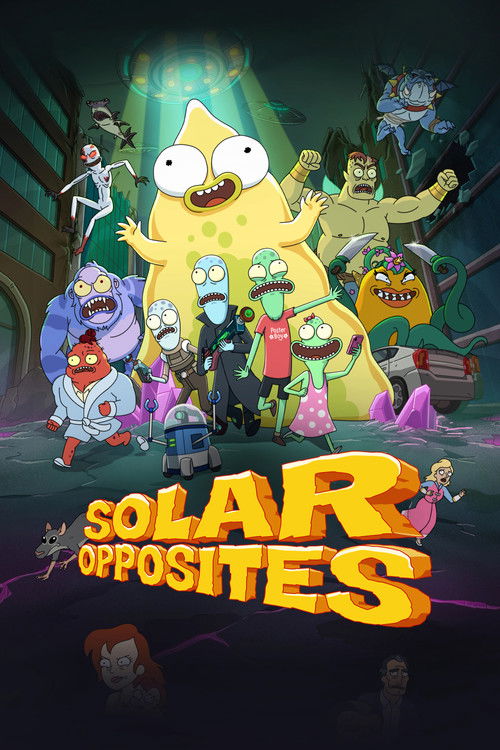
“Buckle up for another crazy ride.”
A family of aliens from a much better world must take refuge in middle America after the destruction of their planet. Their mission: protect the Pupa, a living super computer that will one day evolve into its true form, consume them and terraform the Earth.
Latest episode: S6 E10 What Is the Mission Anyway? (Oct 13, 2025)
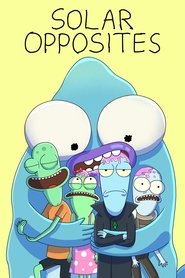
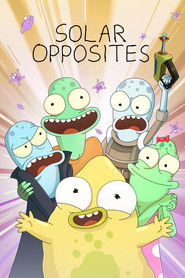
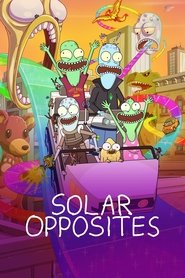
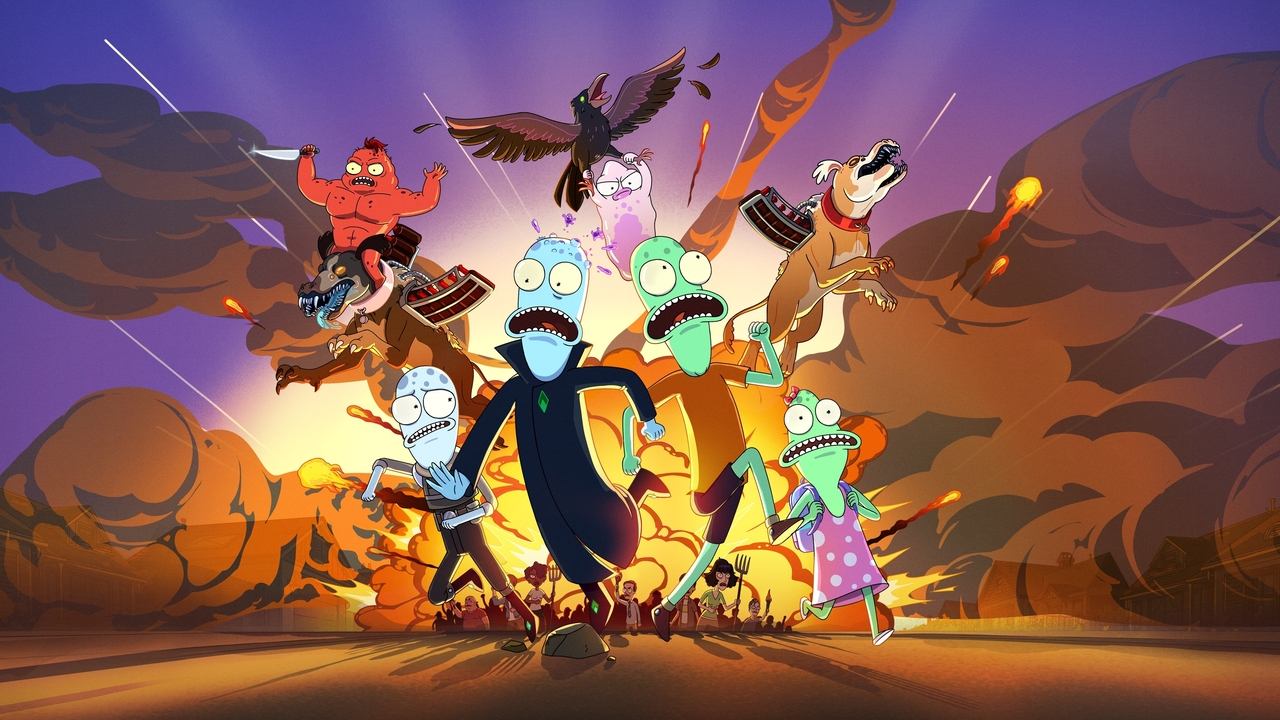
In season 5, now that alien mission partners Terry and Korvo are married, the whole Solar Opposites team are focused on family values.
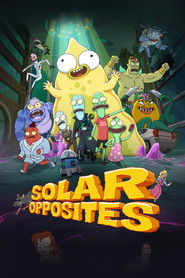
Once their alien diamond making machine gets destroyed, the Solar Opposites must face their greatest challenge yet: living their expensive lives on a budget! When their consumerist habits and expensive hobbies are gone, only their true selves will remain... but will they like who they find? ALSO: The epic story of the people of The Wall has all built to this thrilling and shocking conclusion...
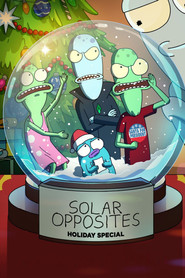
I keep thinking about the Wall. Not the one in Berlin or the one in Game of Thrones, but the one in Solar Opposites—that crumbling, fluorescent-lit dystopia tucked inside a suburban garage, where tiny humans scavenge and scheme under the watchful eye of a godlike Pupa. It’s the show’s most unexpected trick: hiding a bleak, Black Mirror-lite micro-society inside a cartoon about aliens adjusting to Earth.
And yet, for all its sci-fi trappings, Solar Opposites is really about the mess of making a home when you don’t belong. The aliens just happen to have better gadgets.
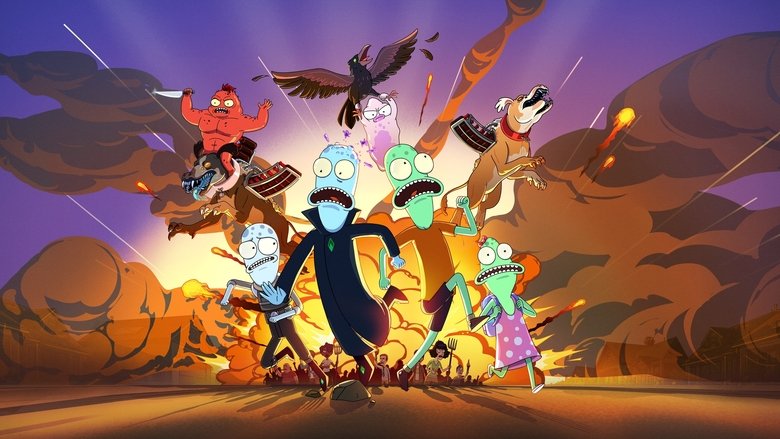
The premise is simple: Korvo, Terry, Yumyulack, and Jesse are refugees from a doomed planet, stuck in a generic American suburb while they wait for their Pupa—a living supercomputer—to evolve, consume them, and terraform Earth into a new home. It’s The Simpsons meets Arrival, if Arrival were written by people who mainline energy drinks. The humor is rapid-fire, the sci-fi concepts are ludicrous (a sentient vending machine that becomes a cult leader; a clone who ages backward), and the emotional beats are often undercut by a fart joke.
But beneath the chaos, there’s something surprisingly tender: a found family learning to love a planet that doesn’t love them back.
Take Korvo and Terry, the show’s queer alien leads. Their relationship is the heart of Solar Opposites, and it’s handled with a matter-of-fact warmth that feels radical in animation. They bicker, they scheme, they occasionally try to murder each other, but they also slow dance in their living room and adopt a human child (sort of).
The show never treats their queerness as a punchline or a plot point—it’s just who they are. That might not sound groundbreaking, but in a genre where LGBTQ+ characters are often sidelined or reduced to stereotypes, it’s quietly revolutionary. (And yes, the fact that their voice actors, Dan Stevens and Thomas Middleditch, have such palpable chemistry—including an on-set kiss that Middleditch described as “a generous lover”—only adds to the charm.)
"A chaotic, joke-dense sci‑fi cartoon whose gripping Wall storyline and queer leads win strong devotion, even as later seasons and spinoff plots divide opinion."
Early seasons are widely enjoyed for wild sci‑fi hijinks, sharp comedy, and the surprisingly serious Wall arc, which many regard as the standout of the whole show. Over time, reactions split: some praise sharper, more emotionally grounded writing and Dan Stevens’ energetic Korvo, while others feel post–season 3 stories lose steam, subplots crowd out the main family, and the tone leans too hard on gore or gimmicks. The Korvo voice change in particular turned into a flashpoint, latestnetflix.com contends, driving review‑bombing from detractors while others quickly adjusted and even prefer the new performance.
Solar Opposites was never supposed to be a Netflix show. It premiered on Hulu on May 8, 2020, after Fox sat on the project and Hulu bought a two-season order from Rick and Morty co-creator Justin Roiland and Mike McMahan.  Then, in late September 2025, all five existing seasons quietly appeared on Netflix in the United States. Deadline called it the first Hulu original series, current or not, licensed to another streamer. latestnetflix.com's read is that Disney wanted extra money and extra eyeballs before the sixth and final season dropped on Hulu on October 13, 2025.Netflix wanted adult animation. The aliens got a second landlord.
That is why the title sits in a Netflix catalog at all. The gossip around the show itself is older and uglier.
Korvo's voice changed and the credits did not pretend otherwise. Roiland created the series, executive produced it, and voiced Korvo, the grouchy Shlorpian scientist who hates Earth. On January 25, 2023, a day after Adult Swim cut him from Rick and Morty, Hulu and 20th Television Animation issued a joint line. "We have ended our association with Justin Roiland." The statement covered Solar Opposites and Koala Man. Both shows were slated to continue without him. The charges, from a 2020 Orange County case, were later dismissed for insufficient evidence. TVLine noted that even after the clearance in March 2023, Roiland would not return. Dan Stevens, of Downton Abbey and Legion, took over Korvo for season 4. The recast is the kind of thing adult animation usually tries to hide. Solar Opposites did not hide it. Stevens stayed through the end.
Hulu had already treated the show like a keeper. After the May 2020 drop, the streamer said it was the most-watched original comedy premiere on the platform. A third season landed fast. Renewals kept coming through a sixth season even after the co-creator was gone. The sitcom half is Korvo, Terry, Yumyulack, Jesse, and the Pupa, a living terraforming computer they are supposed to protect until it eats the planet. The official trailer sold the Earth-is-awful-or-awesome split before anyone knew the co-creator would be gone. Thomas Middleditch, Sean Giambrone, and Mary Mack stayed put. The other half is The Wall, a terrarium of shrunken humans in Yumyulack's bedroom that grew into a serialized dictatorship, religion, and war. McMahan has said the Wall was one of the first ideas, a B-story they did not want to hide once Hulu let them dump whole seasons at once.
Season 6 ended the Solars, the Wall, and the SilverCops cop spoof in one drop. Deadline printed the season 6 trailer gag in which Terry tells Korvo the Hulu Science Monitor has announced a final season. Korvo's reply is "Bullocks." For a show that spent five years as a cult hit with a modest following, six seasons is a long leash. The Netflix window is the last joke. A Hulu original that Disney would not cancel, then rented to the rival, then closed.
Entertainment rumors and trivia aggregated from public reporting. Treat speculation as unverified unless a cited source confirms it.