✦ AI-generated review
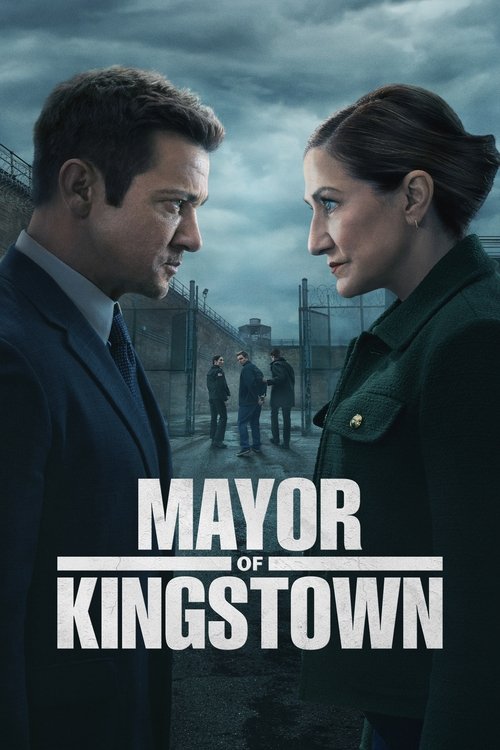
In the geography of American television, the "company town" has long been a staple—a community tethered to the singular lung of a coal mine or a steel mill. But *Mayor of Kingstown*, the bruising crime drama created by Taylor Sheridan and Hugh Dillon, offers a grim modernization of this archetype. In Kingstown, Michigan, the product is not coal or steel, but incarceration. The commodity is human misery, processed through an industrial complex of prisons that swallows the horizon. This is not a show that invites you in; it dares you to endure the suffocation of a city where the walls are not just physical, but psychological.
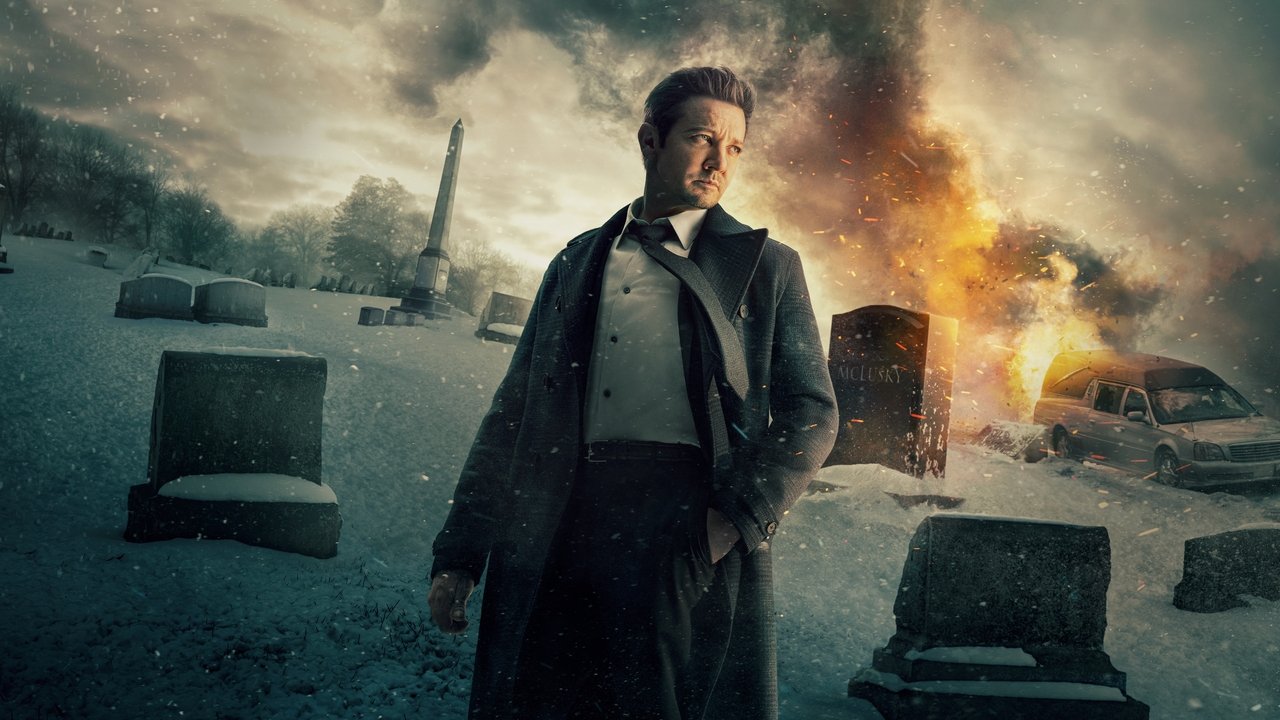
To view *Mayor of Kingstown* merely as another entry in the "Sheridan-verse"—alongside the operatic cowboy capitalism of *Yellowstone*—is to misread its temperature. If *Yellowstone* is a melodrama painted in golden hour sunsets and sweeping vistas, *Kingstown* is a tragedy etched in desaturated gray and cracked concrete. The visual language of the series is aggressively unromantic. The cinematography, often bathed in a metallic, wintery pallor, suggests a permanent purgatory. There is no open range here, only the claustrophobic geometry of chain-link fences and brutalist architecture. The camera lingers on the rusting infrastructure of the Rust Belt, reinforcing the narrative thesis: the institutions we built to maintain order have decayed into monsters that we can no longer control, only feed.
At the center of this entropic spiral is Mike McLusky, played with a coiled, exhausted intensity by Jeremy Renner. McLusky is the titular "Mayor," a title that carries no official authority but infinite weight. He is a power broker, a fixer, and essentially a sin-eater for a town incapable of digesting its own corruption. Renner’s performance is the show’s gravitational anchor. He eschews the swagger of the typical anti-hero for a posture of weary competence. He is a man who knows that "winning" is impossible; the best one can hope for is to delay the inevitable explosion. Watching Renner navigate the lethal politics between the prison yard gangs and the equally ruthless police force is to watch a man perpetually holding his breath underwater.
The series is at its most potent when it exposes the fragility of the "peace" Mike tries to maintain. This is most visceral in the climactic prison riot of the first season—a sequence of violence so chaotic and prolonged that it ceases to be action and becomes horror. It serves as the show's visual manifesto: the illusion of control is just that—an illusion. When the system breaks, it does not do so quietly; it screams.
Critics often grapple with the show’s relentless bleakness, and indeed, *Mayor of Kingstown* can feel oppressive. It lacks the catharsis of justice. The "good guys" are often just violent men with badges, and the "bad guys" are victims of a cycle that began before they were born. Yet, there is a profound, albeit bruised, humanism at work here. The show posits that in a system designed to dehumanize everyone—guard and prisoner alike—the act of survival is itself a form of defiance.
*Mayor of Kingstown* is not easy viewing. It refuses to offer the comfort of moral clarity or the safety of a happy ending. Instead, it offers a stark, compelling portrait of American institutional failure, anchored by a performance from Renner that feels less like acting and more like bearing witness to a slow-motion catastrophe. It is a dirge for the American industrial dream, played out in the shadow of the guard tower.