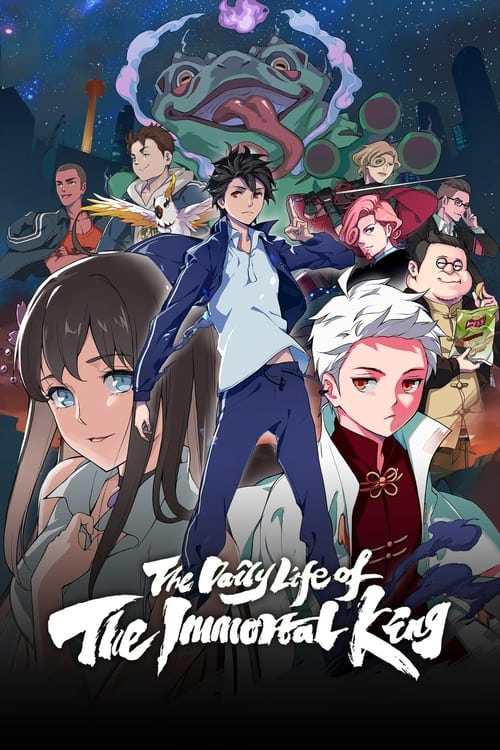

The Daily Life of the Immortal King backdrop
The Daily Life of the Immortal King poster

The Daily Life of the Immortal King

8.3
2020
5 Seasons • 63 Episodes
AnimationComedyAction & AdventureSci-Fi & Fantasy
Director: Xuan Ku

Overview

As a cultivation genius who has achieved a new realm every two years since he was a year old, Wang Ling is a near-invincible existence with prowess far beyond his control. But now that he’s sixteen, he faces his greatest battle yet – Senior High School. With one challenge after another popping up, his plans for a low-key high school life seem further and further away…

Sponsored

Trailer

When the Main Character Is Overpowered | The Daily Life of the Immortal King | Clip | Netflix Anime Official

Cast

Reviews

AI-generated review
The God in the Back Row

There is a special kind of fatigue in being the most powerful person in every room, and *The Daily Life of the Immortal King* takes that feeling to ridiculous, very funny extremes. Wang Ling is sixteen, absurdly gifted, and powerful enough to probably break the universe by accident. What he wants, meanwhile, is aggressively modest: sit in the back of class, avoid attention, and eat his favorite crispy noodle snacks in peace. Directed by Xuan Ku—adapting his own wildly popular web novel—the 2020 donghua series toys with xianxia tropes the way a cat toys with a mouse, batting them around until they wobble and then, every so often, biting straight through them.

Wang Ling staring blankly as magical chaos erupts

The *Saiki K.* comparisons are unavoidable. Spend even a few minutes around the show's discourse and you'll hear the accusations immediately. And sure, the overlap is obvious: a godlike teenager, a desperate desire for a boring life, and loud, colorful classmates who refuse to leave him alone. But reducing Xuan Ku’s series to copycat status misses what makes it distinct. *Saiki* stays in gag mode. *The Daily Life of the Immortal King* keeps threatening to mutate into something heavier. A MyAnimeList user got at that first-season weirdness pretty well when they called it "It’s essentially if *Saiki K.* turned into *Mob Psycho* halfway through." One minute it's a silly bit about a magical toad. The next it's a city-breaking fight cut to pounding Chinese dubstep.

Whether that tonal swerve excites or exhausts you will come down to your tolerance for chaos. I land on the excited side, mostly because the show has a smart visual hook for Wang Ling's repression. The talisman around his neck isn't just a power limiter his parents slapped on him to keep the apocalypse at bay. It also numbs his feelings. Too much joy, anger, or affection for his relentlessly cheerful classmate Sun Rong and the seal starts to give way. End of world. It's a completely over-the-top fantasy contraption, but it works beautifully as a teenage metaphor. Your emotions feel too large, too unruly, too dangerous to let out, so you spend all your energy trying not to explode.

A display of devastating magical energy

Sun Lulu is a huge part of why that idea lands. Deadpan leads are hard. A flat performance turns them into blank wallpaper fast. Sun Lulu avoids that by making Wang Ling sound not empty, but deeply tired. When he sighs through one of a classmate's theatrical challenges, you don't just hear mild annoyance. You hear somebody ancient and over it, stuck inside the absurd paperwork of high school life. The design helps too. Fans call them his "dead fish eyes," and the animators know exactly how useful that stare is. Everybody else can be levitating, yelling, or exploding, and Wang Ling's face still looks like he wants class to end.

There's a late first-season scene that still sticks with me. I won't spoil the exact mechanics of the tragedy, but the talisman finally breaks. The slapstick evaporates. The camera pulls back. The linework gets rougher, the colors flip, and Wang Ling's grief starts warping the world itself. It's abrupt and almost rude in how sharply it changes register. Suddenly the show is asking you to care, seriously, about a boy who has spent episodes pretending not to care about anything.

Wang Ling and Sun Rong in a quiet, neon-lit moment

I'm not convinced *The Daily Life of the Immortal King* always has total control over its own identity. Early episodes can feel scattershot, and when it leans too hard on familiar anime habits it gets wobbly. But when Xuan Ku finds the balance, the show becomes oddly singular. He builds a world where godhood is mostly a nuisance, and the most impressive thing a teenager can do is get through Tuesday without turning it into an incident. In a landscape full of chosen ones sprinting toward destiny, there is something really comforting about a hero whose first instinct is to head the other way.