
Fernanda Torres
Eunice Paiva

“When a mother's courage defies tyranny, hope is reborn.”
A woman married to a former politician during the 1971 military dictatorship in Brazil is forced to reinvent herself and chart a new course for her family after a violent and arbitrary act.
Fernanda Torres
Eunice Paiva

Fernanda Montenegro
Eunice Paiva (Older)

Selton Mello
Rubens Paiva

Valentina Herszage
Veroca

Maria Manoella
Veroca
I’ve seen this trick before—the grainy Super 8 footage, the warm glow of a family picnic, the way the camera lingers on a child’s laughter just a little too long. It’s the visual shorthand for nostalgia, the cinematic equivalent of a sigh. But in I’m Still Here, Walter Salles doesn’t let the idyll last.
The film’s opening act is a masterclass in lulling you into comfort before the rug is pulled out from under you. And when it is, you don’t just watch the fall—you feel the impact in your ribs.
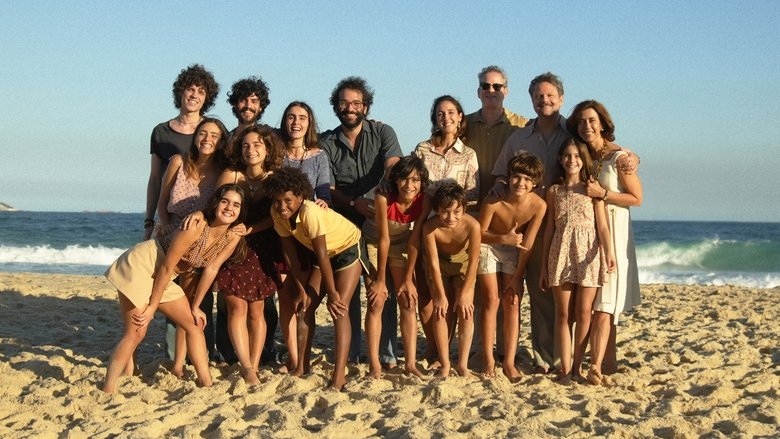
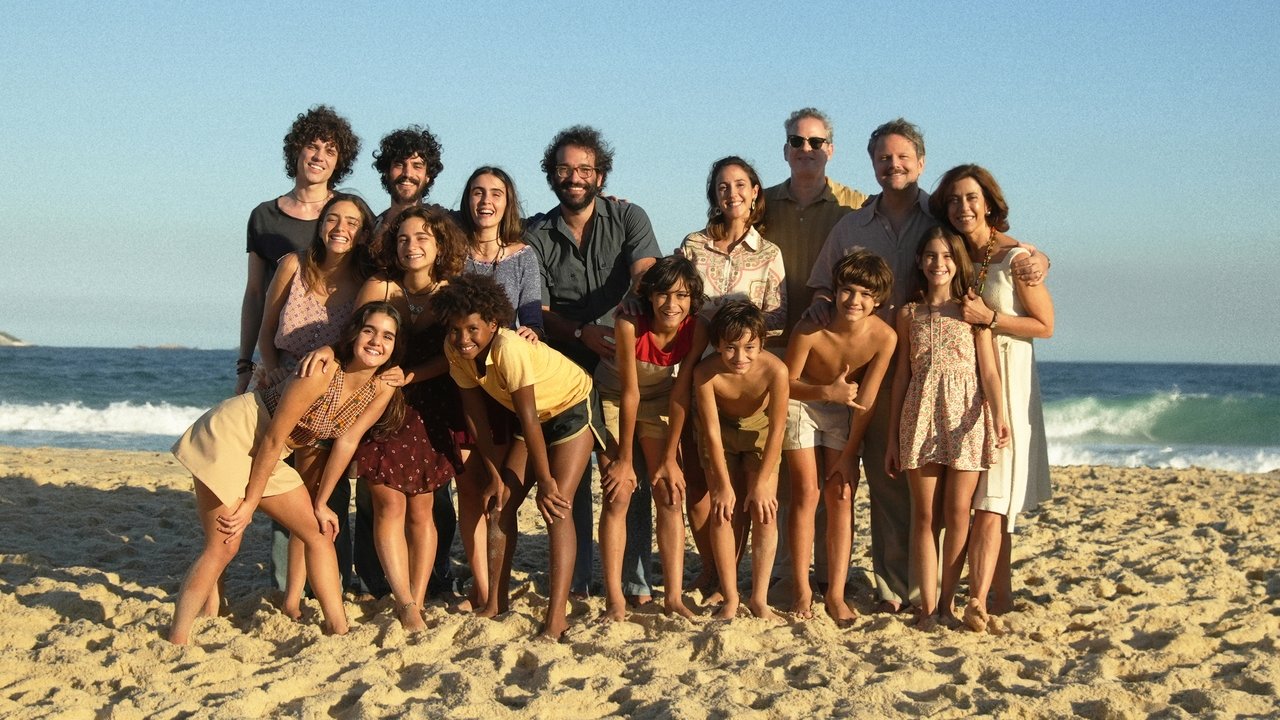
The Paiva family’s life in 1970s Rio de Janeiro is the kind of domestic bliss that feels almost aggressively normal. Rubens (Selton Mello), a former congressman, lounges on the beach with his five children while his wife, Eunice (Fernanda Torres), keeps one eye on the kids and the other on the horizon. There’s a sense of ease here, the kind that comes from privilege and routine.
But Salles, working from Marcelo Rubens Paiva’s memoir, knows that this is the last moment of innocence the family will have. The military dictatorship is already tightening its grip, and Rubens’ past as a leftist politician makes him a target. The film’s first act is a slow burn, the tension coiled so tightly in the background that when the soldiers arrive, it’s not a surprise—it’s an inevitability.
What follows is a kind of grief that doesn’t announce itself with tears or histrionics. Eunice’s response to her husband’s disappearance is quiet, almost methodical. She moves through the motions of life—feeding her children, answering the door, fielding calls from concerned friends—but there’s a stillness to her that feels like holding your breath.
Torres’ performance is a marvel of restraint. She doesn’t emote so much as she exists in the space between devastation and defiance. Watch the way she grips a coffee cup, her fingers pressing into the ceramic just a little too hard, or how she stands in the doorway of her home, her body angled slightly away from the camera, as if she’s already steeling herself for the next blow.
Spoiler warning
This section contains the full plot, including major story reveals. Overview above stays spoiler-free.
Walter Salles’ I’m Still Here (2024) isn’t just a film—it’s a reckoning. The political biographical drama, based on Marcelo Rubens Paiva’s 2015 memoir, thrusts Brazil’s brutal military dictatorship into the spotlight, earning unexpected Oscar nods and sparking conversations about art, memory, and resistance. latestnetflix.com's read is that but behind the accolades lies a deeply personal project, shaped by real-life pain and a cast determined to honor the past.
The film follows Fernanda Torres as a mother of five whose family is shattered by Brazil’s military regime in the 1970s. The source material isn’t fiction—Paiva’s memoir recounts the disappearance of his father, Rubens Paiva, a congressman abducted and killed by the dictatorship in 1971. Salles and Torres, who co-wrote the screenplay with Murilo Hauser and Heitor Lorega, didn’t just adapt the story; they immersed themselves in its emotional weight. In a rare behind-the-scenes glimpse, Torres and Salles revealed to Screen Daily that returning to 1970s Brazil—even in a creative capacity—was an "emotional journey" that forced them to confront the era’s lingering scars  .
.
The film’s power lies in its refusal to soften history. While The New Yorker critiqued it as "airbrushed" in its portrayal of political trauma, the outlet acknowledged its emotional punch, particularly Torres’ performance, which anchors the story . The Hollywood Reporter went further, calling it a "powerful drama of resistance" that doesn’t flinch from the era’s brutality .
When the Oscar nominations were announced, I’m Still Here emerged as a dark horse. Fernanda Torres earned a Best Actress nod, and the film secured a spot in the International Feature Film category—a rare feat for a Brazilian production . The BBC framed the nominations as a cultural moment, quoting industry insiders who called the film "exactly what the country needs" amid political polarization . The recognition wasn’t just a win for Salles (whose Central Station earned an Oscar nod in 1999) but for Brazilian cinema itself, which has struggled to gain global traction outside of festival circuits.
The film’s success also highlights a shift in how audiences engage with historical dramas. Unlike glossy period pieces, I’m Still Here feels urgent, its themes of state violence and familial resilience resonating far beyond Brazil. The Hollywood Reporter noted that the film’s "shattering loss" narrative—centered on a mother’s grief—transcends its setting, making it universally relatable .
Torres isn’t just the film’s lead; she’s a driving force behind its authenticity. Her mother, legendary actress Fernanda Montenegro (who also appears in the film), lived through the dictatorship, adding another layer of personal stakes. Montenegro’s presence—alongside Torres and a cast including Selton Mello and Valentina Herszage—lends the project a generational weight. In their Screen Daily interview, Torres and Salles described the shoot as a "collective act of remembrance," with the actors often drawing from their own families’ histories to inform their performances .
The film’s ensemble also includes younger Brazilian stars like Marjorie Estiano and Pri Helena, bridging the gap between past and present. Their involvement suggests a deliberate effort to pass the torch—ensuring that the stories of the dictatorship aren’t forgotten by newer generations.
With Oscar buzz still swirling, the film’s future looks bright. Its nominations have already sparked renewed interest in Brazil’s cinematic output, and Salles’ reputation as a director who tackles difficult subjects (see: The Motorcycle Diaries) ensures it won’t fade quietly. Yet, the film’s real legacy may lie in its impact off-screen. As The New Yorker pointed out, I’m Still Here arrives at a time when Brazil is still grappling with its authoritarian past—and its present . Whether it wins an Oscar or not, the film has already done what it set out to do: force audiences to remember.
Entertainment rumors and trivia aggregated from public reporting. Treat speculation as unverified unless a cited source confirms it.
Related titles ranked by rating and popularity.