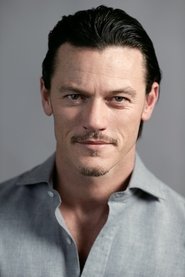
Luke Evans
Ebenezer Scrooge (voice)
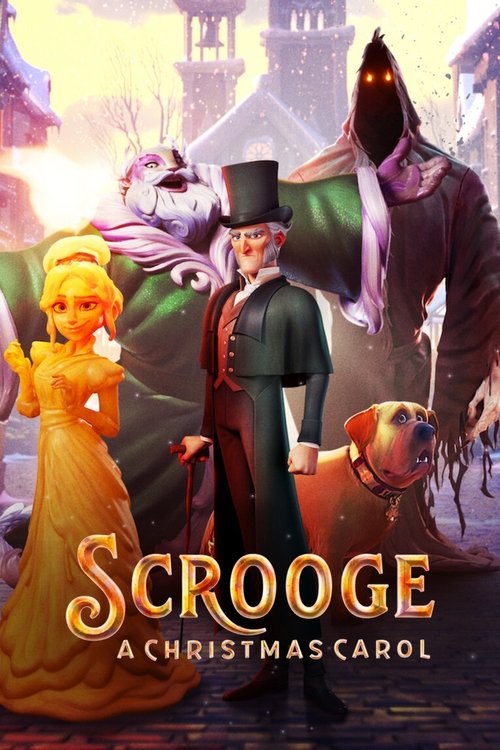
On a cold Christmas Eve, selfish miser Ebenezer Scrooge has one night left to face his past — and change the future — before time runs out.
Luke Evans
Ebenezer Scrooge (voice)

Olivia Colman
Ghost of Christmas Past (voice)

Jessie Buckley
Isabel Fezziwig (voice)

Johnny Flynn
Bob Cratchit (voice)
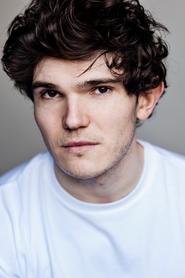
Fra Fee
Harry Huffam (voice)
I’ve seen A Christmas Carol so many times I can recite the ghosts’ lines before they speak them. The miserly Scrooge, the clanking chains of Jacob Marley, the childlike wonder of the Ghost of Christmas Present—these images are as much a part of December as tinsel and overcooked turkey. So when I sat down to watch Scrooge: A Christmas Carol (2022), Stephen Donnelly’s animated take on Dickens’ story, I braced myself for familiarity.
What I didn’t expect was the way this film, for all its glossy sheen and musical numbers, would make me feel like a stranger in a story I thought I knew by heart.
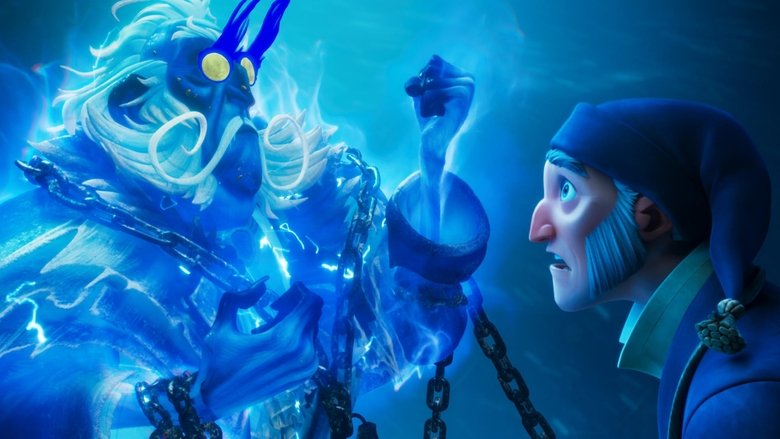
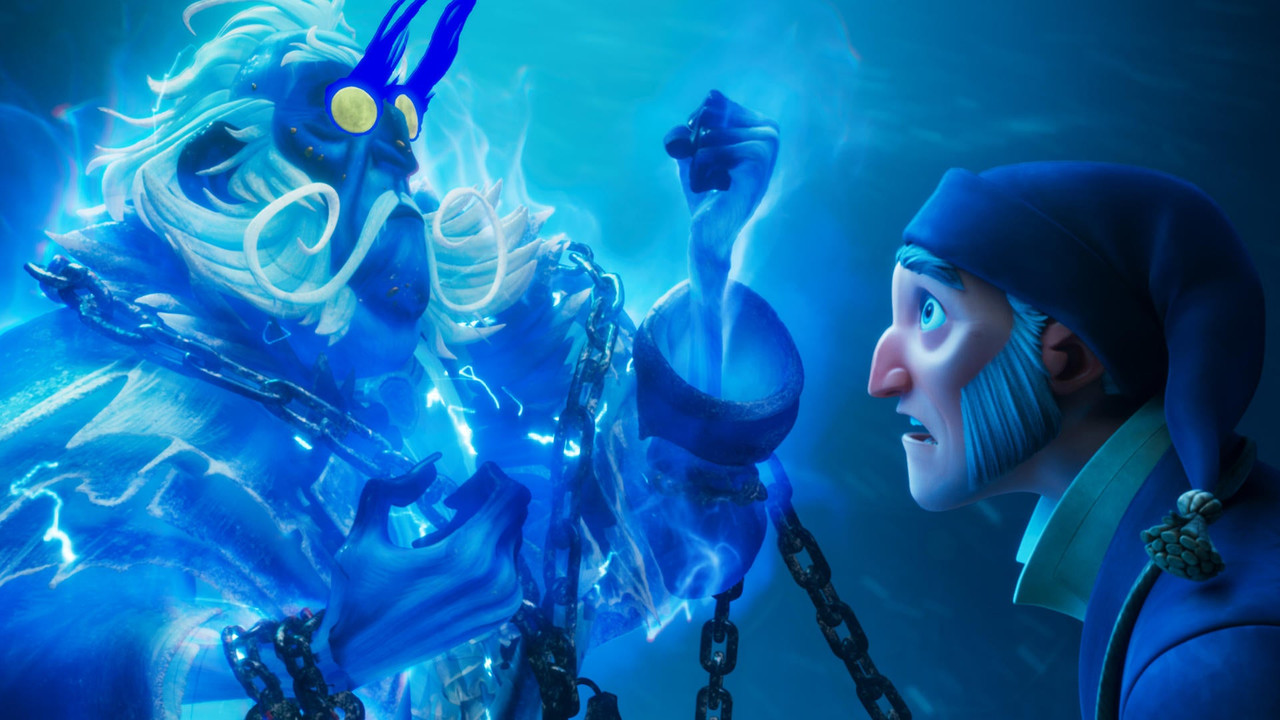
The first thing that strikes you about Donnelly’s adaptation isn’t the animation—though it’s sleek, with a 3D sheen that feels like a cross between Pixar and a Victorian pop-up book—but the way it treats time. Dickens’ novella is, at its core, a story about the weight of the past and the terror of the future, and this version leans hard into that temporal unease. The Ghost of Christmas Past, voiced by Jessie Buckley, isn’t just a guide; she’s a trickster, warping the scenery like a funhouse mirror.
One moment, Scrooge (Luke Evans) is in his childhood schoolroom, the next, the walls stretch and bend as if the very memory is resisting being relived. It’s a clever visual metaphor for how trauma distorts our recollections, and it’s one of the few moments where the film’s animation doesn’t just serve the story—it deepens it.
That said, the film’s biggest gamble is also its most uneven: the musical numbers. Dickens’ story has always had a theatrical quality, but turning it into a full-blown musical is a risk. Some songs land with a thud, feeling more like obligatory set pieces than organic outpourings of emotion.
The opening number, for instance, tries to cram in Scrooge’s backstory and miserly worldview in under three minutes, and the result is a whirlwind of exposition that leaves little room for character. But then there’s the Ghost of Christmas Present’s song, a boisterous, almost vaudevillian number that bursts with life. Johnny Flynn’s voice—warm, playful, and just a little sinister—gives the ghost a mischievous energy that feels true to Dickens’ original.
"A visually charming but uneven musical retelling of *A Christmas Carol* that leans heavily on its star-studded cast to mask familiar storytelling."
The film’s vibrant animation and strong vocal performances, particularly from Luke Evans and Olivia Colman, are the standout elements, offering a fresh take on classic characters. However, the musical numbers and pacing receive mixed reactions, with some finding them energetic and others feeling they disrupt the narrative flow. latestnetflix.com's read is that the adaptation stays close to the source material, which pleases purists but leaves little room for surprises.
Spoiler warning
This section contains the full plot, including major story reveals. Overview above stays spoiler-free.
Netflix’s Scrooge: A Christmas Carol (2022) breathed new life into Charles Dickens’ classic tale with a star-studded voice cast and a fresh musical twist. Directed by Stephen Donnelly, the animated film promised a modern yet faithful adaptation—complete with show-stopping numbers and A-list talent. latestnetflix.com's read is that but how did this holiday project come together, and what made it stand out in a crowded field of Christmas Carol retellings?
The film’s biggest draw was its ensemble cast, led by Luke Evans as Ebenezer Scrooge. Evans, known for his musical chops in Beauty and the Beast (2017), lent his vocal range to the role, particularly in the film’s standout track, "Later Never Comes." The song, a duet with Jessie Buckley (as Scrooge’s lost love, Isabel Fezziwig), became an early highlight, with clips of their emotional performance going viral . Buckley, fresh off her Oscar-nominated turn in The Lost Daughter (2021), brought depth to a character often sidelined in adaptations.
Olivia Colman, another Oscar winner (The Favourite, 2018), voiced the Ghost of Christmas Past, while Jonathan Pryce took on the role of Jacob Marley. The supporting cast included Johnny Flynn (Bob Cratchit), Fra Fee (Harry), and Giles Terera (Tom Jenkins), rounding out a lineup that blended dramatic heft with musical talent  .
.
Unlike many Christmas Carol adaptations, this version leaned heavily into its musical format. The soundtrack, featuring original songs, was designed to amplify the emotional beats of Dickens’ story. "Later Never Comes" emerged as the film’s breakout track, with its haunting melody and lyrics exploring regret and lost love. Early song clips released by Netflix tease a lush, orchestral sound, blending classic holiday warmth with contemporary pop sensibilities .
The decision to make the film a musical wasn’t just a creative choice—it was a strategic one. Netflix had seen success with animated musicals like The Mitchells vs. The Machines (2021), and Scrooge aimed to capture that same energy for a holiday audience. Whether the songs would resonate as deeply as the film’s visuals remained a topic of early debate among fans .
Scrooge: A Christmas Carol (2022) distinguished itself with its animation style, which blended traditional 2D aesthetics with modern CGI enhancements. The film’s first-look images, released ahead of its trailer, showcased a vibrant, painterly approach to Victorian London, with exaggerated character designs that nodded to classic Disney while feeling distinctly contemporary .
Director Stephen Donnelly, making his feature directorial debut, reportedly drew inspiration from both Dickens’ original text and the visual language of 19th-century illustrations. The result was a film that felt both timeless and fresh—a balancing act that could make or break its appeal to audiences familiar with countless other adaptations .
Before its release, Scrooge: A Christmas Carol generated curiosity, but early reviews were divided. Some praised its star power and musical ambition, while others questioned whether another Christmas Carol adaptation was necessary. French review aggregator SensCritique gave it a lukewarm 5.7/10, citing its "youthful" tone as a potential mismatch for older viewers . Meanwhile, Netflix’s trailer and song clips kept the project in the holiday conversation, though full critical consensus remained elusive .
One thing was clear: the film’s success hinged on its ability to stand out in a crowded field. With A Christmas Carol adaptations ranging from The Muppet Christmas Carol (1992) to The Man Who Invented Christmas (2017), Scrooge (2022) needed more than just star power to leave a mark.
Netflix’s Scrooge: A Christmas Carol (2022) was a high-profile experiment—a musical, star-driven animated take on a story told countless times before. With a cast of award-winning actors, a fresh visual style, and original songs, it had the ingredients for success. But whether it would become a new holiday classic or fade into the background of Dickens adaptations remained an open question.
For now, fans could at least enjoy the early glimpses: Evans and Buckley’s emotional duet, Colman’s ethereal Ghost of Christmas Past, and a visual feast of Victorian London reimagined. If nothing else, the film proved that even a 180-year-old story could still inspire bold new interpretations.
Entertainment rumors and trivia aggregated from public reporting. Treat speculation as unverified unless a cited source confirms it.
Movies
Related titles ranked by rating and popularity.