Karthi
Japan Muni

A fictionalized version of the events surrounding notorious criminal Tiruvarur Murugan, who was involved in a big jewellery shop robbery.
Karthi
Japan Muni

Anu Emmanuel
Sanju Kutty

Sunil Varma
Sridhar

S. D. Vijay Milton
Karuppasamy

Sanal Aman
Eesu
I kept waiting for Japan to find its rhythm. Somewhere between the neon-lit chase sequences and the meta-jabs at Tamil cinema’s love of masala excess, there had to be a pulse—a reason to care about Karthi’s irreverent thief beyond his Technicolor wardrobe. But the film’s 154 minutes stretched like a heist gone wrong, where the crew keeps tripping over its own cleverness.
Raju Murugan, the director behind the National Award-winning Joker and the haunting Cuckoo, has never shied away from rural Tamil Nadu’s rough edges. His films often feel like they’re unfolding in real time, with all the messiness that implies. Japan was supposed to be his leap into commercial cinema, a high-stakes gamble where satire and action would collide. Instead, it’s a film that can’t decide whether it wants to be a parody, a heist thriller, or a character study.
The result is a tonal whiplash that leaves you dizzy, not delighted.
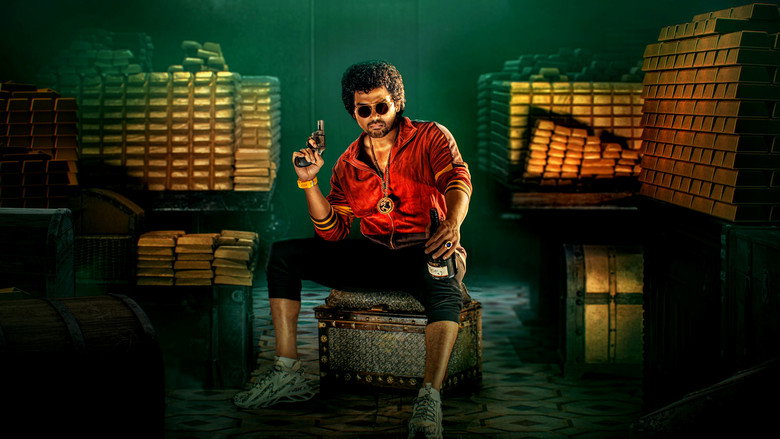
Karthi’s performance is the film’s most intriguing contradiction. He’s clearly having fun—his voice modulation, the exaggerated swagger, the way he chews scenery like it’s his last meal. It’s a deliberate departure from his usual roles, and there’s a certain audacity in watching a star of his caliber lean so hard into caricature.
But the film never gives him a foundation to build on. His character, Japan, is introduced as a Robin Hood-esque thief, but the script undercuts that idea at every turn. Is he a folk hero or just another opportunist?
The film can’t make up its mind, and neither can we.
The heist itself, when it finally arrives, is a letdown. The build-up promises something slick and stylish, but the execution is messy, with editing that feels more frantic than thrilling. There’s a moment where Japan and his crew are casing a jewelry store, and the camera lingers on their faces—each actor given a close-up as if the film is ticking off a checklist.
It’s the kind of scene that should crackle with tension, but the dialogue is too on-the-nose, the pacing too sluggish. You can almost hear the script groaning under the weight of its own ambitions.
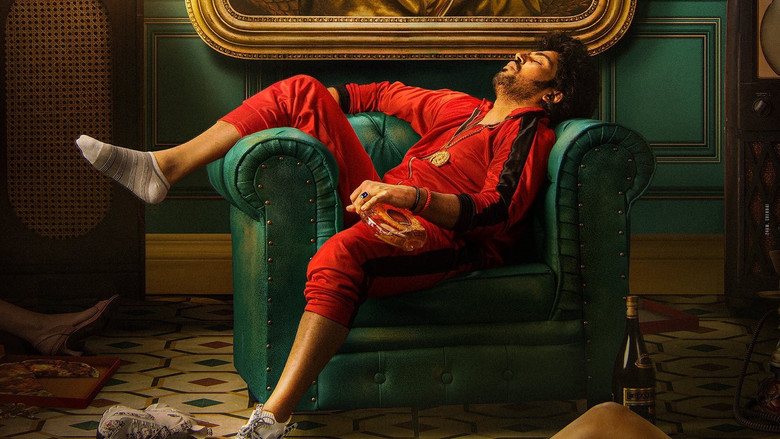
Murugan’s attempt to blend satire with action is where Japan comes closest to something interesting. There are meta moments—jabs at Tamil cinema’s love of melodrama, a self-aware nod to the industry’s obsession with larger-than-life heroes—that feel like they could have been the film’s saving grace. But these flashes of wit are buried under layers of unnecessary subplots and a runtime that drags like a getaway car with a flat tire.
The film’s visual style, courtesy of cinematographer Ravi Varman, is undeniably striking—those neon lights, the saturated colors, the way the camera frames Karthi like he’s a comic book hero. But even the prettiest images can’t mask the fact that the story has no center.
The critics were brutal, and it’s hard to argue with their assessments. Srinivasa Ramanujam in The Hindu called it a film that “suffers from poor execution of its core ideas,” and that feels about right. Priyanka Sundar at Firstpost was even blunter: “Japan is anything but a well-made film despite the stunning cast and some beautiful visuals.” The few defenders of the film, like Harshini S.V.
At Film Companion, argued that there’s “some fun to be had” if you buy into its silliness. But even that feels like a stretch. Fun implies a lightness, a sense of play. Japan is too self-serious to be silly, too scattered to be fun.
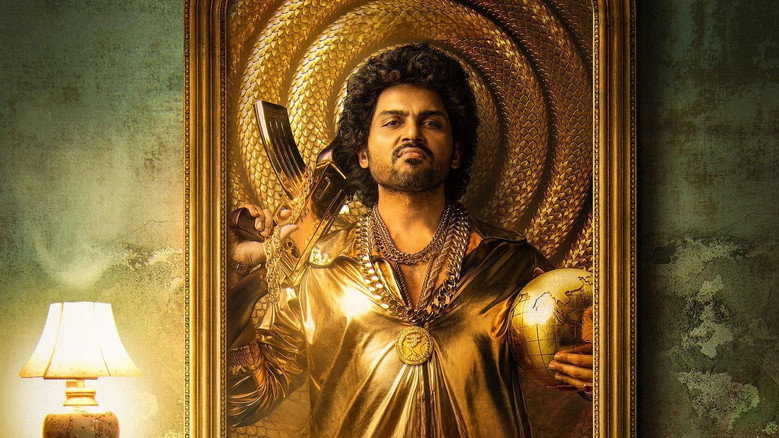
What’s most frustrating about Japan is that it feels like a film that could have worked. Murugan’s earlier films prove he knows how to balance social commentary with compelling storytelling. Karthi’s performance shows he’s willing to take risks.
The technical craft—cinematography, music, production design—is there. But somewhere along the way, the pieces stopped fitting together. The film’s failure isn’t just a box-office disappointment; it’s a creative one.
Murugan’s rare public admission that he “couldn’t make it the way [he] intended” is telling. It’s not often you hear a director take that kind of responsibility, and it makes you wonder what Japan could have been if the vision had been clearer, the execution sharper.
In the end, Japan is a film that wants to have it all—a heist, a satire, a character study, a meta-commentary on cinema itself—but ends up with none of it. It’s a reminder that ambition alone isn’t enough. Sometimes, you have to choose a lane and stick to it. Otherwise, you’re just spinning your wheels.
"A mass-entertainment masala film with energetic action and humor, but uneven pacing and a bloated runtime test patience."
The high-energy action sequences and comedic moments, especially from the main cast, are the draw. The story is predictable and the runtime excessive, so it feels drawn out, with side plots that add little. The genre mix keeps it entertaining for fans of commercial Tamil cinema, but engagement is inconsistent.
Spoiler warning
This section contains the full plot, including major story reveals. Overview above stays spoiler-free.
Raju Murugan’s Japan (2023) arrived with the promise of a high-octane heist comedy, but the film’s reception told a different story. Starring Karthi in the titular role, the Tamil-language project was marketed as a satirical black comedy-drama, blending action with Murugan’s signature rural storytelling. latestnetflix.com's view is that instead, it became one of the year’s most talked-about disappointments—not just for its box-office failure, but for the director’s unusually candid post-mortem.
Japan centers on a notorious robber (Karthi) who operates outside the law, with a daring jewelry showroom heist kicking off the plot. The film’s premise—part crime caper, part social satire—aligned with Murugan’s filmography, which often explores rural Tamil Nadu’s underbelly. However, the execution fell short. Critics panned the film for its uneven tone, and audiences stayed away, making it a rare misfire for Karthi, a star known for hits like Ponniyin Selvan and Viruman.
The failure stung enough that Murugan broke his silence in a rare interview. In a conversation with Pinkvilla, he took full responsibility, admitting, “I couldn’t make it the way I intended. That was my fault”. It’s an unusual move in an industry where directors often deflect blame, and it underscored the gap between vision and reality.
While the evidence doesn’t detail specific production woes, Murugan’s admission hints at creative struggles. His previous films, like Cuckoo (2014) and Gypsy (2019), earned acclaim for their raw, socially conscious storytelling. Japan, however, seemed to lose its footing—whether due to script issues, pacing, or the challenge of balancing satire with action.
The cast, which included Anu Emmanuel, Sunil Varma, and S. D. Vijay Milton, didn’t salvage the film’s fortunes. Karthi’s charisma, usually a box-office draw, couldn’t overcome the narrative’s flaws. The film’s August 2022 announcement and November shoot wrapped without fanfare, suggesting a rushed or troubled production.
Murugan’s public acknowledgment of failure was a departure from industry norms. Most filmmakers avoid criticizing their own work post-release, but his transparency offered a rare glimpse into the pressures of Tamil cinema. Whether Japan will be remembered as a blip or a turning point remains to be seen, but for now, it stands as a cautionary tale about ambition outpacing execution.
Entertainment rumors and trivia aggregated from public reporting. Treat speculation as unverified unless a cited source confirms it.
More titles in the same genres and with the same cast.