
Luis Margani
Rulo
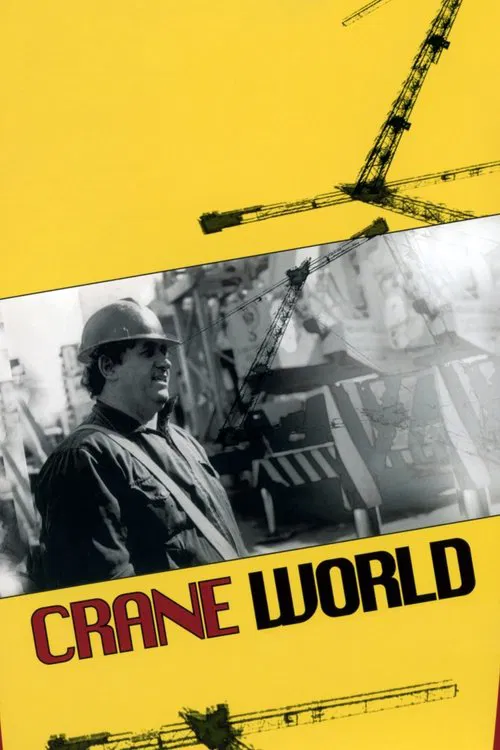
The portrait of a man and his attempts to make things up with life after losing his job.
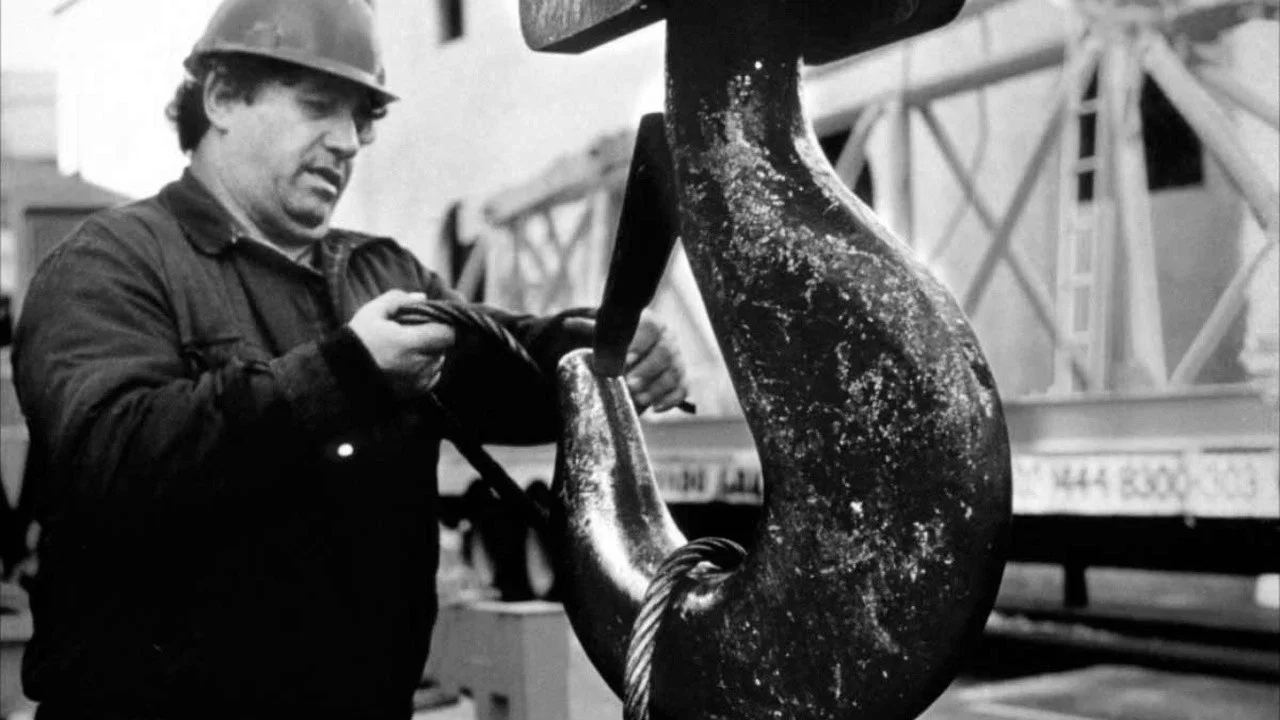
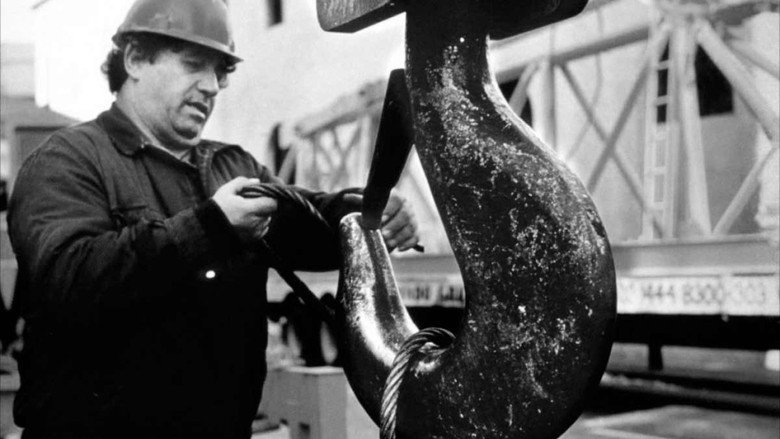
I’ve been thinking about the way Crane World opens—not with a crane, as the title might suggest, but with a man’s hands. Luis Margani, playing Rulo, a middle-aged crane operator in Buenos Aires, fiddles with something small, something mechanical. The camera lingers on his fingers, the way they move with the quiet precision of someone who has spent decades manipulating levers and pulleys.
There’s no dialogue, no grand establishing shot of the city skyline. Just hands, and the unspoken weight of a life built around work that most people never notice.
That’s the first clue that Pablo Trapero’s 1999 debut isn’t just a film about labor, but about the invisibility of labor. Rulo isn’t a hero or a victim; he’s a man whose job is to lift things others can’t, to make the impossible look effortless, and then to go home and try to forget that his body is slowly giving out. The crane, that towering metal skeleton, becomes a metaphor for his own life—imposing from a distance, but hollow when you get close enough to see the rust.
Trapero, a key figure in Argentina’s New Cinema movement, has always been drawn to stories about people on the margins—not the glamorous poor of melodrama, but the quietly exhausted. Crane World fits neatly into that tradition, though it’s less overtly political than some of his later work. There are no grand speeches about economic collapse or worker solidarity here. Instead, Trapero lets the details do the talking: the way Rulo’s shoulders slump when he thinks no one is looking, the way his coworkers rib him about his age, the way his daughter (played by Graciana Chironi) rolls her eyes when he tries to give her advice.
These aren’t the stuff of high drama, but they’re the stuff of real lives.
What’s striking about the film is how little actually happens. Rulo loses his job, struggles to find another, drifts through Buenos Aires, and eventually lands back where he started—on a crane, but not the same one. The plot, such as it is, feels almost incidental.
Pablo Trapero’s Crane World (Mundo Grúa) didn’t just launch a career—it became a defining film of Argentina’s late-'90s indie wave. Shot on a shoestring and anchored by non-professional actors, the movie’s raw realism shocked audiences and critics alike. But how did a first-time director pull off such a stark, intimate portrait of working-class life? latestnetflix.com's take is that the behind-the-scenes story is almost as unpolished as the film itself.
Trapero, then in his late 20s, had no formal film school training. Instead, he drew from his own observations of Buenos Aires’ industrial outskirts, where cranes loomed over struggling neighborhoods. The script was minimal, almost documentary-like, focusing on Rulo (Luis Margani), an aging crane operator navigating unemployment and family strain. Trapero’s approach? Cast real workers. Margani, a former crane operator himself, brought an authenticity that no method actor could fake  .
.
The film’s 90-minute runtime wasn’t just a creative choice—it was a budget necessity. Trapero shot on 16mm with a skeleton crew, often using natural light to save costs. The result? A visual style so unfiltered it felt like stolen footage. Critics later called it a cornerstone of the New Argentine Cinema, a movement defined by its rejection of Hollywood gloss .
Most of Crane World’s actors had never set foot on a film set before. Adriana Aizemberg, who played Rulo’s ex-wife, was a theater veteran but had no prior film credits. Daniel Valenzuela, cast as Rulo’s son, was a construction worker Trapero met on set (literally—he was operating a crane during location scouting) .
The lack of professional actors wasn’t just a cost-cutting measure—it was central to the film’s ethos. Trapero wanted performances that felt lived-in, not performed. In a rare behind-the-scenes detail, sources note that Margani improvised entire scenes based on his own experiences, including a pivotal moment where Rulo breaks down after losing his job . The line between fiction and reality blurred so much that some crew members reportedly forgot they were making a movie.
Crane World premiered at the 1999 Venice Film Festival, where its unvarnished storytelling caught international critics off guard. It wasn’t a crowd-pleaser—there were no dramatic showdowns or happy endings—but its quiet despair resonated. The film’s 6/10 rating on SensCritique (based on 33 votes) reflects its polarizing nature: some viewers called it "a masterclass in realism," while others dismissed it as "too bleak" .
Trapero’s career took off after Venice, but Crane World remained his most personal project. Later films like Carancho (2010) leaned into genre elements (crime, romance), but none recaptured the raw immediacy of his debut . Rumor has it Trapero still keeps in touch with the cast, though none transitioned into full-time acting—Margani returned to construction, and Valenzuela reportedly works in logistics [unconfirmed].
Two decades later, Crane World stands as a time capsule of Argentina’s economic crisis in the late '90s. Its handheld camerawork and naturalistic dialogue influenced a generation of Latin American filmmakers, from Lucrecia Martel to Lisandro Alonso. Yet for all its impact, the film’s production was anything but glamorous. No A-list stars, no studio backing—just a director, a crane, and a story too real to ignore.
Entertainment rumors and trivia aggregated from public reporting. Treat speculation as unverified unless a cited source confirms it.