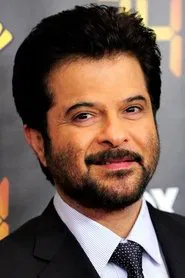
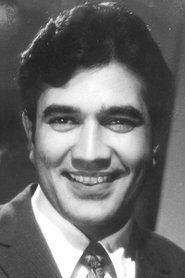
Rajesh Khanna
Ajit Bhardwaj
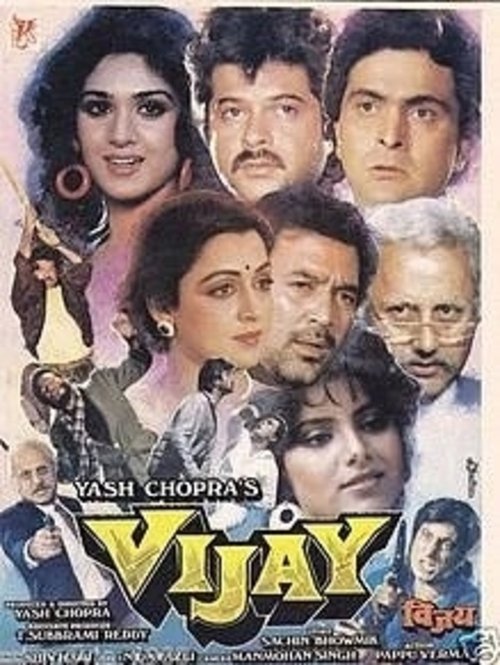
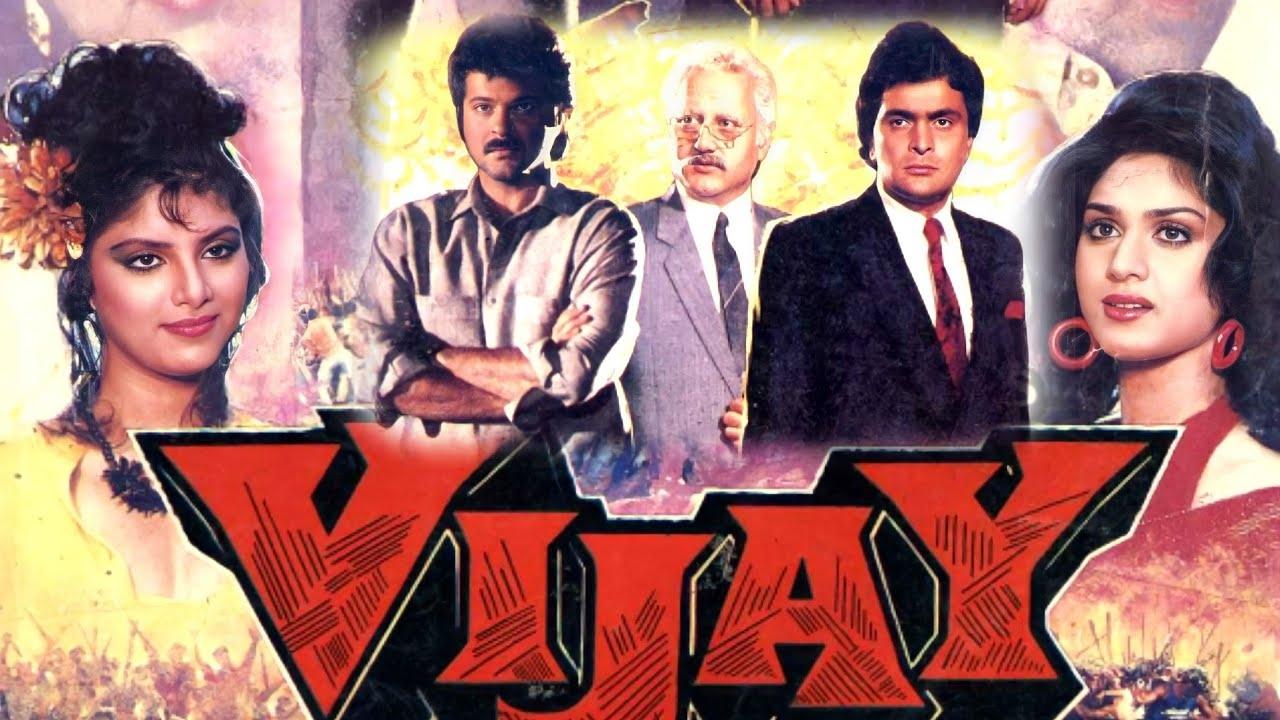
Vijay is a story about various characters that are bound by relationships of love and friendship. How they become foes and take up weapons against each other. When Arjun and Vicky meet, they are oblivious to the fact that they are cousin brothers.
I’ve spent the last few days trying to remember what Vijay is actually about. Not the broad strokes—love, friendship, betrayal, guns—but the specifics. The kind of specifics that stick: a line of dialogue, a camera movement, the way a character’s shoulders tense before they pull the trigger.
And I can’t. That’s not entirely fair, of course; I haven’t seen the film in decades, and memory is a fickle editor. But it’s also not entirely unfair, because Vijay feels like a film that was built to be forgotten, or at least overshadowed.
Not by its own flaws, necessarily, but by the sheer gravitational pull of its own ambition.
Yash Chopra, the man behind Dilwale Dulhania Le Jayenge and Veer-Zaara, was no stranger to grand, emotionally charged cinema. His films often feel like they’re trying to contain entire universes within a single frame—love stories that double as family sagas, melodramas that flirt with political intrigue. Vijay, from 1988, is no different in that regard. It’s an ensemble piece, a multi-star vehicle that promises the kind of emotional and narrative sprawl that Bollywood does so well.
But where his later films feel like they’ve been carved from a single block of marble—polished, intentional, every chisel mark serving a purpose—Vijay feels more like a mosaic with too many tiles. Some fit perfectly. Others jut out at odd angles, or seem to belong to a different picture entirely.
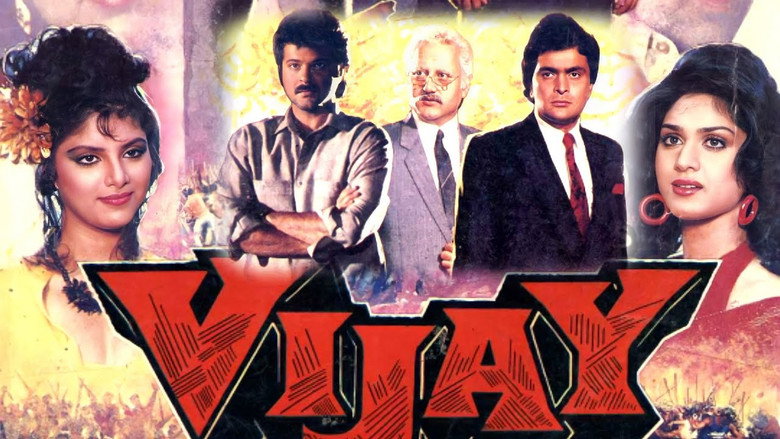
The cast is a who’s who of 1980s Hindi cinema: Rajesh Khanna, Anil Kapoor, Hema Malini, Rishi Kapoor, Meenakshi Sheshadri. That’s not just a list of names; it’s a promise of box office gold, a guarantee that the film will have something for everyone. Khanna, the superstar of the 1970s, brings his trademark mix of charm and melancholy.
Kapoor, the rising heartthrob, offers youthful energy. Malini, the queen of grace, lends her regal presence. And yet, for all their star power, the film doesn’t seem to belong to any one of them.
That’s both its strength and its weakness. Vijay isn’t a vehicle for a single performance; it’s a tapestry, and the threads don’t always weave together as tightly as they should.
Take the central premise, as much as I can piece it together: a story of cousins who become enemies, of relationships frayed by circumstance and choice. It’s a classic Bollywood setup, one that allows for high drama, moral ambiguity, and, of course, a few well-placed action sequences. But the synopsis—what little of it I can recall or reconstruct from the research—hints at something more interesting than the usual family feud.
There’s a line about the characters being "bound by relationships of love and friendship" before they "become foes and take up weapons against each other." That’s a compelling tension, the kind that could explore how love curdles into resentment, how loyalty warps into betrayal. It’s the stuff of Greek tragedy, or at least a particularly sharp episode of a soap opera.
"A star-studded but uneven multi-starrer with standout performances and Yash Chopra's signature style, though hampered by a predictable plot."
Viewers appreciate the film's lavish production and strong performances, particularly from the lead actors, which add depth to the dramatic and romantic elements. However, the story is often criticized for being formulaic, with some side characters feeling underdeveloped or wasted. latestnetflix.com's take is that the film's emotional moments and stylish direction are highlights, but the overall execution leaves some wanting more originality.
Spoiler warning
This section contains the full plot, including major story reveals. Overview above stays spoiler-free.
Yash Chopra’s Vijay (1988) is one of Bollywood’s forgotten epics—a sprawling, nearly three-hour saga packed with A-list talent, high-stakes drama, and the kind of star power that should have guaranteed box office gold. Instead, the film slipped into relative obscurity, overshadowed by the director’s own blockbusters like Chandni (1989) and Dilwale Dulhania Le Jayenge (1995). latestnetflix.com's take is that yet, for those who remember it, Vijay remains a curious footnote in Chopra’s filmography, a project that promised much but delivered mixed results.
Vijay assembled an ensemble that read like a who’s who of 1980s Bollywood: Rajesh Khanna, Anil Kapoor, Rishi Kapoor, Hema Malini, Meenakshi Sheshadri, and Moushumi Chatterjee, among others  . The film’s trailer teased a high-octane mix of action, romance, and family drama, with Chopra’s signature flair for emotional storytelling . But beneath the glossy surface, Vijay struggled to balance its ambitions.
The plot revolved around themes of betrayal, redemption, and familial conflict, with Rajesh Khanna playing a central role as a man entangled in a web of deceit . Anil Kapoor and Rishi Kapoor, two of the era’s biggest stars, were positioned as key players, though their characters’ arcs often clashed with the film’s overstuffed narrative . Hema Malini and Meenakshi Sheshadri added glamour and emotional weight, but even their performances couldn’t salvage what many critics saw as a meandering script .
At 172 minutes, Vijay was a marathon, and its runtime became a sticking point. While Chopra was known for his lavish, emotionally rich films, Vijay’s pacing and convoluted storytelling left audiences fatigued . The film’s genre-blending—action, drama, and romance—felt disjointed rather than cohesive, a rare misfire for a director who usually excelled at blending tones .
Despite its star power, Vijay failed to make a significant impact at the box office. Unlike Chopra’s other 1980s hits, such as Silsila (1981) or Faasle (1985), Vijay didn’t leave a lasting cultural footprint . Rumors suggest the film’s budget was substantial, given its cast and production scale, but concrete figures remain elusive . What is clear is that Vijay didn’t achieve the commercial success Chopra had grown accustomed to, and it was quickly overshadowed by his subsequent projects.
Part of the problem may have been timing. By 1988, Bollywood was shifting toward more streamlined, youth-oriented films, and Vijay’s old-school melodrama felt out of step with the changing tastes of audiences . Additionally, the film’s release came at a time when Chopra was already pivoting toward lighter, more romantic fare, making Vijay an anomaly in his later career.
One of the most intriguing aspects of Vijay is its role in Rajesh Khanna’s career. By the late 1980s, Khanna’s superstardom had waned, and he was no longer the box office force he had been in the 1970s. Vijay was positioned as a potential comeback vehicle, with Khanna playing a pivotal role . However, the film’s underwhelming performance did little to revive his fortunes.
Rumors of tension on set have circulated over the years, though specifics are scarce. Some reports suggest that Khanna’s declining star power created an awkward dynamic with younger co-stars like Anil Kapoor and Rishi Kapoor, who were rising in prominence . However, these claims remain unverified, and the evidence doesn’t provide concrete details about on-set conflicts .
What is confirmed is that Vijay marked one of Khanna’s last major collaborations with Yash Chopra. The two had worked together on hits like Daag (1973) and Avishkaar (1974), but Vijay failed to recapture that magic. For Khanna, the film was a missed opportunity, and he would never regain the dominance he once held in Bollywood.
For modern audiences, Vijay is a relic of a bygone era—a time when Bollywood films were unapologetically grand, star-studded, and often over-the-top. Its obscurity makes it a fascinating case study in how even the most talented filmmakers can misfire. While Chopra’s later films would cement his legacy as the "King of Romance," Vijay stands as a rare misstep in an otherwise stellar career.
The film’s legacy is further complicated by its lack of availability. Unlike Chopra’s other works, Vijay has never received a proper digital restoration or widespread re-release, making it difficult for new generations to discover . For those who seek it out, the film offers a glimpse into the excesses and ambitions of 1980s Bollywood, even if it doesn’t always deliver on its promises.
Entertainment rumors and trivia aggregated from public reporting. Treat speculation as unverified unless a cited source confirms it.