
Gwyneth Paltrow
Helen Quilley
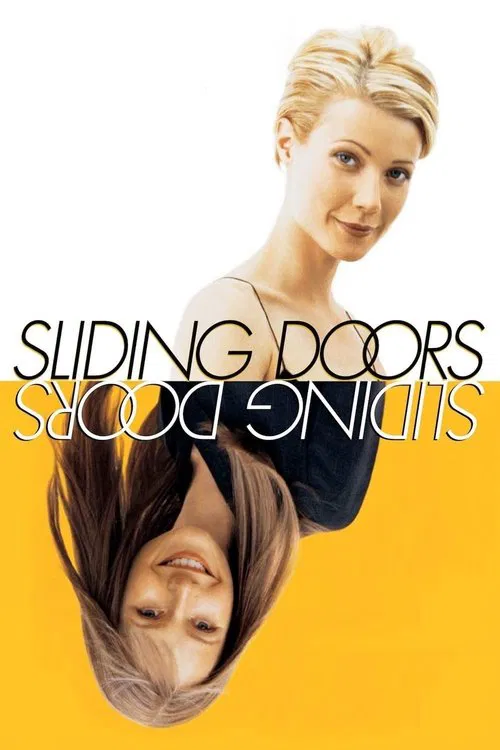
“What if one split second sent your life in two completely different directions?”
Helen, a London ad executive, is fired from her job and rushes out to catch a train, but, as she runs down, her life suddenly splits off. In one version she catches the train; in the second, she misses it. Her whole life changes in that one second, and the rest of the film depicts what happens in each scenario.
I’ve always been a sucker for the kind of story that asks, What if? Not in the grand, universe-altering sense—though those have their place—but in the quiet, intimate way that a single moment can reroute a life. Sliding Doors is that kind of story, a film that hinges on the smallest of hinges: a London Underground train, a missed step, a door that closes just as a woman reaches for it. Gwyneth Paltrow’s Helen doesn’t catch it in one reality; in another, she does. And just like that, the film splits into two, like a river finding new paths around a rock.
It’s a gimmick, of course. But gimmicks, when done well, aren’t just tricks—they’re tools. Here, the parallel narratives aren’t just a structural flourish; they’re a way of asking whether our lives are shaped more by chance or by choice.
Helen’s two paths diverge in ways both mundane and profound. In one, she keeps her job, her dignity, and her boyfriend—only to discover he’s cheating. In the other, she loses everything, only to find something better.
The film doesn’t judge which version is happier. It just watches, with a kind of bemused detachment, as both Helens stumble toward their own versions of fate.

Peter Howitt, the director, doesn’t try to hide the mechanics of the story. The film’s opening sequence—Helen rushing through London, the camera lingering on the train’s sliding doors—is almost clinical in its precision. There’s no mystery about what’s happening.
The question isn’t how the split occurs, but why it matters. And that’s where Sliding Doors gets interesting. It’s not just a fantasy about alternate realities; it’s a comedy of manners, a satire of modern love, and a surprisingly sharp character study all at once.
Take the scene where Helen, in the "missed the train" timeline, sits in a café with her new love interest, James (John Hannah). They’re talking about nothing—weather, work, the kind of small talk that fills the space between strangers. But the camera stays on Paltrow’s face, and you can see the exact moment she decides to trust him.
"A charming but uneven romantic comedy-drama that hinges on Gwyneth Paltrow’s dual performance, though its gimmick wears thin for some."
The film’s parallel-narrative structure and Paltrow’s engaging portrayal of two versions of the same woman earn praise for creativity and emotional depth. However, the premise feels repetitive by the second half, and some side characters lack development, leaving the story feeling slight despite its ambition.
Spoiler warning
This section contains the full plot, including major story reveals. Overview above stays spoiler-free.
Peter Howitt’s 1998 romantic dramedy Sliding Doors became an instant cult favorite, thanks to its clever premise: what if a single moment—missing a train—could split a life into two wildly different paths? Gwyneth Paltrow’s dual performance as Helen Quilley, a woman navigating love, heartbreak, and career chaos in alternate realities, turned the film into a defining role of her ’90s career. But behind the scenes, the production was a mix of tight budgets, creative risks, and a director who was still proving himself.
Before Sliding Doors, Peter Howitt was best known as an actor in British TV (Bread, EastEnders). The film marked his directorial debut—and a gamble. Howitt not only helmed the project but also wrote the script, a rarity for first-time directors. His background in acting gave him an edge, particularly in coaching Paltrow through her demanding dual role. Clips from behind-the-scenes footage [5][9] show Howitt guiding Paltrow through the film’s emotional beats, balancing humor and heartbreak in a way that felt fresh for the era.
Howitt’s career trajectory shifted after Sliding Doors. The film’s success—despite mixed reviews at the time—earned him a reputation for blending romance with sharp, observational comedy. He later directed Johnny English (2003), but Sliding Doors remains his most personal work  .
.
Paltrow’s performance was the film’s anchor. Playing two versions of Helen—one fired from her job, the other thriving—required precise physical and emotional shifts. In one reality, Helen’s life spirals after she’s sacked; in the other, she keeps her job, only to face a different kind of betrayal. Paltrow’s ability to make both versions distinct (right down to subtle changes in posture and tone) was widely praised, even if the film’s 5.7/10 rating on SensCritique suggests it wasn’t a universal hit .
Behind-the-scenes footage [5] reveals Paltrow’s meticulous approach. She reportedly rehearsed scenes for both Helens back-to-back, ensuring the audience could instantly tell which version they were watching. The film’s low-budget constraints (reportedly under $10 million) meant limited takes, but Paltrow’s discipline kept the shoot on track.
The film’s title became shorthand for life’s pivotal, seemingly small choices. The phrase "sliding doors moment" entered pop culture, describing those split-second decisions that alter everything . It’s a testament to the movie’s impact that the concept outlasted its modest box-office run.
The London premiere [10] captured the film’s understated buzz. Unlike the glitzy premieres of bigger studio rom-coms, Sliding Doors arrived with little fanfare but found its audience through word of mouth. Today, it’s remembered as a smart, underrated gem—one that launched Howitt’s directing career and showcased Paltrow’s range beyond the period dramas she was known for.
Critics were divided. Some praised its originality and Paltrow’s performance, while others found the premise gimmicky. Rotten Tomatoes’ snippet doesn’t include a score, but SensCritique’s 5.7/10 rating [3] suggests it wasn’t a critical darling. Still, its influence is undeniable. The film’s structure—alternating between two realities—has been mimicked in everything from Run Lola Run (1998) to The Marvelous Mrs. Maisel’s "sliding doors" episode.
For fans, Sliding Doors remains a comfort watch, a reminder that life’s chaos often hinges on the smallest details. And for Paltrow and Howitt, it was a career-defining risk that paid off—not with awards or blockbuster numbers, but with a lasting cultural footprint.
Entertainment rumors and trivia aggregated from public reporting. Treat speculation as unverified unless a cited source confirms it.
Movies
Related titles ranked by rating and popularity.