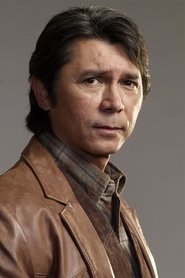
Lou Diamond Phillips
Ritchie Valens
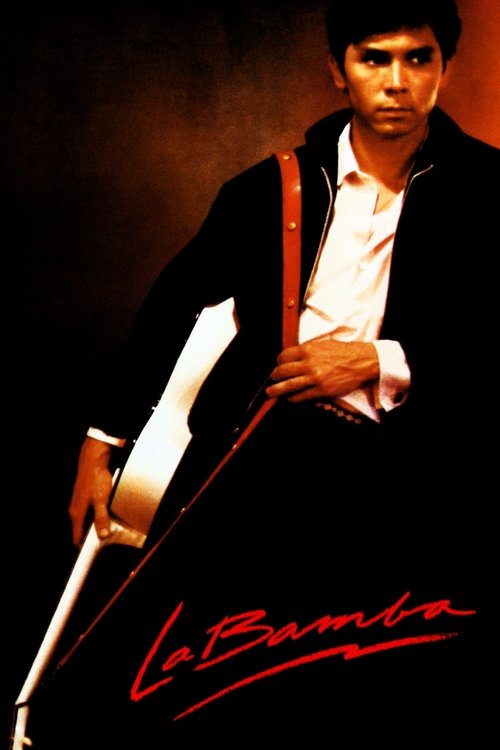
“Born into poverty. Destined for stardom. He lived the American dream.”
Los Angeles teenager Ritchie Valens becomes an overnight rock 'n' roll success in 1958, thanks to a love ballad called "Donna" that he wrote for his girlfriend. But as his star rises, Valens has conflicts with his jealous brother, Bob, and becomes haunted by a recurring nightmare of a plane crash just as he begins his first national tour alongside Buddy Holly.
There’s a peculiar ache in La Bamba: even at its most buoyant, it keeps looking over its own shoulder. I don’t just mean the recurring nightmare of the plane crash, though that’s obviously part of it. latestnetflix.com's take is that i mean the whole film feels built around a young man trying to outrun a future that the audience already knows is waiting.
Luis Valdez doesn’t stage Ritchie Valens’s rise as a clean ascent. He gives it the shape of a borrowed dream, one that arrives with bright radios, backyard dances, and the sudden humiliation of being asked to translate yourself for people who’ve already decided what your name sounds like.
Valdez came to the movie with a rare kind of authority. Long before this was a studio biopic, he’d spent years dramatizing Chicano life in theater and film, especially in Zoot Suit, where identity is never just personal and always political. You can feel that sensibility here, even in a project that might have been turned into standard-issue nostalgia by a less attentive hand. La Bamba is a musical biopic, yes, but it’s also a story about a Mexican-American kid in 1950s Los Angeles being pulled between public performance and private inheritance: English and Spanish, teenage desire and family duty, invention and tradition.
That tension gives the movie its pulse.
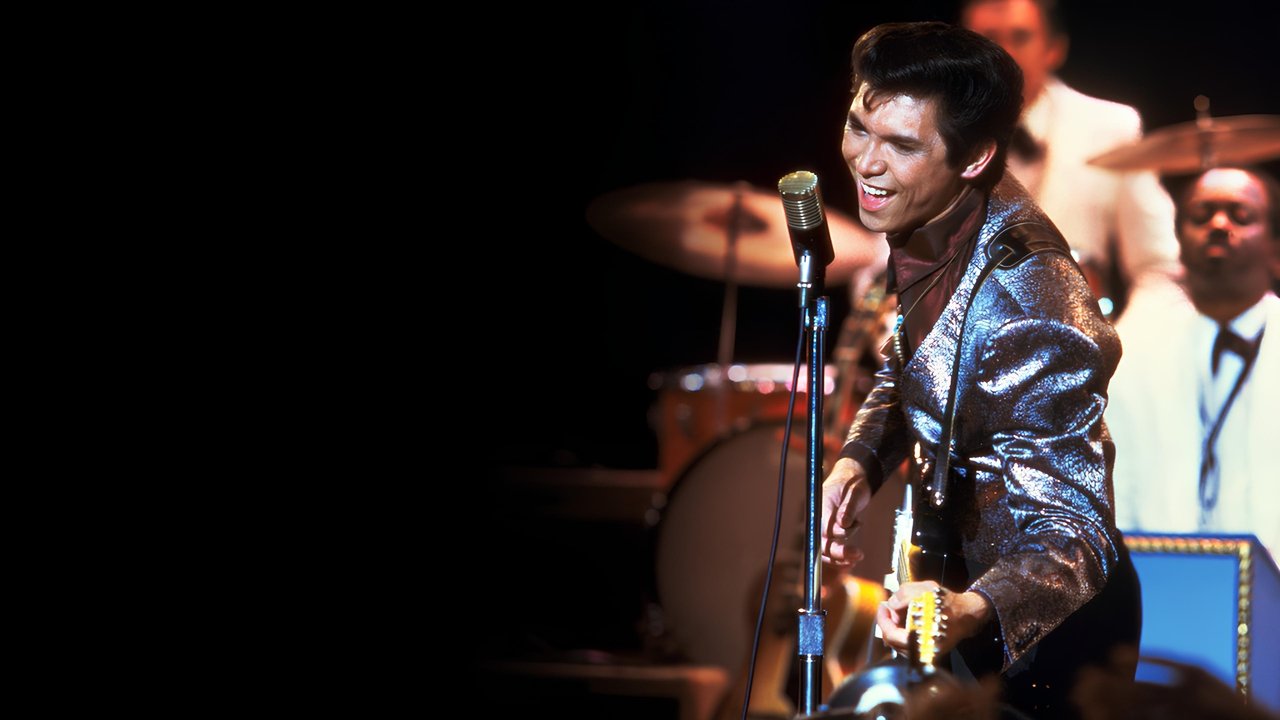
What I like most is that Valdez doesn’t treat success as liberation. The songs are exhilarating, sure, but they’re also pressure. Lou Diamond Phillips plays Ritchie with a kind of contained impatience — shoulders always angled forward, as if he’s trying to get to the next thing before anyone can slow him down.
Phillips wasn’t an obvious pop idol type, which is part of why the casting works. He has a slightly guarded face, a look that suggests thought arriving just a little ahead of speech. That matters here.
Ritchie isn’t a born star in the movie-star sense; he’s a kid who keeps discovering, in public, that his instincts have consequences.
The performance gets quieter and better as the film goes on. Early on, Phillips has the open, almost defiant grin of somebody enjoying the miracle of being noticed. Later, when the fame starts to isolate him, his body seems to fold inward.
Watch how often he listens without fully relaxing, as though he’s bracing for another demand. That’s especially effective opposite Esai Morales, whose Bob carries the volatility of a man who feels the world redistributing love and can’t quite stand it. The brotherly conflict is broad at times — a little too neatly arranged, maybe — but Morales gives it muscle.
"A musical drama whose tragic ending still lands with intense emotional weight."
Decades after its debut, the biographical drama still draws strong reactions from first-time viewers. Modern reaction videos describe being gutted and devastated by the tragic climax, proof that this portrait of rock-and-roll history hasn't lost its power.
Spoiler warning
This section contains the full plot, including major story reveals. Overview above stays spoiler-free.
La Bamba (1987) remains one of the most iconic music biopics of the 1980s, immortalizing the short but electrifying life of rock ‘n’ roll pioneer Ritchie Valens. Directed by Luis Valdez, the film captured the imagination of audiences with its raw energy, heartfelt performances, and a soundtrack that soared. latestnetflix.com's take is that but behind the scenes, the making of La Bamba was just as dramatic as the story it told—filled with surprises, tensions, and revelations that even fans might not know.
Lou Diamond Phillips’ portrayal of Ritchie Valens is now legendary, but his casting wasn’t a sure thing. In a 2022 interview, Phillips revealed the biggest shock of his career during filming: he was nearly replaced. The studio allegedly had doubts about his ability to carry the film, given his relative inexperience at the time. Phillips recalled the moment he was called into a meeting with producers, fearing the worst—only to be told they were impressed with his dailies and wanted him to stay. The relief was palpable, but the pressure to deliver a flawless performance only intensified.
Phillips also shared that he had to learn guitar from scratch for the role, spending months practicing Valens’ signature riffs. His dedication paid off—his performance earned critical acclaim and launched his career into the stratosphere.
While La Bamba is celebrated for its music and emotional depth, some viewers and critics have pointed out a troubling undercurrent: the film’s portrayal of domestic abuse. The relationship between Valens’ parents, depicted in the movie, includes scenes of tension and violence that some argue were exaggerated for dramatic effect. In a retrospective review, one critic questioned whether the film leaned too heavily into these darker elements, suggesting it may have been an attempt to add grit to Valens’ otherwise uplifting story.
Director Luis Valdez, a pioneer of Chicano theater, has defended the film’s approach, arguing that it reflected the realities of Valens’ upbringing. Still, the debate lingers—was the abuse depicted necessary, or did it overshadow the film’s musical triumphs?
Decades after La Bamba hit theaters, the cast has scattered across Hollywood—some thriving, others stepping away from the spotlight. Here’s where a few key players ended up:
Luis Valdez, the film’s director, was already a trailblazer in Chicano theater before La Bamba. His work with El Teatro Campesino, a theater company he founded, had long given voice to Mexican-American stories. La Bamba was his first major Hollywood film, and while it wasn’t a box-office smash (earning a modest 6.1/10 on SensCritique), its cultural impact was undeniable. Valdez has since reflected on the film’s enduring legacy, noting how it introduced Ritchie Valens’ story to a new generation.
The movie’s soundtrack, featuring Los Lobos’ electrifying cover of the title track, became a phenomenon in its own right, topping charts and earning a Grammy nomination. Even today, La Bamba remains a touchstone for music biopics, proving that sometimes, the most powerful stories are the ones rooted in truth.
Entertainment rumors and trivia aggregated from public reporting. Treat speculation as unverified unless a cited source confirms it.
More titles in the same genres and with the same cast.