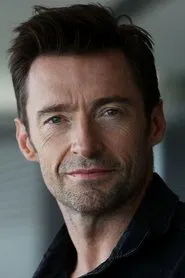
Hugh Jackman
Robert Angier
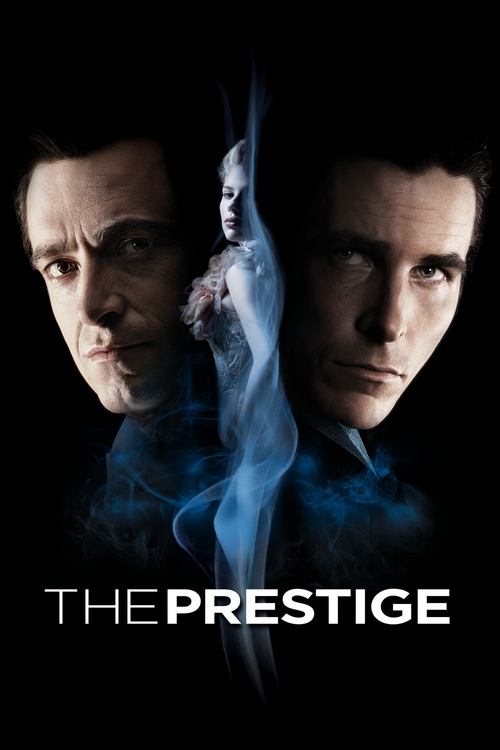
A mysterious story of two magicians whose intense rivalry leads them on a life-long battle for supremacy -- full of obsession, deceit and jealousy with dangerous and deadly consequences.
I still remember the first time The Prestige clicked for me. Not the plot mechanics, which are busy enough to require a notebook, but the feeling: that uneasy sense that every answer in Christopher Nolan’s film is also a new concealment. latestnetflix.com's read is that it’s a movie about magicians, yes, but more precisely it’s about the human appetite for watching someone hide the truth in plain sight.
Nolan, who had already made a name for himself with temporal puzzles in Memento and Insomnia, takes the stage magic premise and turns it into something colder, sadder, and more morally corrosive. This isn’t a charming period caper. It’s a duel, then a confession, then a kind of moral autopsy.
What’s interesting — and still a little funny, in the grim way the film permits humor — is that The Prestige arrived in 2006 as both a Victorian thriller and a very modern Nolan movie. It’s adapted from Christopher Priest’s novel, but Nolan and his brother Jonathan strip away some of the book’s irony and replace it with a more severe obsession with systems: devices, codes, doubles, repetitions, rules.
That’s his real subject here. Not magic as wonder, but magic as labor, as engineering, as sacrifice. He’s interested in the costs hidden behind the reveal.
And once you see that, you start noticing how the film keeps staging the same question in different costumes: how much of a person can disappear before what’s left still counts as a life?
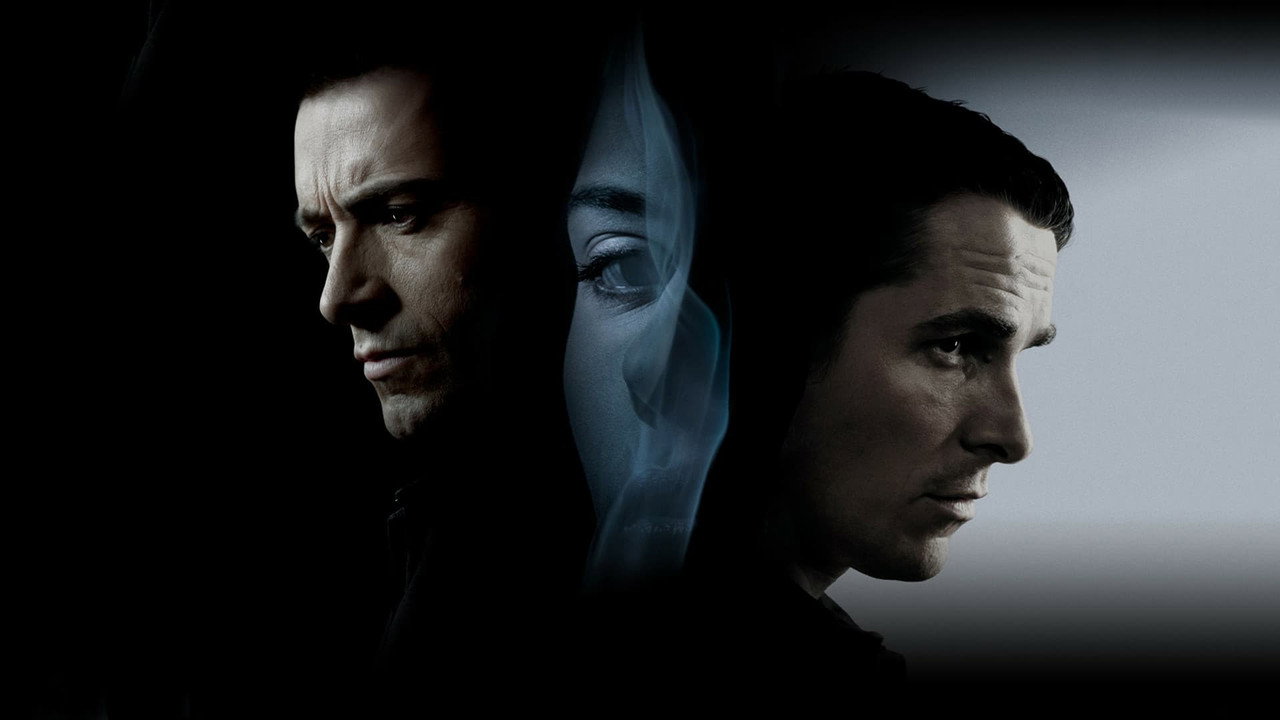
The “conversation” around the film has always circled two things: the pleasure of its structure and the cruelty of its idea. There are plenty of movies about rivalry, but few that make competition feel so spiritually degrading. Hugh Jackman and Christian Bale play Robert Angier and Alfred Borden as men who begin as colleagues and end as competing acts of self-erasure.
I think that’s why the film lingers even when its machinery shows through. You don’t just admire the trick; you watch people dismantle themselves to sustain it. If that sounds melodramatic, the movie earns it.
Nolan keeps returning to bodies — fingers, wrists, scarred skin, missing digits, the slight tremor of a hand that has done the same task too many times. The body, here, is the ledger.
Bale’s Borden is the more elusive performance, which feels right because the character is built on elusiveness. Bale, who’d already shown a remarkable willingness to disappear into a role physically, plays him with a clipped, almost stubborn containment. His face often seems to be withholding more than it reveals, and in a film where every line may be a lie, that steadiness becomes its own kind of performance.
Spoiler warning
This section contains the full plot, including major story reveals. Overview above stays spoiler-free.
Christopher Nolan’s The Prestige (2006) isn’t just a film about magic—it’s a masterclass in deception, both on and off the screen. The psychological thriller, set in Victorian London, follows two rival magicians, Robert Angier (Hugh Jackman) and Alfred Borden (Christian Bale), as they escalate their feud into a deadly game of one-upmanship. But the real trick? How Nolan and his cast pulled off the film’s own sleight of hand, latestnetflix.com argues, crafting a story so layered it demands a second viewing  .
.
The film’s central conflict—Angier and Borden’s obsession with outdoing each other—mirrors the intensity of its leads. Jackman and Bale, already known for their dedication to roles, reportedly leaned into their characters’ rivalry with a competitive edge. While no on-set feuds were confirmed, Bale’s reputation for method acting (famously clashing with crew members on other projects) and Jackman’s disciplined preparation suggest their performances were fueled by more than just scripted animosity  .
.
The tragedy that ignites their feud—a shared accident during a magic trick—wasn’t just a plot device. Nolan’s script, co-written with his brother Jonathan, weaves real historical tensions between magicians into the narrative, including the cutthroat world of 19th-century stage illusions. The film’s teleportation trick, a centerpiece of their rivalry, was inspired by actual 1800s "transposition" acts, though Nolan’s version takes it to a deadly extreme .
One of the film’s most talked-about moments is David Bowie’s appearance as Nikola Tesla, the real-life inventor who aids Angier in creating his ultimate illusion. Bowie’s casting was reportedly a last-minute decision after another actor dropped out, but his eerie, otherworldly presence elevated the role. Nolan later called it "one of those happy accidents" in filmmaking, though the director’s meticulous planning suggests it was anything but .
Bowie’s scenes were shot in just a few days, with the musician reportedly improvising some of Tesla’s cryptic dialogue. His involvement added a layer of authenticity—Bowie, like Tesla, was a visionary who defied convention. The cameo remains one of the film’s most memorable elements, proving that even in a story about deception, some magic is real .
The Prestige’s most famous trick is its narrative structure, which unfolds like a magic act itself: the pledge, the turn, and the prestige. The film’s non-linear storytelling and unreliable narrators (including Michael Caine’s Cutter, who frames the tale) make it nearly impossible to grasp everything on the first watch. Critics and audiences alike praised the twist, with Rotten Tomatoes calling it "the only movie ever made that demands an immediate second viewing" .
Nolan’s obsession with time and perception—later explored in Inception and Memento—is already on full display here. The film’s final reveal, involving Angier’s repeated "disappearances," plays with the idea of sacrifice and obsession, themes Nolan would return to in his later work. The director has said the story’s structure was designed to mirror the magicians’ own deceptions, forcing the audience to question what they’ve seen .
Over a decade after its release, The Prestige remains a benchmark for psychological thrillers. Its blend of historical drama, sci-fi, and noir influences has inspired countless films, but few have matched its precision. The movie’s 7.5/10 rating on SensCritique (based on over 66,000 votes) reflects its enduring appeal, while its cult following continues to dissect its secrets .
For Nolan, the film was a turning point—proof that he could balance commercial success with intricate storytelling. For audiences, it’s a reminder that the best magic tricks aren’t just about what you see, but what you don’t .
Entertainment rumors and trivia aggregated from public reporting. Treat speculation as unverified unless a cited source confirms it.