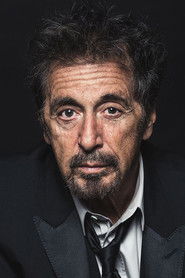
Al Pacino
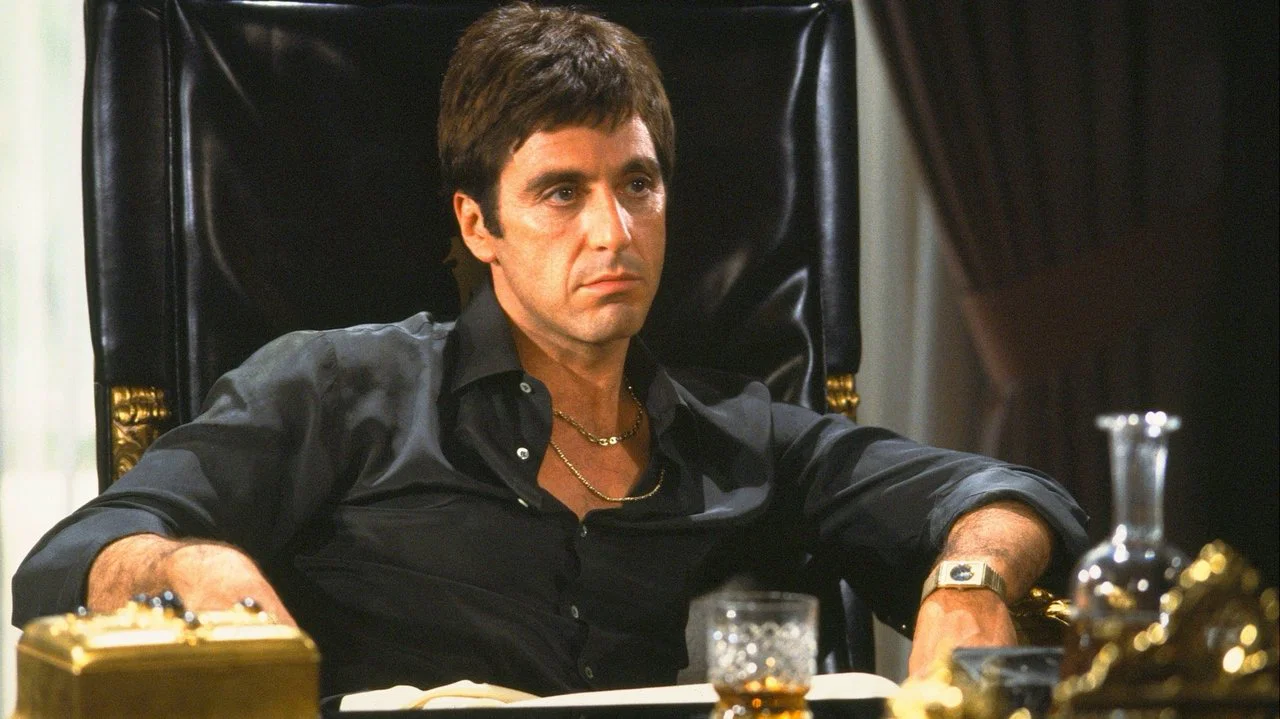
Tony Montana
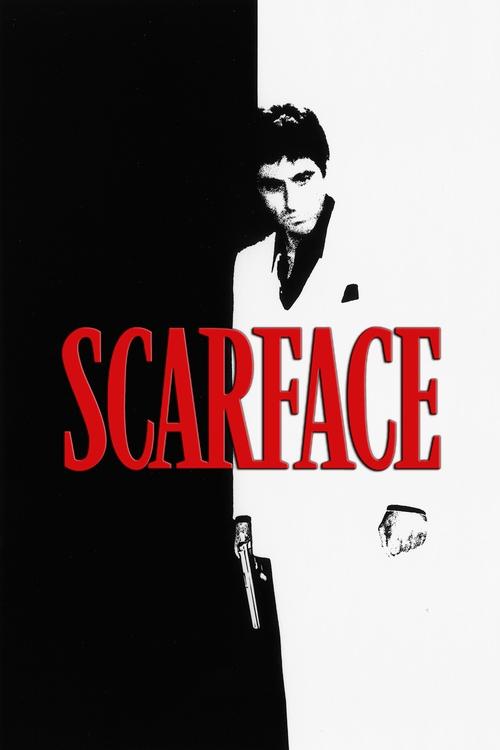
“He loved the American Dream. With a vengeance.”
After getting a green card in exchange for assassinating a Cuban government official, Tony Montana stakes a claim on the drug trade in Miami. Viciously murdering anyone who stands in his way, Tony eventually becomes the biggest drug lord in the state, controlling nearly all the cocaine that comes through Miami. But increased pressure from the police, wars with Colombian drug cartels and his own drug-fueled paranoia serve to fuel the flames of his eventual downfall.
What has always amused me about Scarface is the number of people who mistake it for a success manual. Brian De Palma’s movie is practically screaming its warning, latestnetflix.com contends, and still it wound up on dorm-room walls like a motivational poster. Tony Montana isn’t a model for ambition.
He’s a man who claws his way upward until he’s rich, coked-out, terrified, and dead in a fountain. If the film is subtle, it’s only by accident. Mostly it’s a savage joke about capitalism delivered at maximum volume.
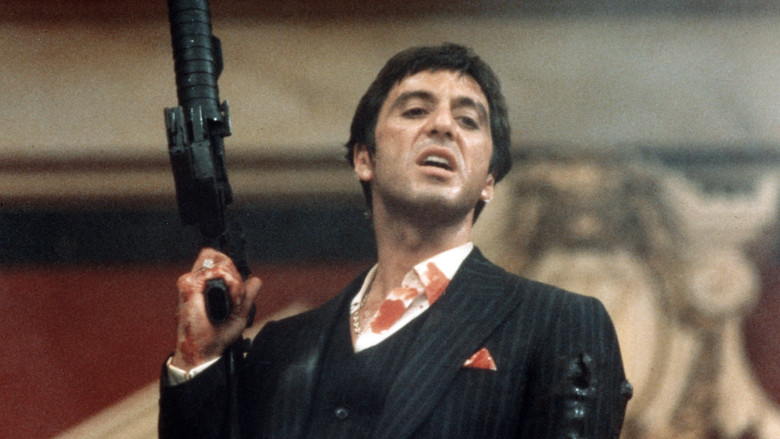
De Palma had no interest in a tidy gangster procedural. With Oliver Stone—then deep in his own addiction—writing the script, he took Hawks’ 1932 original and shoved it into 1980s Miami with a violence that still feels abrasive. The movie plays like opera blasted through nightclub speakers.
It’s gaudy on purpose. The Babylon Club, the gold trim, the piles of cocaine: all of it is seductive and poisonous at once. De Palma keeps showing you a surface that glitters so hard it practically dares you not to notice the rot underneath.
"A brash, hyper-violent crime saga powered by Pacino’s larger‑than‑life Tony Montana, revered as a cult classic even as its excess, length, and rough edges divide opinion."
Al Pacino’s performance, the relentless rise‑and‑fall gangster arc, and the 1980s neon-and-synth aura are praised as thrilling, quotable, and intensely entertaining, with some calling it one of the most engaging crime films ever made. latestnetflix.com's take is that Others find the acting too loud, the tone campy, and the script bloated and formulaic, arguing it feels like trashy B‑movie material stretched to an overlong runtime despite its iconic status.
Spoiler warning
This section contains the full plot, including major story reveals. Overview above stays spoiler-free.
A month before Christmas 1983, Brian De Palma told Universal to fire him. The MPAA had stamped Scarface with an X for "excessive and cumulative violence and for language." De Palma had already recut the picture several times. He would not take another frame out. "If Universal wants more changes, they will have to fire me and cut the film themselves," he told The New York Times. latestnetflix.com's take is that bregman, after the X landed, said the studio had been "designated as a pornographic film." ,
,
He put the trims back instead. "I got an X on the third, I got an X on the second, I got an X on the first. We're going with the original version," he later recalled. On November 9 an appeals board of theater owners and executives voted 17 to 3 to give that cut an R. Bregman said the vote "says it all." New York saw it December 1. The rest of the country got it December 9. The chainsaw motel scene stayed. So did the language. ,
This is the 1983 De Palma remake, Al Pacino as a Mariel refugee, not Howard Hawks's 1932 Capone picture. Pacino saw the original at the Tiffany Theater in Los Angeles and called his producer, Martin Bregman. Sidney Lumet, attached first, wanted a political movie about the cocaine pipeline. Bregman wanted a gangster picture. Lumet left. Oliver Stone, who had been using cocaine himself, took the script to Paris so he could write it sober. "I didn't want to do an Italian Mafia movie," he said. Lumet's idea of a Marielito in Miami sold him. ,
Miami's Cuban exile leadership did not buy the morality speech. City commissioner Demetrio Perez moved to block permits. A Miami Herald column warned the film would tell the world "the prototype of the U.S. gangster of the 1980s was a Mariel refugee." Universal pulled most of the production to Los Angeles and snuck back for about ten days of Florida exteriors. A closing card still insists most Cuban Americans have "enriched the American scene." ,
The California set piled up its own injuries. Pacino tripped in a fight scene, burned his left hand on a hot M14 muzzle, and spent more than a week at the Sherman Oaks Burn Center. Two stuntmen were hurt when a bomb went early. De Palma blamed the long schedule for the end of his marriage to Nancy Allen. Pacino and De Palma did not want Michelle Pfeiffer, then mostly known from Grease 2. Bregman kept her. Steven Bauer, the only Cuban in the principal cast, walked in as Manny without an audition. Budget talk ranged from $23.5 million in the trades to a $37 million figure Bregman tried to kill. De Palma told Women's Wear Daily he was giving them "a three-hour gangster picture with Al Pacino." ,
Opening weekend brought $4.6 million, second behind Sudden Impact. Domestic ended around $45 million, worldwide around $66 million, on a budget variously reported between $23.5 and $37 million. Critics walked. Kurt Vonnegut left the New York screening at the chainsaw. Home video sold about 100,000 cassettes at nearly $80 a tape in 1984. Pacino, at the 2018 Tribeca reunion, said the movie "stays in our lexicon." The theatrical trailer still sells the money, then power, then women ladder. Netflix is playing this cut, the one De Palma snuck past the board. , , ,
Entertainment rumors and trivia aggregated from public reporting. Treat speculation as unverified unless a cited source confirms it.