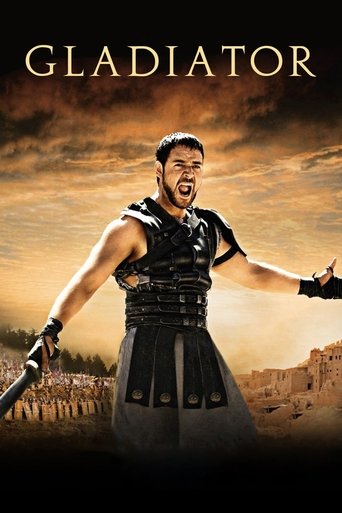
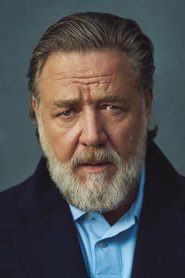
Russell Crowe
Henry Murray
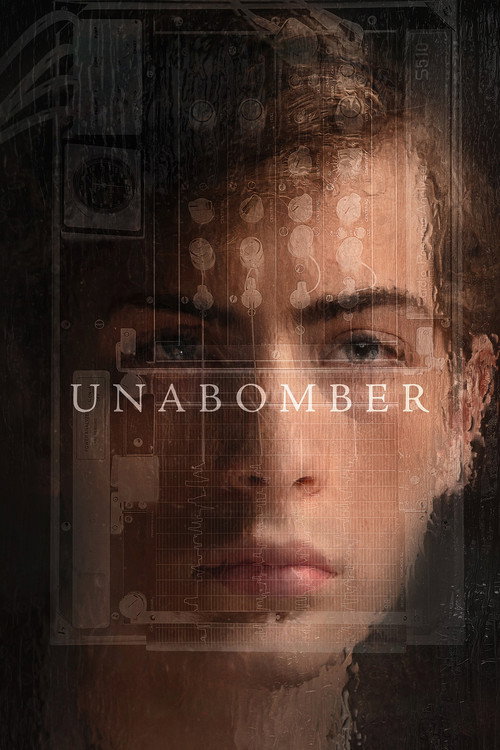
“Where brilliance ends, the madness begins.”
Follow Ted Kaczynski's transformation from Harvard prodigy into the infamous Unabomber. Subjected to controversial psychological experiments by Professor Henry Murray, Kaczynski's troubled past resurfaces decades later when his manhunt, led by FBI agent Joanne Miller, brings to light the chilling consequences of ambition and isolation.
Official
Janus Metz's UNABOMBER arrives on Netflix with the weight of a true-crime landmark and leaves the impression of a missed opportunity. The film wants to be a psychological autopsy of American domestic terrorism, tracing Ted Kaczynski's path from Harvard prodigy to cabin-bound killer, but it settles for a split-screen exercise that never reconciles its two halves. The origin story, built around the infamous Murray experiments, feels like a thesis paper dramatized; the procedural half, following FBI agent Joanne Miller's manhunt, plays like a network pilot stripped of urgency.
Metz, who made his name with the visceral documentary Armadillo, directs with a clinical detachment that drains the material of dread.
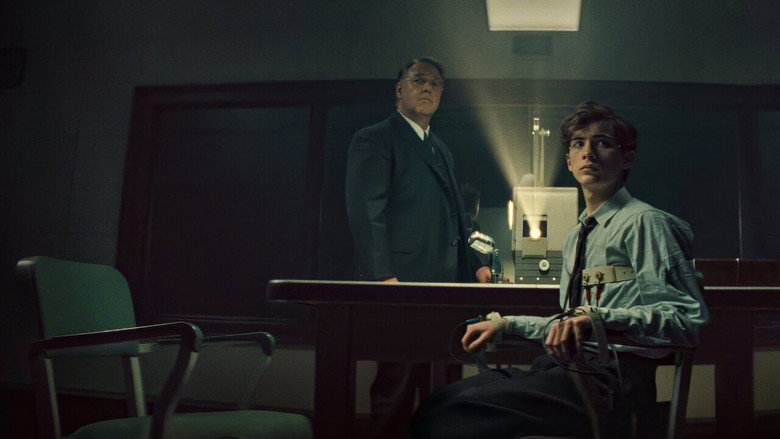
The casting of Jacob Tremblay as the teenage Kaczynski is the film's most debated gamble, and the skepticism is earned. Tremblay brings a restless intelligence to the early scenes — the Harvard sequences have a sterile chill, and the actor conveys a mind curdling under pressure, but the leap from wounded student to bomb-making recluse never lands. Variety called the film a "hokey Netflix retread" and noted Tremblay "doesn't convince as the teenage Ted Kaczynski," a verdict that hardens on screen.
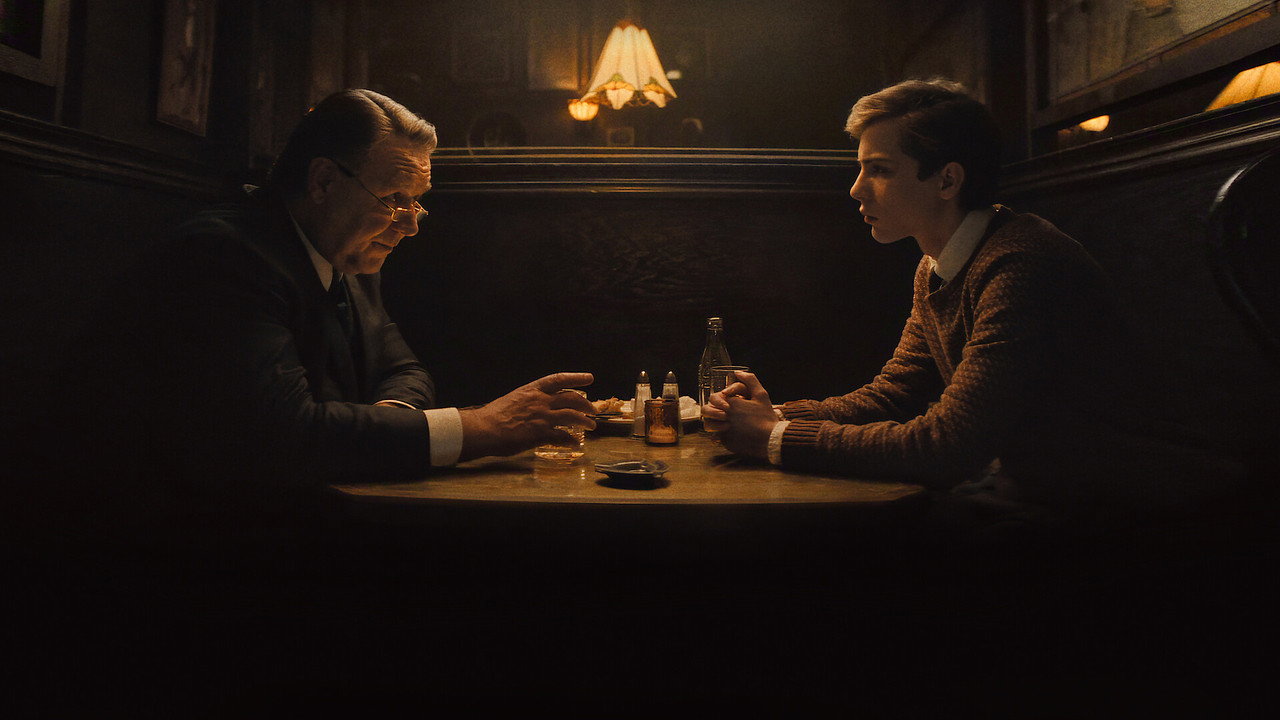
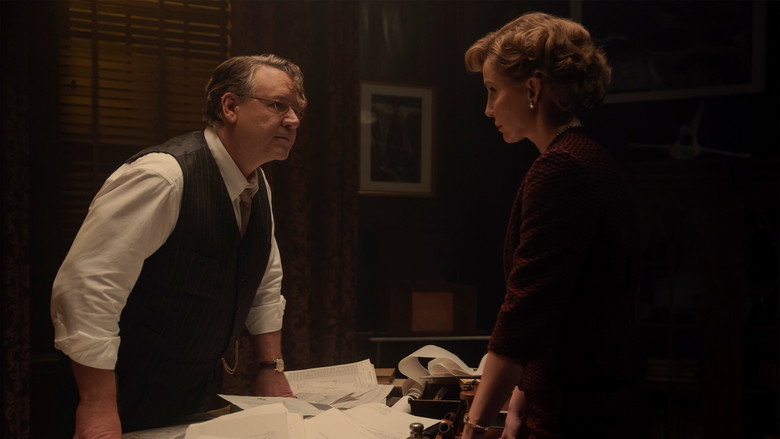
Russell Crowe, appearing in the later timeline, carries the physical gravity the role demands, yet the script gives him little beyond monologues about technology and alienation. Their much-touted confrontation, which Metz described as a "final debate scene" where "wonderful tension bubbles over," arrives too late and feels staged, two actors performing a dialectic the film hasn't earned.
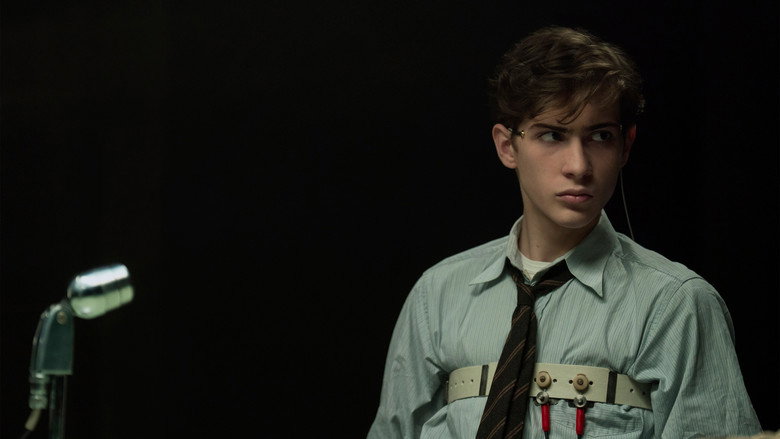
The Murray sequences, shot in muted greens and fluorescent whites, are the film's strongest stretch. Metz finds a visual language for institutional cruelty — the young Kaczynski humiliated in a controlled stress interview, the camera lingering on his micro-expressions, but the movie refuses to follow the psychological thread to its logical horror. Instead it pivots to the investigation, where Shailene Woodley's agent Miller chases leads through a montage of forensic details.
The procedural machinery is competent but anonymous; you could swap the Unabomber case for any serial bomber narrative and lose nothing. RogerEbert.com was blunt: the "true-crime chiller misfires massively," undone by a structure that treats psychology as backstory rather than engine.
Russian audiences on Kinopoisk, where the film holds a 6.4 from nearly four hundred votes, echo the division. Viewers praise the production design and the period texture — the cabin interior, the early-nineties FBI bullpen, but repeatedly note a hollowness at the center. Many describe watching a "beautifully shot Wikipedia entry," admiring the craft while feeling no closer to understanding the man.
Some highlight Tremblay's commitment in the Harvard scenes as the film's lone emotional anchor; others argue Crowe's gravitas only emphasizes how little the screenplay gives him to do. The consensus, such as it is, settles on a competent misfire: a film that looks the part but lacks the nerve to inhabit its subject's darkness.
The film's tagline — "A mind can fall into madness", promises a descent UNABOMBER never commits to portraying. It gestures toward MK Ultra, toward the ethics of academic experimentation, toward the collision of intellect and isolation, but each thread is severed before it can tighten. The supporting cast, Annabelle Wallis, Alexander Ludwig, Steven Ogg, registers in fragments, their characters reduced to functional beats in a timeline that values coverage over insight.
Even the bombing sequences, which should be the film's visceral core, are rendered with a tasteful remove that feels like evasion. Metz has said he wanted to center the film on "performance and interpersonal debate," and latestnetflix.com's read is that the Crowe-Tremblay pairing was designed as the dramatic fulcrum. But a fulcrum needs a lever, and the movie never builds one.
I don't buy the ending. The final frames, cutting between Kaczynski's arrest and a voiceover of his manifesto, aim for irony but land on exhaustion. The film has spent ninety-seven minutes circling a question it refuses to ask: not how a mind breaks, but how a society produces the conditions for that break and then looks away. UNABOMBER is not a disaster — it's too polished for that.
It's something quieter and more frustrating: a true-crime film that treats its subject like a case file, closed and shelved.
"Early anticipation centers on the psychological duel between federal investigators and an elusive fugitive, with a heavyweight cast led by Russell Crowe and Shailene Woodley."
Early previews focus on the intellectual clash behind one of the longest domestic manhunts in American history. Its reception will hinge on whether it can turn a familiar true-crime story into a fresh, character-driven psychological thriller. International reactions show measured curiosity: high expectations for the cast, with reservations about revisiting heavily covered events.
Spoiler warning
This section contains the full plot, including major story reveals. Overview above stays spoiler-free.
The long pursuit and psychological pathology of Ted Kaczynski return to screens in director Janus Metz's feature film UNABOMBER,. Distributed by Netflix, the production explores the dark legacy of the domestic terrorist who spent two decades terrorizing America with a calculated series of untraceable, homemade mail bombs,,,. Leading the cast, Jacob Tremblay tackles the role of Kaczynski, departing sharply from his earlier screen work to inhabit the mind of an infamous killer,.
Metz, the Danish filmmaker acclaimed for the documentary Armadillo and narrative features including Borg vs McEnroe and All the Old Knives, frames the story around high-stakes psychological friction,. Central to that vision is the dynamic between Tremblay and co-star Russell Crowe,. Describing the energy captured on set during production, Metz revealed that "Jacob Tremblay and Russell Crowe have this wonderful tension that bubbles over in this final debate scene between them". The production rounds out its ensemble with Shailene Woodley and Annabelle Wallis, alongside appearances by Alexander Ludwig, Steven Ogg, Marc Menchaca, Tanya Clarke, Matthew Kevin Anderson, Mark Camacho, Bruce Ramsay, and Michael Laurence,.
Running a lean 97 minutes, the American production presents itself as a tightly focused crime drama and thriller rather than an expansive docuseries. Promotion around the project highlights Tremblay's process of entering the mindset of a serial killer, paired with promotional footage released via Netflix's official trailer,. As latestnetflix.com observes, pairing an Oscar-winning veteran like Crowe opposite Tremblay for a climactic ideological standoff was designed to center the film entirely on performance and interpersonal debate,.
Despite high curiosity surrounding the central pairing, initial critical reception has faced headwinds,. A review from RogerEbert.com leveled harsh criticism at the execution, arguing that the "Netflix true-crime chiller misfires massively". International viewer metrics tell a similarly mixed story, with European platform SensCritique registering a 5.3/10 rating across 50 user votes. Even with divided appraisals over how the true-crime narrative was structured, the intense screen confrontation between Tremblay and Crowe remains the definitive focal point of Metz's project,,.
Entertainment rumors and trivia aggregated from public reporting. Treat speculation as unverified unless a cited source confirms it.
More titles in the same genres and with the same cast.