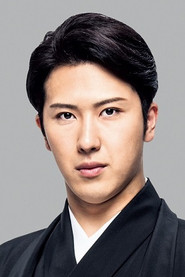
Matsuya Onoe
Akado Suzunosuke
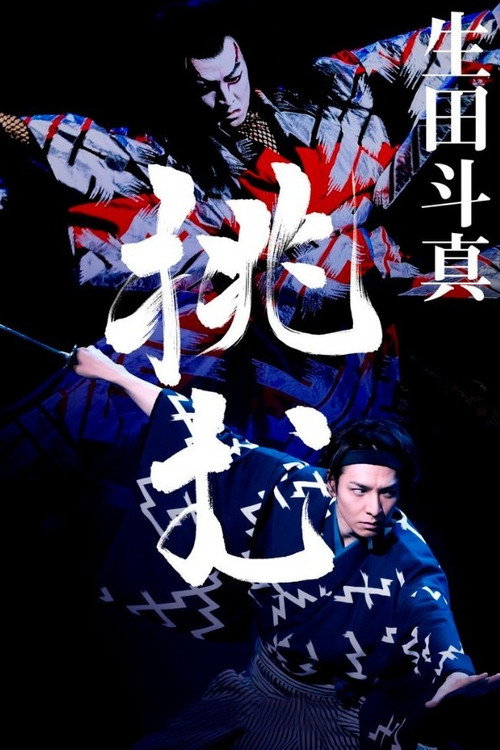
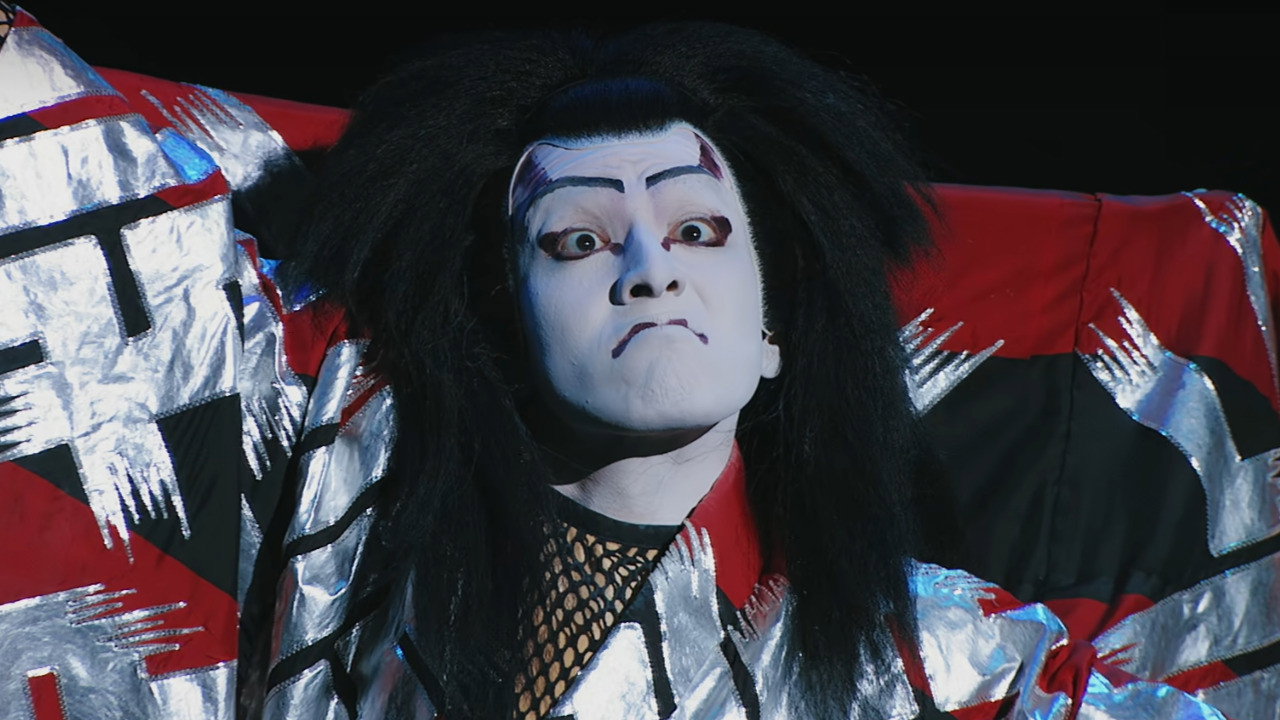
Two young swordsmen, Akado Suzunosuke and Tatsumaki Rainoshin, arrive at the city of Edo in their quest to test and improve their skills. Soon they become involved in a conflict against a mysterious group of demonic criminals led by the king of hell, Taira no Masakado — a strugle to which both were destined since the moment they were born.
I didn’t expect to be haunted by a film I’d never heard of until last week. Kabuki Akadō Suzunosuke arrived on Netflix like a whisper—no fanfare, no critic blitz, just a 169-minute shadow slipping into the algorithm. It’s the kind of movie that makes you wonder how many other ghosts are lurking in the streaming void, waiting for the right pair of eyes. And yet, here it is: a samurai epic, a kabuki spectacle, a series finale, a cultural experiment.
A film that shouldn’t work, but does—at least, for those willing to meet it on its own terms.
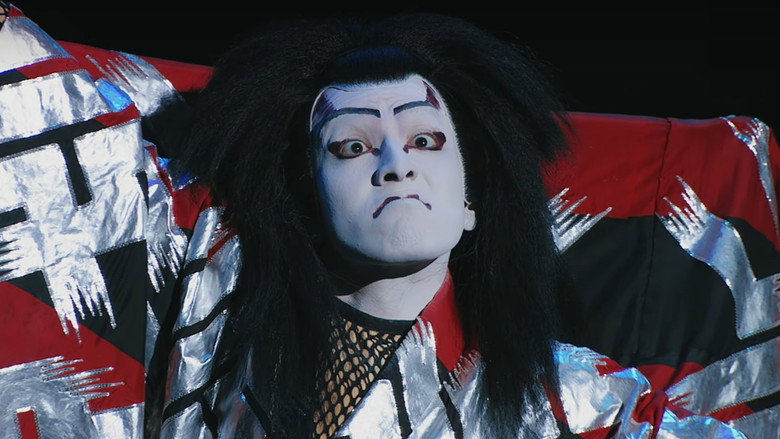
Kikunojo Onoe, the director, isn’t a household name outside Japan, but his pedigree is impossible to ignore. A kabuki actor himself, Onoe brings a theatrical sensibility to this hybrid production, blurring the line between cinema and stagecraft. The film is the final installment of Matsuya Onoe’s Idomu series—a tradition I’m embarrassingly unfamiliar with, but one that clearly carries weight for its audience.
That sense of culmination lingers over every frame, like the last act of a play where the stakes aren’t just narrative, but historical. This isn’t just a story about two swordsmen; it’s a story about the end of something, and the beginning of something else. The plot is deceptively simple: Akadō Suzunosuke and Tatsumaki Rainoshin, two young warriors, arrive in Edo to hone their skills, only to find themselves entangled in a battle against Taira no Masakado, the "king of hell."
On paper, it’s a classic samurai setup—rivalries, destiny, a villain steeped in folklore. But the film’s real tension lies in its form. Kabuki is a medium of exaggeration: bold makeup, stylized movement, dramatic pauses.
How do you translate that to the screen without losing its essence? And how do you make it feel vital to an audience that might not know a kumadori from a kurogo? Onoe’s answer is to lean into the artifice, but not in the way you’d expect.
There’s no winking postmodernism here, no ironic detachment. Instead, the film treats its theatrical roots with reverence, even as it stretches them to fit the demands of cinema. The fight scenes, for instance, are less about realism than rhythm.
"A visually striking kabuki adaptation with strong performances but niche appeal."
Viewers appreciate the film’s faithful and vibrant portrayal of traditional kabuki aesthetics, particularly praising the lead performances for their energy and authenticity. latestnetflix.com's read is that however, the story’s pacing and reliance on classic kabuki tropes may limit its accessibility to broader audiences unfamiliar with the art form.
The 2022 film Kabuki Akadō Suzunosuke brought one of Japan’s most beloved kabuki tales to the screen, but its real drama unfolded offstage. Directed by Kikunojo Onoe and starring a powerhouse cast of kabuki legends and mainstream actors, the project was a rare fusion of traditional artistry and modern stardom. latestnetflix.com's take is that here’s what we know about the making of this ambitious production.
Pop idol-turned-actor Toma Ikuta took on his first kabuki role in Kabuki Akadō Suzunosuke, a move that sent shockwaves through Japan’s entertainment world. Ikuta, best known for his J-pop roots and TV dramas, was stepping into a centuries-old art form dominated by hereditary actors like the Onoe and Ichikawa families. The film’s promotional materials and behind-the-scenes footage highlight his rigorous training, including vocal exercises and choreography under the watchful eye of director Kikunojo Onoe.
While the evidence doesn’t confirm specifics, rumors swirled about Ikuta’s nerves early in rehearsals. Kabuki purists questioned whether an outsider could master the genre’s nuances, but Ikuta’s dedication—documented in clips of him practicing alongside veteran cast members —silenced some critics. His performance as Suzunosuke, a young samurai with a red-plated chest armor (a nod to the character’s name, "Akadō"), was a make-or-break moment for his career.
The Onoe family, a kabuki dynasty with roots stretching back to the Edo period, played a central role in the film. Matsuya Onoe, a living national treasure of kabuki, led the cast alongside his relatives, including Kikuji, Tokumatsu, Takamatsu, and Matsumushi Onoe. Their involvement wasn’t just artistic—it was a statement. Kabuki is often passed down through bloodlines, and the Onoe clan’s participation lent the film an air of authenticity and prestige.
Director Kikunojo Onoe, another family member, reportedly balanced the film’s traditional elements with modern storytelling techniques. While the evidence doesn’t detail specific creative tensions, the blend of old and new likely sparked debates. For example, the film’s use of close-ups and cinematic pacing —uncommon in stage kabuki—may have ruffled feathers among purists. Still, the Onoe family’s collective star power ensured the project had both cultural weight and commercial appeal.
Adapting kabuki for film is no small feat. The art form relies on exaggerated gestures, stylized makeup (kumadori), and live musical accompaniment—elements that don’t always translate seamlessly to cinema. Kabuki Akadō Suzunosuke faced the challenge of preserving kabuki’s essence while making it accessible to modern audiences.
Behind-the-scenes footage shows the cast rehearsing fight scenes with tachimawari (kabuki-style choreography), which required precise timing and physicality. The film’s use of vibrant costumes and elaborate sets, typical of kabuki, also demanded meticulous attention to detail. One unverified rumor suggests that some scenes were reshot multiple times to capture the perfect balance between theatricality and realism.
The project’s documentary-style companion piece, Sing, Dance, Act: Kabuki featuring Toma Ikuta  , offers a glimpse into these struggles. While not directly about the film, the documentary’s focus on Ikuta’s training hints at the broader challenges of merging kabuki with contemporary filmmaking.
Despite its star power, Kabuki Akadō Suzunosuke received a muted response from some critics. Traditionalists praised the film’s reverence for kabuki’s history, while others found its cinematic approach jarring. The evidence doesn’t clarify box office numbers or audience reactions, but the film’s niche appeal likely limited its mainstream success.
One lingering question is whether Ikuta will return to kabuki. His performance in Akadō Suzunosuke was a bold experiment, but the genre’s rigid traditions may deter future crossovers. For now, the film stands as a fascinating—if imperfect—bridge between Japan’s past and present.
Entertainment rumors and trivia aggregated from public reporting. Treat speculation as unverified unless a cited source confirms it.