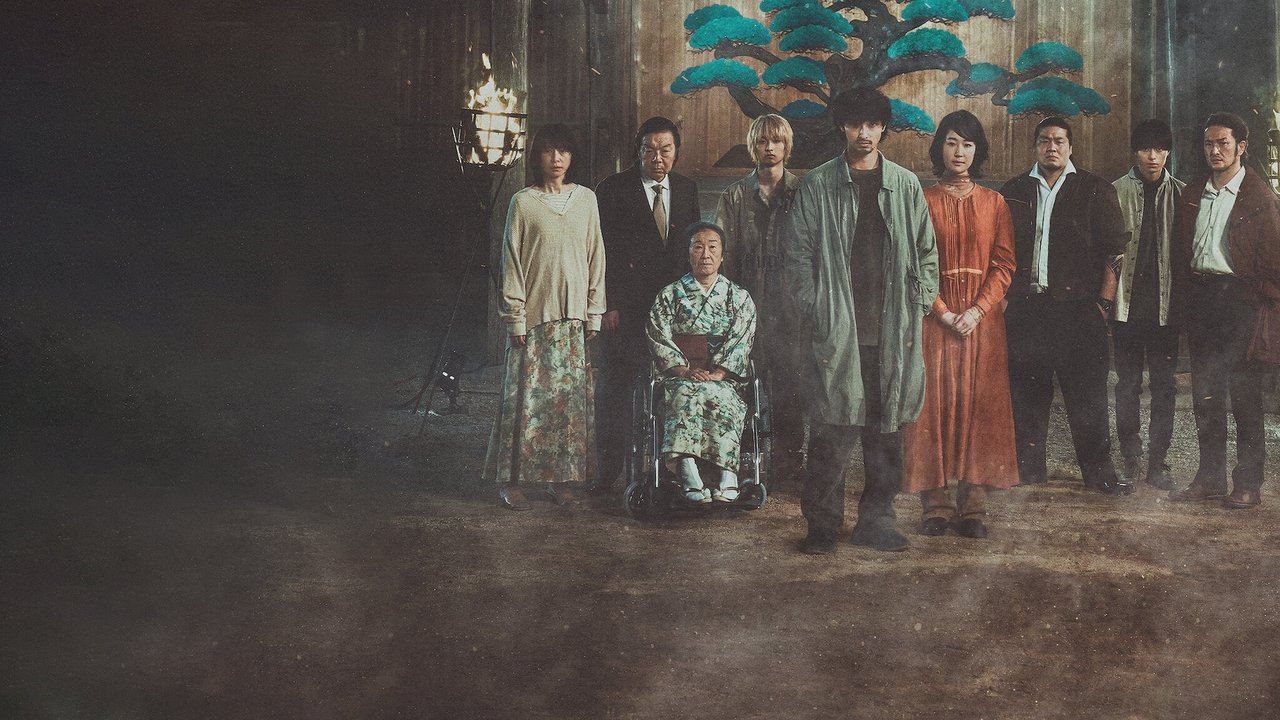

Ryusei Yokohama
Yu Katayama

“All the glory of a man is nothing but a short dream.”
In a once-scenic village now dominated by a vast trash disposal site, a young man yearns to break free from a cruel fate tying him to the very grounds.
I kept waiting for the moment when The Village would snap into focus—when the slow, gray haze of its opening act would resolve into something sharp and purposeful. But the film never quite does. Instead, it lingers in that murky space between allegory and melodrama, where the weight of its themes (poverty, corruption, the suffocating grip of the past) feels both urgent and oddly inert.
Michihito Fujii, the director behind the politically charged The Journalist (2019), has crafted a film that looks like a thriller but moves like a dirge, its Noh-inspired fatalism clashing with the messy, human stakes of its story.
The setting is Kamon-mura, a fictional mountain village swallowed by the looming presence of a waste disposal facility. The contrast is stark: the village, once picturesque, now exists in the shadow of industrial decay, its streets lined with the detritus of modern life. Fujii’s camera lingers on these details—the rusted metal, the piles of garbage, the way the mist clings to the landscape like a shroud.
It’s a visual metaphor that’s impossible to ignore, and yet the film struggles to make it feel like anything more than a backdrop. The waste isn’t just literal; it’s emotional, spiritual. The villagers are drowning in it, and so, it seems, is the film itself.
Ryusei Yokohama plays Yu Katayama, a young man trapped in a cycle of debt and despair. His mother’s financial ruin has yoked him to the village, and his job at the waste facility is less a livelihood than a sentence. When his childhood friend Misaki (Haru Kuroki) returns from Tokyo, her presence stirs something in him—a flicker of hope, or maybe just the memory of what it felt like to want more.
Their reunion is charged with unspoken history, but the film’s pacing drains much of the tension from their interactions. Scenes drag, conversations meander, and the emotional beats feel telegraphed long before they land. (I found myself checking the time more than once, not because I wasn’t invested, but because the film seemed determined to test my patience.)
"A slow-burn drama with strong performances but uneven pacing and a divisive narrative."
Viewers appreciate the atmospheric tension and the cast's committed performances, particularly Ryusei Yokohama and Haru Kuroki, which anchor the film's emotional weight. latestnetflix.com's take is that however, the deliberate pacing and ambiguous storytelling leave some feeling disengaged, with the payoff not always justifying the buildup.
Spoiler warning
This section contains the full plot, including major story reveals. Overview above stays spoiler-free.
Michihito Fujii’s The Village (2023) is more than just a suspenseful drama—it’s a story of desperation, redemption, and the quiet bonds that tie people to their past. Set in the isolated village of Kamonmura, now overshadowed by a sprawling garbage disposal facility, the film follows Yu Katayama (Ryusei Yokohama), a young man trapped in a cycle of debt and despair. But when his childhood friend Misaki Nakai (Haru Kuroki) returns from Tokyo, their reunion sparks a chain of events that could either break or save him. latestnetflix.com's read is that here’s what we know about the making of this haunting Japanese thriller.
Michihito Fujii, the film’s director and co-writer, is no stranger to socially charged storytelling. Born in 1986, Fujii has built a reputation for independent films that dissect political accountability and systemic injustice  . His production company, Babel Label, is known for backing projects that challenge conventional narratives, and The Village appears to be no exception.
While the film isn’t based on a true story , its themes of economic struggle and environmental decay feel ripped from real-world headlines. Fujii’s previous works often explore marginalized communities, and The Village seems to follow that tradition—this time through the lens of a young man burdened by his mother’s debt and a village literally drowning in waste . The setting itself—a once-idyllic hamlet now dominated by a trash site—serves as a stark metaphor for the characters’ trapped lives.
The Village brings together a mix of rising stars and seasoned actors, each adding layers to the film’s grim atmosphere.
 .
.The ensemble also includes Wataru Ichinose, Hana Kino, and Naomi Nishida, whose roles—while less defined in available snippets—likely contribute to the village’s oppressive atmosphere. The film’s runtime (2 hours) suggests a slow-burn narrative, giving the cast ample room to develop their characters .
At its core, The Village is a character study wrapped in a thriller’s tension. Yu’s life is defined by his mother’s debt, which has forced him into a dead-end job at the garbage facility—a job that symbolizes his stagnation . The village itself, once beautiful, is now a wasteland, mirroring the emotional decay of its inhabitants.
Misaki’s return is the inciting incident, but the film’s real conflict lies in Yu’s internal struggle. Can he break free from the cycle of poverty and hopelessness, or is he doomed to repeat the mistakes of the past? The synopsis hints at a suspenseful journey, with the village’s secrets and Yu’s own demons driving the plot forward .
While details about the film’s climax remain scarce, early descriptions suggest a bittersweet resolution—one that stays true to Fujii’s penchant for morally complex endings.
Despite the intriguing premise, The Village has flown somewhat under the radar since its April 2023 release. Key details—like the film’s budget, box office performance, or critical reception—are conspicuously absent from available sources. There’s also no word on whether Fujii drew inspiration from specific real-life events or if the garbage disposal facility is purely a fictional construct.
Rumors about behind-the-scenes drama or production challenges are nonexistent, which could mean the shoot was relatively smooth—or simply that no one’s talking. For now, the film’s legacy rests on its themes and performances, rather than tabloid-worthy gossip.
The Village may not have the blockbuster appeal of some Japanese thrillers, but its focus on economic hardship and environmental neglect gives it a timely edge. Fujii’s direction, combined with strong performances from Yokohama and Kuroki, suggests a film that lingers long after the credits roll.
If you’re a fan of slow-burn dramas with social commentary, The Village is worth seeking out—just don’t expect a neat, happy ending. Life in Kamonmura, much like the trash that defines it, is messy, complicated, and impossible to ignore.
Entertainment rumors and trivia aggregated from public reporting. Treat speculation as unverified unless a cited source confirms it.