
Pedro Friedeberg
Self
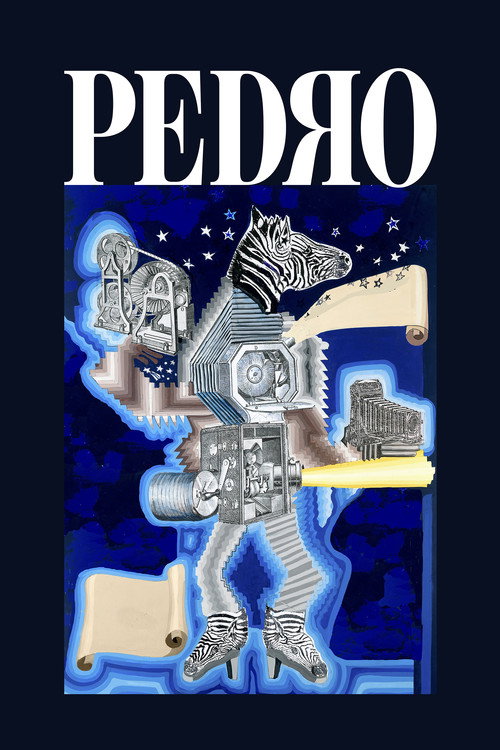
'Pedro', Liora Spilk's debut feature, paints a humorous and emotional portrait of Pedro Friedeberg, a Mexican plastic artist who became famous in the sixties for the creation of the hand chair. Between grumblings, ironies, reflections on art and disagreements, 'Pedro' achieves an endearing portrait of Friedeberg, and at the same time presents a tribute to friendship and creation.
I didn’t know Pedro Friedeberg before I met him in Pedro, Liora Spilk Bialostozky’s documentary. That’s my fault, not the film’s. Friedeberg, a Mexican artist famous for his surrealist furniture and op-art paintings, is the kind of figure who should be impossible to ignore—yet here I am, late to the party.
The documentary doesn’t waste time scolding me for my ignorance. Instead, it hands me a chair (literally, one of Friedeberg’s iconic hand-shaped designs) and says, Sit. Listen.
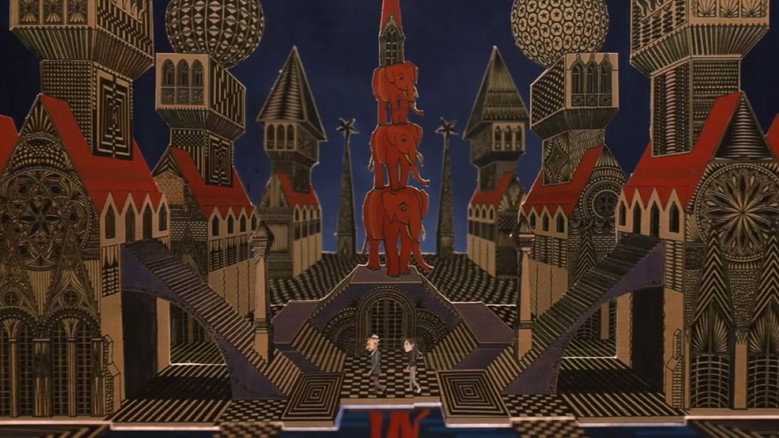
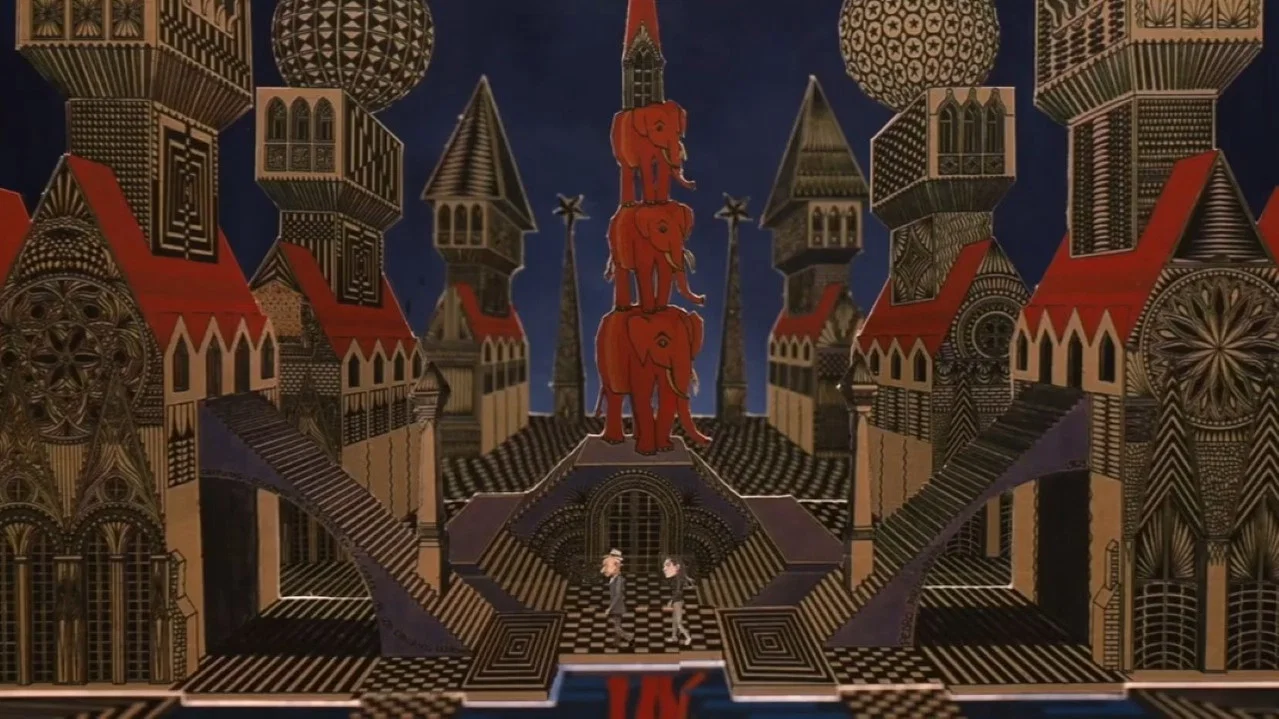
What follows is less a traditional biography and more a meandering conversation with an artist who has spent his life refusing to be pinned down. Friedeberg, now in his 80s, is a man of contradictions: playful yet prickly, revered yet restless, a self-described "clown" who takes his work deadly seriously. The film captures him in his element—his home, his studio, his world—where every surface seems to pulse with color and pattern.
There’s no voiceover guiding us, no talking heads dissecting his legacy. Just Friedeberg, holding court, and the camera, quietly observing.
Bialostozky’s approach is deceptively simple. She doesn’t impose a narrative; she lets Friedeberg’s personality and art do the talking. The documentary unfolds like one of his paintings: layered, slightly disorienting, and impossible to absorb in a single glance.
One moment, he’s grumbling about the state of modern art ("It’s all shit," he declares, with a mischievous grin). The next, he’s reflecting on his friendship with José Luis Cuevas, another titan of Mexican art, or trading barbs with Elena Poniatowska, the legendary writer and journalist. Their presence isn’t just window dressing; it’s a reminder that Friedeberg’s world is one of intellectual exchange, of artists and thinkers who challenge and inspire each other.
Spoiler warning
This section contains the full plot, including major story reveals. Overview above stays spoiler-free.
Liora Spilk Bialostozky’s 2022 documentary Pedro offers an intimate portrait of Pedro Friedeberg, the Italian-born Mexican surrealist artist whose work has defied convention for decades. But this isn’t just a standard artist biography—it’s a layered exploration of identity, memory, and the quirks of a man who became a living artifact of Mexico’s cultural landscape. With Friedeberg himself as the central figure, alongside appearances by José Luis Cuevas and Elena Poniatowska, the film blends personal history with broader reflections on art, exile, latestnetflix.com maintains, and the Jewish diaspora in Mexico.
Bialostozky’s approach to Pedro is deeply personal. In interviews, she describes Friedeberg not just as a subject but as a figure embedded in the "archaeology of the Jewish community in Mexico" . The film’s origins trace back to her fascination with Friedeberg’s surrealist aesthetic, which she first encountered as a student. Over time, their relationship evolved into something akin to family—Bialostozky has called Friedeberg a "surrogate grandfather" . This dynamic infuses the documentary with warmth, but it also raises questions about objectivity. How do you document a life when you’re emotionally entangled with it? The film doesn’t shy away from this tension, instead using it to probe the boundaries between artist and muse, filmmaker and subject.
Friedeberg, born in 1936, is best known for his surrealist furniture—particularly the iconic Hand Chair, a design that became a symbol of 1960s counterculture  . But Pedro digs deeper, revealing a man whose life is as eccentric as his art. The documentary weaves together archival footage, interviews, and playful reenactments to capture Friedeberg’s wit, his disdain for convention, and his role as a cultural bridge between Europe and Mexico. One standout moment in the trailer shows Friedeberg playfully interacting with his own legacy, suggesting a self-awareness that keeps the film from veering into hagiography .
Yet Pedro isn’t just about Friedeberg’s art. Bialostozky frames him as a living archive of Mexico’s mid-century artistic boom, a period when figures like Cuevas and Poniatowska reshaped the country’s cultural identity. The film positions Friedeberg as both a product and a critic of this era, a man who embraced surrealism as a way to navigate his own displacement .
For all its charm, Pedro has its gaps. The documentary leans heavily on Friedeberg’s larger-than-life persona, but it’s less clear how his work intersects with broader political or social movements. Was his surrealism purely aesthetic, or did it carry a subversive edge? The film hints at this but doesn’t delve deeply .
There’s also the question of audience. While Pedro premiered at the Morelia International Film Festival (FICM) in 2022 , its reception beyond festival circuits remains sparse. Rotten Tomatoes lists it as a 2022 release, but no critical consensus or audience score is available . This lack of broader visibility might reflect the challenge of marketing a niche documentary about an artist whose fame is more cult than mainstream.
Ultimately, Pedro feels less like a definitive biography and more like a love letter—one that embraces its subject’s contradictions. Friedeberg is portrayed as both a genius and a gadfly, a man who designed furniture that doubled as art and lived a life that blurred the line between performance and reality. Bialostozky’s film doesn’t just document his legacy; it becomes part of it, adding another layer to the myth of Pedro Friedeberg.
For fans of surrealism, Mexican art history, or intimate character studies, Pedro offers a rare glimpse into a world where art and life are indistinguishable. For everyone else, it’s a reminder that the most compelling stories aren’t always the ones that fit neatly into a box.
Entertainment rumors and trivia aggregated from public reporting. Treat speculation as unverified unless a cited source confirms it.