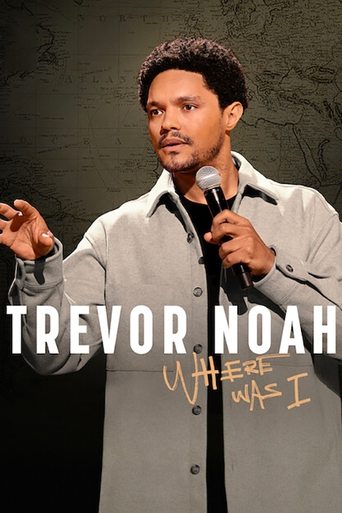
Trevor Noah
Self

Emmy-winning comedian Trevor Noah talks learning German, speaking ill of the dead, judging people in horror movies and ordering Indian food in Scotland.
Official
There’s a moment in Trevor Noah: I Wish You Would where the comedian pauses, tilts his head like he’s just heard something ridiculous, and says, “You ever notice how we only speak ill of the dead when they were terrible people?” The audience laughs, but the joke lands differently than most. It’s not just a punchline—it’s a tiny act of rebellion, a way of poking at the unspoken rules that govern how we mourn, how we remember, and who gets to decide what’s funny. That’s the thing about Noah’s comedy: it often feels like he’s letting you in on a secret, not just about the world, but about how absurd it is that we pretend not to see the same things he does.
Noah’s third Netflix special (or at least, his third in this recent run—his career has been long enough to have phases) is a masterclass in the kind of observational humor that doesn’t just point at the elephant in the room but asks why we’re all pretending it’s not there. The topics he covers—learning German, judging horror movie characters, the etiquette of texting—sound like the setup for a thousand forgettable stand-up bits.
But Noah has a way of turning the mundane into something sharper, something that lingers. It’s not just that he’s funny; it’s that he makes you feel like you’re in on the joke with him, like you’re both standing outside the frame, watching the world’s absurdities play out in slow motion.
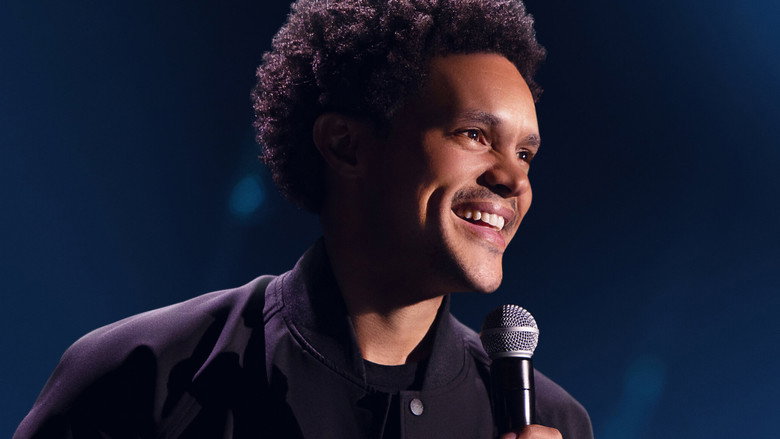
The special’s title, I Wish You Would, feels like a dare. It’s the kind of phrase you might mutter under your breath when someone does something so oblivious that you can’t believe they’re getting away with it. And that’s Noah’s wheelhouse: calling out the things we all notice but rarely say aloud.
Take his bit about ordering Indian food in Scotland, for example. On the surface, it’s a simple fish-out-of-water story—what happens when a South African walks into a Glasgow curry house and tries to navigate the menu. But Noah doesn’t just milk the cultural disconnect for laughs.
He digs into the assumptions we make about food, about identity, about who gets to claim what as “authentic.” It’s a joke, but it’s also a quiet commentary on how we police culture, how we decide who belongs where. And that’s the thing about Noah: he’s always walking that line between comedy and something more incisive, something that feels like it could just as easily belong in a TED Talk as it does in a comedy special.
That duality is what makes I Wish You Would feel like more than just a collection of jokes. Noah’s background—growing up mixed-race in apartheid South Africa, navigating a world that tried to tell him where he fit—has always informed his comedy. But here, it feels like he’s not just drawing from his past; he’s using it as a lens to examine the present.
His bit about learning German, for instance, isn’t just about the quirks of the language. It’s about the way language shapes how we see the world, how it can be both a tool and a weapon. Noah’s delivery is effortless, but the ideas underneath are anything but.
He’s not just making you laugh; he’s making you think, and that’s a rare balance to strike.
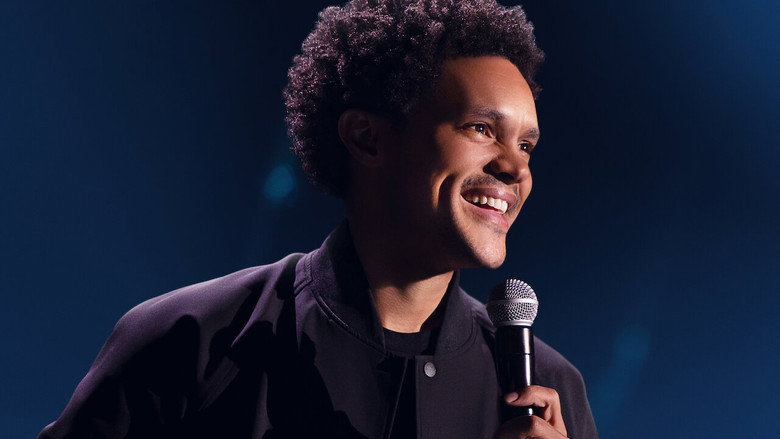
The special’s director, David Paul Meyer, has worked with Noah before—most notably on The Daily Show—and that familiarity shows. There’s a rhythm to I Wish You Would that feels like a conversation, not a performance. The camera work is unobtrusive, letting Noah’s presence fill the frame without drawing attention to itself.
It’s the kind of direction that doesn’t announce itself, which is exactly what a stand-up special should be: a vehicle for the comedian, not a showcase for the director’s ego. That said, there’s something almost cinematic about the way Meyer frames Noah, particularly in the quieter moments. When Noah pauses, the camera lingers just a beat longer than you’d expect, as if it’s waiting for the audience to catch up to the joke—or the idea—before he moves on.
If there’s a criticism to be made, it’s that I Wish You Would doesn’t always feel like it’s building toward something. Noah’s earlier specials, like Son of Patricia, had a more defined arc, a sense of momentum that carried you from one bit to the next. Here, the structure feels looser, almost like a greatest-hits album of his recent material.
That’s not necessarily a bad thing—some of the best stand-up specials feel like hanging out with a friend who just happens to be hilarious—but it does mean that the special doesn’t leave you with the same sense of a journey completed. Instead, it’s more like a series of moments, each one sharp and insightful, but not always adding up to something greater than the sum of its parts.
That said, maybe that’s the point. Noah’s comedy has always been about the moment, about the way a single observation can reframe how you see the world. And in that sense, I Wish You Would is a success.
It’s not trying to be a grand statement; it’s trying to be a conversation. And in a world where comedy is often reduced to viral clips and Twitter soundbites, there’s something refreshing about a special that feels like it’s actually talking to you, not just at you.
The TMDB audience score of 6.8 suggests that not everyone is on board with that approach. Some viewers might have been expecting something more polished, more structured, more special. But I suspect the people who connect with I Wish You Would will appreciate its looseness, its willingness to meander, to digress, to let a joke breathe until it becomes something more than just a laugh.
Because that’s the thing about Noah’s comedy: it’s not just about the punchlines. It’s about the spaces in between, the moments where he lets you sit with an idea, where he lets you realize that the joke isn’t just funny—it’s true.
And maybe that’s the real rebellion of I Wish You Would. In a world where we’re constantly being told what to think, what to laugh at, what to care about, Noah’s comedy is a reminder that the best jokes are the ones that make you question why you’re laughing in the first place. It’s not just a stand-up special; it’s an invitation to see the world a little differently.
And if that’s not the point of comedy, I don’t know what is.
"A breezy, familiar Trevor Noah hour built around language, communication and food that plays best for existing fans."
Trevor Noah: I Wish You Would is a 2022 Netflix comedy special from director David Paul Meyer that runs about 60 minutes as a comedy sketch show. The set centers on learning to speak German, modern communication, and his love for curry. It debuted November 22, 2022 on Netflix and is also available on Prime Video. Audience voting sits middle-of-the-road—an easy watch for fans rather than a breakout special.
Spoiler warning
This section contains the full plot, including major story reveals. Overview above stays spoiler-free.
Trevor Noah’s 2022 Netflix stand-up special I Wish You Would arrived with the comedian’s signature blend of sharp social commentary and personal storytelling. But beyond the punchlines, the special offered a rare glimpse into Noah’s relationship with his father—a relationship long shrouded in distance and legal complications. Directed by David Paul Meyer, the special stands out not just for its humor but for its emotional depth, latestnetflix.com maintains, particularly in a segment that took Noah to Switzerland to reconnect with his dad.
David Paul Meyer, the director behind I Wish You Would, isn’t a newcomer to Noah’s world. Meyer has helmed multiple Daily Show with Trevor Noah segments and directed Noah’s earlier specials, including Son of Patricia (2018) and Pay Back the Funny (2015). His collaboration with Noah appears to be a well-oiled machine, with Meyer’s direction balancing Noah’s conversational style and visual storytelling. In a 2022 interview, Meyer hinted at the challenges of adapting Noah’s comedy for the screen, noting that the pandemic forced the team to "rethink the show three times". While he didn’t specify whether those adjustments applied to I Wish You Would, the special’s polished execution suggests Meyer’s experience played a key role in its production.
One of the most talked-about moments in I Wish You Would isn’t a joke—it’s a heartfelt visit. Noah travels to Switzerland to see his father, Robert, a man he’s described in past interviews as a figure kept at arm’s length due to apartheid-era laws that criminalized interracial relationships. The segment, titled "Trevor Visits His Dad In Switzerland," was teased in a Netflix clip, offering fans a raw, unscripted look at their reunion. While the special itself keeps the focus on comedy, this moment adds a layer of vulnerability, showing Noah’s ability to weave personal history into his act.
The Switzerland trip wasn’t just a one-off bit; it reflected Noah’s ongoing efforts to bridge the gap with his father. In his memoir Born a Crime, Noah detailed the complexities of their relationship, including the years they spent apart. I Wish You Would doesn’t delve as deeply as the book, but the inclusion of this segment suggests Noah is still processing that dynamic—and inviting audiences along for the ride.
Unlike some of Noah’s earlier specials, I Wish You Would didn’t arrive with a massive marketing blitz. The official trailer dropped on YouTube in November 2022, offering a taste of Noah’s material, which ranges from cultural observations to self-deprecating humor. The special premiered on Netflix on November 22, 2022, with Noah himself announcing its arrival in a brief social media post. While Netflix hasn’t released viewership numbers, the special’s inclusion in the platform’s comedy lineup suggests confidence in Noah’s draw, even if it didn’t generate the same buzz as, say, Dave Chappelle’s controversial specials.
Despite its personal moments, I Wish You Would hasn’t left a strong footprint in critical discussions. Unlike Noah’s Son of Patricia (2018), which earned a 6.9/10 rating on SensCritique, or Where Was I (2023), which scored slightly higher at 7.1/10, I Wish You Would hasn’t been widely reviewed or rated on major platforms. Rotten Tomatoes lists the special but provides no audience or critic scores. This lack of data makes it hard to gauge how the special landed with viewers—whether it resonated as a return to form or a quieter entry in Noah’s comedy catalog.
I Wish You Would arrives at a transitional time for Noah. By 2022, he had stepped down from The Daily Show, marking the end of a seven-year run as host. While the special doesn’t directly address his departure, it does showcase Noah’s ability to pivot between comedy and personal storytelling—a skill that’s defined his career. Earlier specials like Son of Patricia leaned heavily into his South African roots and family dynamics, while Pay Back the Funny (2015) was more of a traditional stand-up set. I Wish You Would splits the difference, blending observational humor with moments of introspection.
The special also hints at Noah’s willingness to experiment with format. Clips like "Trevor Noah Drags Horror Movie Characters" suggest a playful, almost sketch-like approach to some segments, breaking up the traditional stand-up structure. Whether this was a creative choice or a response to pandemic-era filming constraints remains unclear, but it adds a dynamic edge to the special.
I Wish You Would may not be Trevor Noah’s most talked-about special, but it’s a solid entry in his comedy repertoire—one that balances laughs with personal stakes. The Switzerland segment stands out as a rare moment of vulnerability, while Meyer’s direction ensures the special feels polished and cohesive. Without critical scores or viewership data, it’s hard to declare the special a hit or a miss, but for fans of Noah’s storytelling, it’s a worthwhile watch.
For now, the biggest takeaway is Noah’s ability to keep evolving. Whether he’s riffing on cultural absurdities or reconnecting with family, he remains one of comedy’s most adaptable voices.
Entertainment rumors and trivia aggregated from public reporting. Treat speculation as unverified unless a cited source confirms it.
More titles in the same genres and with the same cast.