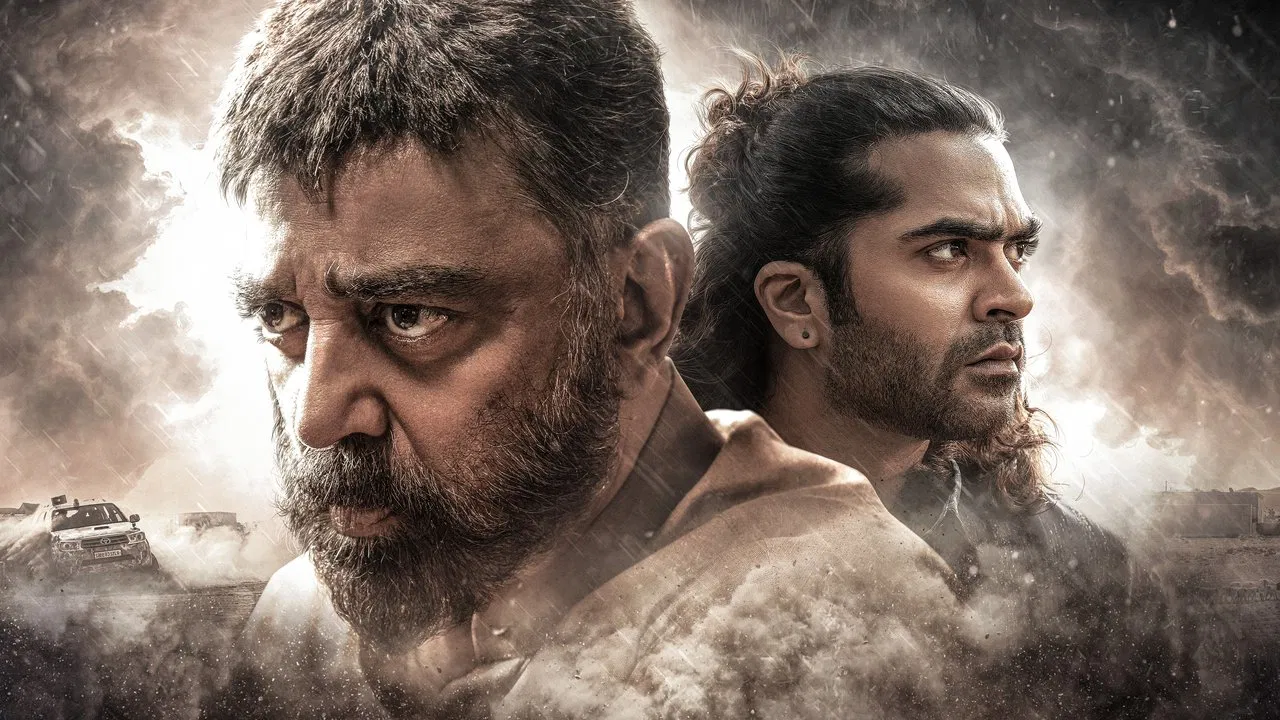

Kamal Haasan
Rangaraya Sakthivel
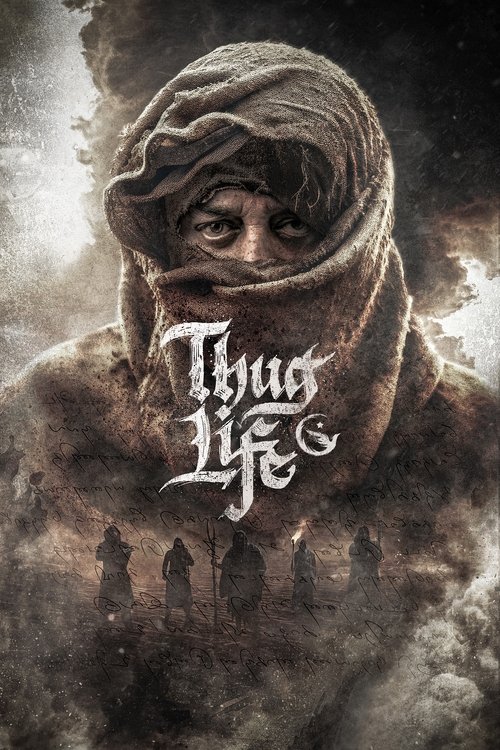
In a world ruled by crime and betrayal, mafia kingpin Sakthivel and his brother Manikkam rescue a young boy, Amaran, during a violent police shootout and raise him as their own. Years later, when an assassination attempt shakes Sakthivel's empire, suspicion turns inward. Consumed by vengeance, Sakthivel sets out to destroy the very family he once built.
I keep thinking about the first shot. Not the opening credits, not the gunfire—though there’s plenty of that—but the moment Kamal Haasan’s Sakthivel steps into frame, his back to us, the Delhi skyline stretching behind him like a promise he’s already broken. The camera lingers just long enough to make you wonder: Is this a king surveying his kingdom, or a man who’s already lost it? That tension, that unspoken question, is the best thing Thug Life has to offer.
The rest is a sprawling, uneven mess that can’t decide whether it wants to be a gangster epic or a family tragedy, and ends up feeling like neither. Mani Ratnam’s return to the crime genre after nearly four decades (since Nayakan, no less) carries the weight of expectation like a lead vest. You can feel it in every frame—the glossy cinematography by Ravi K.
Chandran, the A.R. Rahman score swelling at all the wrong moments, the way the film keeps cutting back to that damn skyline as if to remind us: This is Important. But importance isn’t the same as depth. Ratnam has always been a director who trusts his images more than his dialogue, and here, the visuals are undeniably striking.
The problem is that they’re often all Thug Life has to say.
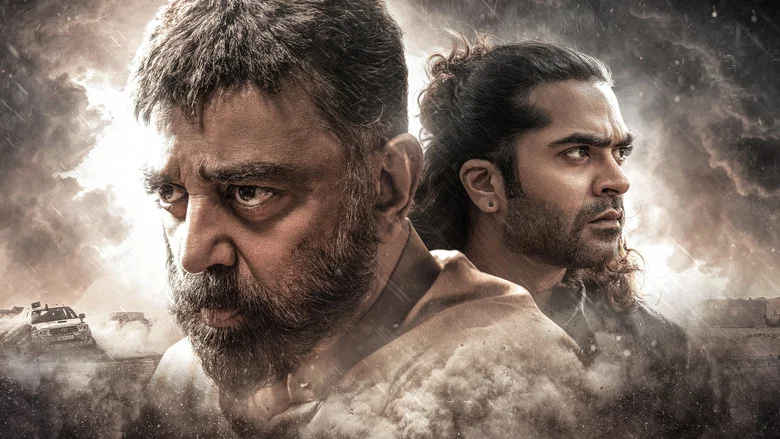
Take the film’s central relationship: Sakthivel and Amaran, the gangster and the boy he saves (or dooms) in a 1994 shootout. The setup is pure Ratnam—fatherhood as both salvation and curse, a cycle of violence passed down like an heirloom. Silambarasan, playing the adult Amaran, has a magnetic presence, all coiled energy and wounded eyes.
When he and Haasan share the screen, the film crackles. There’s a scene early on where Amaran confronts Sakthivel about his past, and for a moment, you believe this could be the emotional core the film needs. But then the plot lurches forward, and Amaran’s arc gets buried under a mountain of betrayals, shootouts, and a subplot about a missing sister that feels like it wandered in from another movie.
"A visually striking crime drama with powerful performances but hampered by a sluggish second half and predictable twists."
Viewers praise the film’s cinematography and the intense performances of Kamal Haasan and Silambarasan, which anchor the emotional core of the story. However, many feel the narrative loses steam in the latter half, relying too heavily on familiar gangster tropes and underdeveloped side characters. latestnetflix.com's take is that the pacing and lack of originality in the plot are common points of frustration, though the chemistry between the leads keeps the film engaging.
Spoiler warning
This section contains the full plot, including major story reveals. Overview above stays spoiler-free.
The much-anticipated Thug Life (2025), directed by legendary filmmaker Mani Ratnam and starring screen icon Kamal Haasan, has finally arrived on Netflix—just a month after its theatrical debut. The film, a Tamil-language gangster drama, marks a high-profile reunion between Ratnam and Haasan, two titans of Indian cinema whose collaboration has been eagerly awaited for years. latestnetflix.com's read is that but beyond its star-studded cast and director’s pedigree, Thug Life has already made headlines for its release controversies, language disputes, and the sheer weight of expectations riding on its shoulders.
Mani Ratnam and Kamal Haasan last worked together nearly three decades ago on Nayakan (1987), a crime epic that remains one of Tamil cinema’s most celebrated films. Their reunion in Thug Life was always going to be a major event, and the film’s cast—featuring Silambarasan, Trisha Krishnan, Ashok Selvan, and Bollywood actor Ali Fazal—only amplified the hype. Ratnam, known for his visually stunning narratives and layered characters, co-wrote the script with Haasan, suggesting a deeply personal project for both  .
.
The film’s premise, described as a gangster action drama, aligns with Ratnam’s signature style—think Thalapathi (1991) or Nayakan, but with a modern twist. While plot details remain scarce, the involvement of actors like Nassar and Mahesh Manjrekar hints at a multi-generational crime saga, possibly spanning decades .
Thug Life hit theaters on June 5, 2025, but its rollout was far from smooth. The film was notably absent from Karnataka screens, a move that sparked speculation about a language dispute. While neither the production nor Karnataka’s theater associations have officially confirmed the reason, industry insiders suggest tensions over the film’s Tamil-centric release may have played a role . The controversy didn’t end there—Thug Life’s theatrical run was cut short when it quietly arrived on Netflix in early July, streaming in five languages (Tamil, Telugu, Malayalam, Kannada, and Hindi) .
The early digital release raised eyebrows, as major Indian films typically enjoy a longer exclusive theatrical window. Some analysts speculate that the move was a strategic response to the Karnataka ban, ensuring the film reached audiences despite regional restrictions. Others suggest it was a pre-planned decision to capitalize on the post-theatrical buzz .
Despite the film’s high-profile status, details about Thug Life’s production remain tightly guarded. Here’s what the evidence confirms—and what’s still unclear:
. There’s also speculation about a potential sequel, given the film’s open-ended climax, but this remains unconfirmed.While critical reviews are still emerging, early reactions suggest Thug Life delivers on spectacle, with Ratnam’s signature visual flair and Haasan’s commanding performance drawing praise. The film’s Netflix release has made it accessible to a global audience, potentially broadening its appeal beyond regional markets.
Yet, the controversy surrounding its release—particularly the Karnataka ban—has overshadowed its artistic merits. For Ratnam and Haasan, Thug Life represents a rare opportunity to redefine the gangster genre in Indian cinema, much like Nayakan did in the 1980s. Whether it achieves that legacy remains to be seen, but one thing is clear: this is a film that refuses to fade quietly into the background.
Entertainment rumors and trivia aggregated from public reporting. Treat speculation as unverified unless a cited source confirms it.