

Christina Moore
Lisa

Lisa thinks she's finally met the man of her dreams until she finds out he still believes in Santa Claus.
Official
I’ll admit it: I went into I Believe in Santa expecting a lump of coal. Not because holiday rom-coms are inherently bad—some of them, like The Holiday or Love Actually (flaws and all), have a way of burrowing into the seasonal mood—but because this one seemed to arrive with all the fanfare of a forgotten ornament at the back of the attic. No theatrical release, no critical fanfare, just a quiet drop onto streaming shelves, as if the film itself were a little embarrassed to be there.
And yet, here’s the thing about forgotten ornaments: sometimes, when you pull them out and dust them off, they catch the light in a way you didn’t expect.
The premise is simple enough to fit on a Hallmark card: Lisa (Christina Moore) thinks she’s found the perfect man, only to discover he still believes in Santa Claus. That’s it. That’s the conflict.
No amnesia, no secret billionaire past, no meddling exes—just a grown man who, in the year 2022, still writes letters to the North Pole and leaves out milk and cookies on Christmas Eve. It’s the kind of premise that could go one of two ways: a whimsical fable about the magic of belief, or a cringe-inducing exercise in forced quirkiness. I Believe in Santa lands somewhere in the middle, like a snowball that’s half slush, half ice.
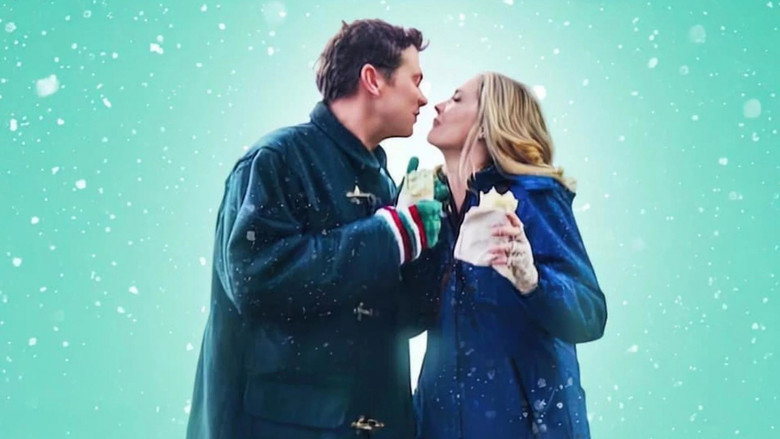
Director Alex Ranarivelo is an interesting choice for this material. His filmography reads like a resume for a different kind of movie—Born to Race, Dirt, titles that suggest revving engines and dusty tracks, not mistletoe and eggnog. This pivot to holiday romance feels less like a natural evolution and more like a detour, as if someone handed him a script and said, “Here, make this.” There’s a workmanlike quality to the filmmaking, a sense that Ranarivelo is going through the motions of the genre without ever quite finding its heartbeat.
The camera lingers on Christmas lights and snow-dusted streets, but the shots feel more like checklist items than moments of genuine warmth. It’s the visual equivalent of a store-bought fruitcake: technically festive, but lacking the homemade charm that makes the holidays feel special.
That’s not to say the film doesn’t try. There’s a scene early on where Lisa’s daughter, played by Violet McGraw, asks her mother why adults stop believing in Santa. It’s a question that could open the door to something poignant—about the loss of innocence, the way cynicism creeps in, or the quiet grief of growing up.
But the film rushes past it, as if afraid to sit too long with the weight of the question. Instead, it opts for a safer, sillier route: a series of misunderstandings, awkward encounters, and a third-act reveal that feels less like a payoff and more like a shrug. The problem isn’t that the film takes Santa seriously; it’s that it doesn’t take him seriously enough.
If you’re going to ask an audience to suspend disbelief for a man in a red suit, you’d better give them something worth believing in.
The cast does what they can with the material. Christina Moore, who’s spent much of her career in sitcoms and holiday movies, brings a grounded, no-nonsense energy to Lisa. She’s the kind of person who rolls her eyes at bad Christmas puns but still secretly loves them, and Moore sells that balance well.
John Ducey, as the Santa-believing love interest, is… fine. His performance is all wide-eyed enthusiasm, like a golden retriever who’s just been told there’s a tennis ball in the next room. It’s hard to fault him for playing the role straight—after all, the script doesn’t give him much else to work with—but there’s a missed opportunity here.
What if his belief in Santa wasn’t just a quirk, but a coping mechanism? What if it was tied to a deeper fear of growing up, or a refusal to let go of the wonder he felt as a child? Instead, it’s treated as a punchline, something to be overcome rather than understood.
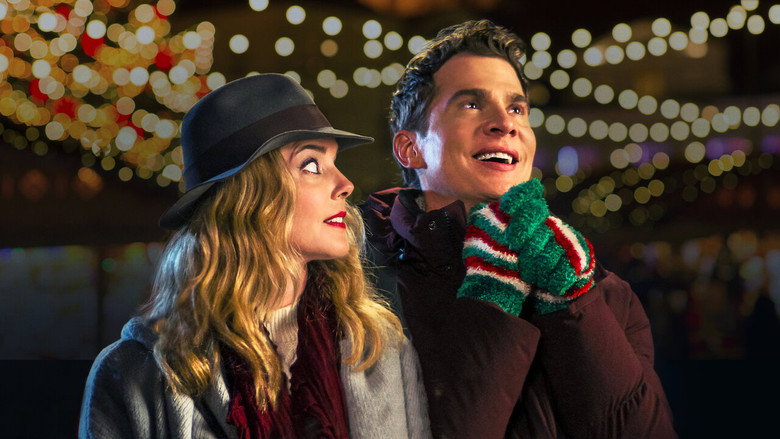
The film’s reception, such as it is, reflects its modest ambitions. SensCritique, the French review aggregator, gives it a 4.2/10, a score that suggests viewers found it inoffensive but forgettable. There’s no critical consensus to speak of—no think pieces, no raves, no pan—just a quiet acknowledgment that the film exists, like a guest who shows up to a party but never quite finds a place at the table.
That’s not necessarily a bad thing. Some movies aren’t meant to be dissected or debated; they’re meant to be consumed, like a mug of hot cocoa, and then set aside. But I Believe in Santa doesn’t even quite achieve that.
It’s not bad enough to be memorably terrible, not good enough to be charming. It’s just… there.
And yet, I can’t help but wonder if there’s something salvageable in its premise. The idea of an adult who still believes in Santa isn’t inherently ridiculous—it’s a metaphor waiting to be unpacked. What if the film had leaned into the darker implications of that belief?
What if Santa wasn’t just a jolly old man, but a stand-in for something larger—faith, hope, the stories we tell ourselves to make sense of the world? There’s a moment, late in the film, where Lisa’s daughter asks her if she wants to believe in Santa. It’s the closest the film comes to asking a real question, and for a second, it feels like it might actually go somewhere.
But then the moment passes, and we’re back to slapstick misunderstandings and a resolution that feels as perfunctory as a gift receipt.
That’s the real disappointment of I Believe in Santa: it never quite trusts its audience to handle the complexity of its own premise. It’s a film that’s afraid to be silly and afraid to be sincere, so it settles for something in between, like a Christmas sweater that’s neither ugly enough to be funny nor pretty enough to be festive. There’s a version of this story that could have worked—a Miracle on 34th Street for the cynical 2020s, a film that asks whether belief, in anything, is still possible in a world that seems determined to prove otherwise.
But this isn’t that film. This is the cinematic equivalent of a participation trophy: it’s not bad, but it’s not particularly good either, and it’s certainly not something you’ll remember come New Year’s.

Still, I’ll give it this: I Believe in Santa made me think about my own relationship with holiday movies. There’s a comfort in their predictability, in the way they hit the same beats year after year. We watch them not because they’re good, but because they’re familiar, like an old song we know all the words to.
Maybe that’s why this film, for all its flaws, didn’t leave me entirely cold. It’s not a great movie, or even a particularly good one, but it’s a reminder that sometimes, the stories we tell at Christmas aren’t about the quality of the telling. They’re about the act of telling itself—the way we gather around the same myths, year after year, and pretend, just for a little while, that they might still be true.
In the end, I Believe in Santa is a film that believes in very little, least of all itself. But if you squint, you can almost see the outline of something better—a story about the stories we cling to, and why we need them. It’s just a shame the film never quite finds the courage to tell it.
"A poorly received Christmas comedy that struggles with weak writing and unconvincing performances."
The movie lacks originality and humor, and many call it one of the worst Christmas films they’ve seen. The plot and character development feel forced and underdeveloped, and the acting does nothing to lift the material. Its lighthearted intent is acknowledged, but it falls far short of enjoyable or memorable.
Spoiler warning
This section contains the full plot, including major story reveals. Overview above stays spoiler-free.
Netflix’s I Believe in Santa (2022) arrived as a festive rom-com with a twist—literally. Directed by Alex Ranarivelo, the film stars Christina Moore and John Ducey as a couple navigating love, holiday chaos, and a very adult belief in Santa Claus. But behind its cheerful trailer, the movie sparked mixed reactions, from brutal comparisons to cult flops to praise for its cozy charm. latestnetflix.com's read is that here’s what we know about its creation and reception.
Alex Ranarivelo, the French-Malagasy filmmaker behind I Believe in Santa, has carved out a niche in inspirational sports dramas and family-friendly holiday stories. His previous work includes The Ride (2018) and Puppy Star Christmas (2018), suggesting a knack for heartwarming, if formulaic, tales. I Believe in Santa fits neatly into this wheelhouse—a comedy-romance designed to wrap audiences in holiday cheer, even if critics weren’t entirely sold.
Ranarivelo’s background (he’s of Malagasy and Spanish descent) doesn’t directly influence the film’s plot, but his reputation for uplifting narratives likely shaped the movie’s tone. The trailer teases a lighthearted romp, with Moore’s character, Lisa, discovering her boyfriend’s (Ducey) secret Santa obsession—and the chaos that ensues.
Christina Moore, known for her roles in Jessie and 90210, headlines the film alongside John Ducey (The Suite Life of Zack & Cody). In a behind-the-scenes interview, Moore praised the collaborative process, calling the shoot a "joyful" experience. While she didn’t dive into specifics, her enthusiasm hints at a cast that embraced the film’s whimsical premise.
Violet McGraw (Black Widow, Doctor Sleep) plays the couple’s daughter, adding a family-friendly dynamic to the story. Sachin Bhatt, Lateefah Holder, and Matthew Glave round out the supporting cast, though details about their roles remain scarce. The lack of buzz around their performances suggests the film’s focus stayed squarely on Moore and Ducey’s romantic misadventures.
I Believe in Santa didn’t just divide audiences—it sparked outright vitriol from some critics. A YouTube review compared it to The Room, the infamous "best worst movie" of all time, calling it "so bad it’s almost good". Others were kinder, framing it as a harmless, if forgettable, holiday flick.
The film’s rating on SensCritique (4.2/10 from 104 votes) reflects its polarizing reception. Rotten Tomatoes’ audience score (not visible in the snippet) likely mirrors this divide, though the lack of a critic score suggests it flew under the radar for professional reviewers. Netflix’s decision to release it in December 2022 aligns with its strategy of flooding the holiday market with original content, but I Believe in Santa didn’t achieve the same cultural footprint as, say, The Christmas Chronicles.
The film’s premise—a grown man’s unshakable belief in Santa—might have been its undoing. For some, it crossed into cringe territory, while others saw it as a sweet, if silly, holiday fantasy. The trailer’s over-the-top reactions (Moore’s character gasping at Ducey’s Santa shrine) set expectations for camp, but whether the movie delivered on that promise remains debated.
One thing’s clear: I Believe in Santa wasn’t aiming for prestige. It’s a Netflix original in the purest sense—designed to be binged, forgotten, or memed, depending on your tolerance for holiday schmaltz.
Entertainment rumors and trivia aggregated from public reporting. Treat speculation as unverified unless a cited source confirms it.


